A new Moroccan report showing that 38% of new borrowers spend more than 40% of their income on debt payments is a warning sign for the country’s consumer-credit engine. For investors, the issue is not just household stress — it is whether banks, lenders and the broader economy can keep growing if fresh borrowing is already starting from a weak footing.
Morocco Borrowers 38% Debt Burden Warns on Credit Growth

That level of debt-service burden matters because it leaves families with less room to absorb higher prices, slower wage growth or any increase in interest rates. When borrowers are stretched this early, lenders usually face a tougher choice: keep extending credit to preserve loan growth, or pull back and accept slower expansion. Either way, the economics are less attractive than a healthy consumer-credit cycle.
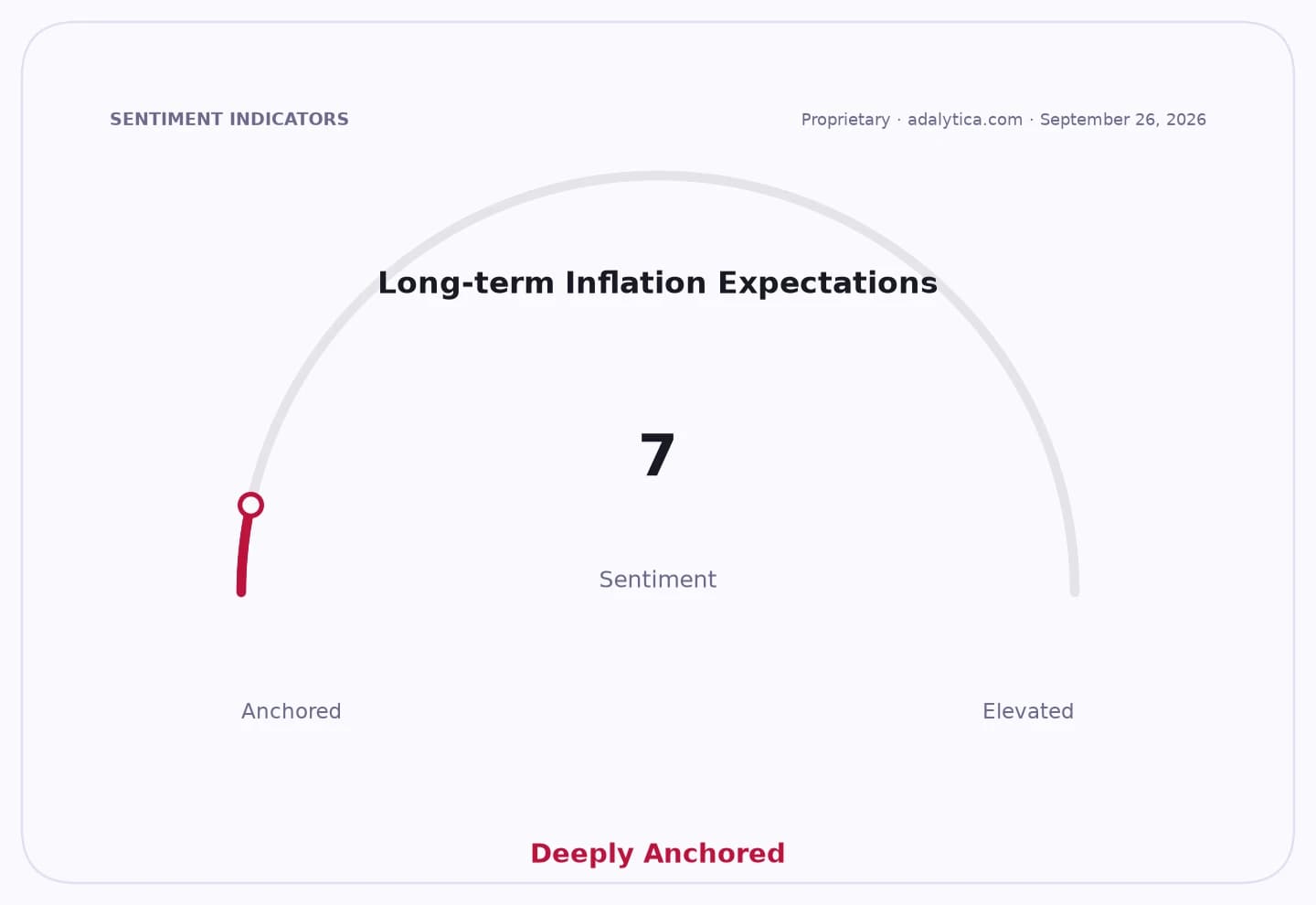
Sentiment IndicatorsⓘProprietary · adalytica.com · August 4, 2026
This is a snapshot — live sentiment, awareness and momentum for 130+ markets update continuously in the dashboard.Open AlphaPulse
The report fits a broader global pattern. High debt burdens are appearing across sectors and countries, and they tend to show up first in consumer loans, where repayment capacity is most sensitive to income shocks. In Morocco, that raises the risk of more delinquencies later, especially if inflation or unemployment worsens. The data also suggest that any policy push to expand lending will have limits unless household incomes rise faster.
For banks, this is the kind of stress that can quietly erode profitability over time. Loan books can grow nicely at first, but if a large share of new customers are already above a prudent debt threshold, provisions may rise and credit standards may tighten. That is usually a headwind for net interest income and a drag on valuation multiples.
The signal for long-term investors is straightforward: credit growth is only durable when borrowers can actually carry the debt. Morocco’s lenders may still have room to expand, but the report says that expansion is increasingly happening in a riskier part of the market. That makes balance-sheet discipline, underwriting quality and funding costs more important than headline loan growth.
For patient investors, the right takeaway is not to avoid the sector entirely, but to focus on institutions that can prove they are lending conservatively and collecting reliably. In a world where debt burdens are becoming more visible, that tends to separate the resilient compounders from the lenders that are simply growing fastest. Worth watching closely.
| Entity | Gains | Losses |
|---|---|---|
| Prudent banks | ▲Better credit quality | ▼Slower loan growth |
| Highly leveraged borrowers | ▲Easier access to cash | ▼Higher repayment strain |
| Moroccan economy | ▲Potential policy focus on household resilience | ▼Softer consumer spending |
| Investors in risky lenders | ▲Short-term volume growth | ▼Higher defaults and provisions |