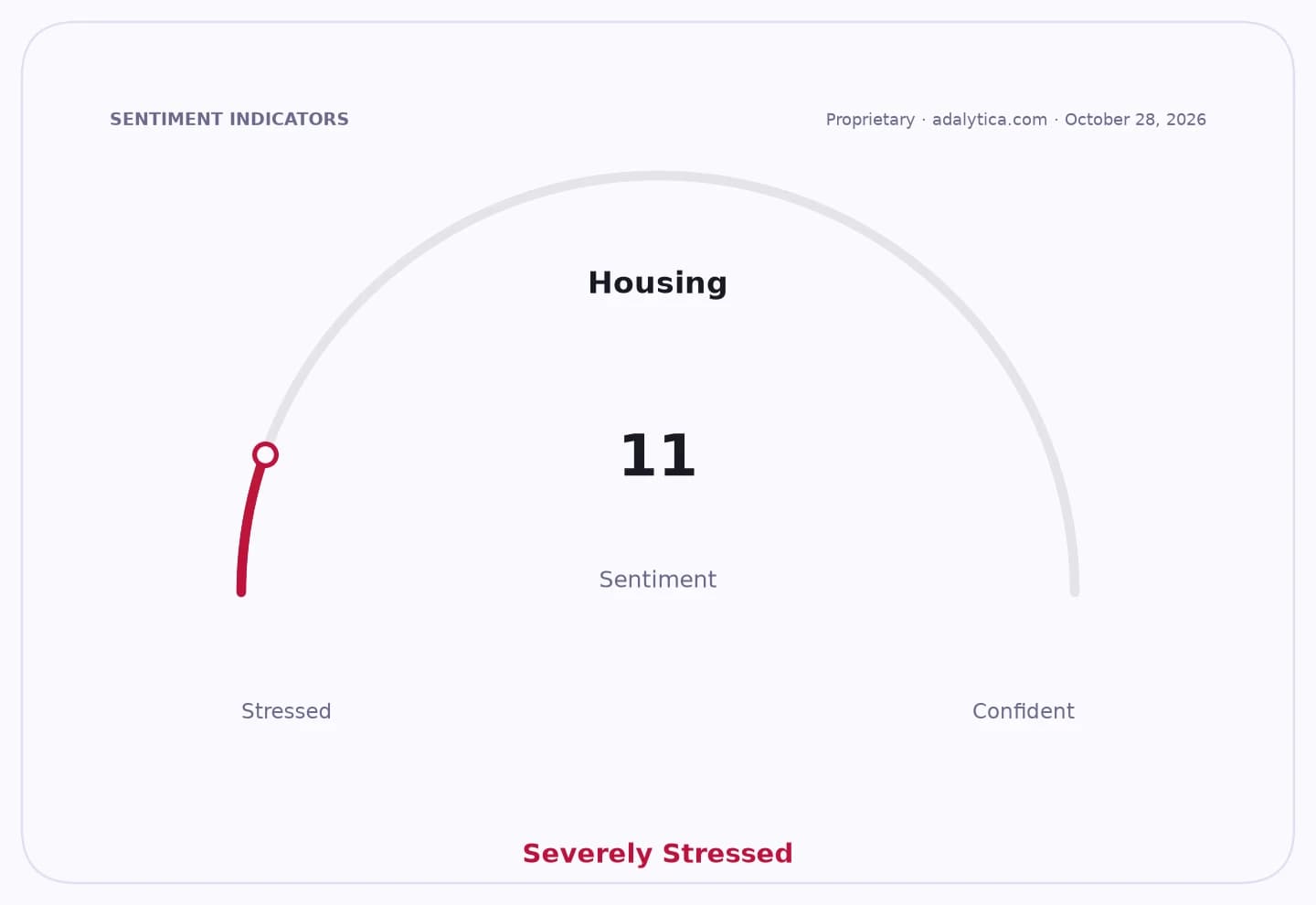
Mozambique’s mortgage market shrank to its weakest level in at least a year in July, underscoring how high borrowing costs and tight lending standards continue to keep home finance out of reach for most households.
Mozambique mortgage credit falls to 7.189 billion meticais
The stock of housing credit fell 4.1% on the month to 7.189 billion meticais, or about 98 million euros, from 7.495 billion meticais in June, the central bank said. Compared with July a year earlier, mortgage lending was down 14.3%, highlighting a deeper contraction in a segment that already represents just 2.5% of total bank credit to the economy.
The decline matters because housing finance is one of the clearest channels through which lower interest rates should support domestic demand, construction and household wealth creation. Instead, Mozambique’s mortgage market remains structurally small, reflecting weak affordability, limited formal employment and bank underwriting that still demands sizable downpayments, mortgage collateral, compulsory insurance and loan-to-value ratios often capped at 80% to 90%.
Even though borrowing costs have eased from last year’s peaks, they remain too high to revive long-term lending. The central bank said average one-year lending rates fell to 21.27% in July from 23.04% a year earlier, still a prohibitive level for mortgage finance. The banking association’s prime rate, which feeds into lending formulas, has also been drifting lower since the start of 2024 after hitting 24.1%, but it was left unchanged at 15.5% in October for a sixth straight month.
That combination helps explain why cheaper policy funding has not translated into stronger housing credit. The Bank of Mozambique has held its reference rate at 9.25% since September, but commercial banks continue to price in inflation risk, credit risk and weak recovery prospects. For lenders, mortgages remain a cautious, collateral-heavy product rather than a growth engine. For households, the result is continued reliance on savings, informal finance or developer-backed schemes rather than conventional bank loans.
Investors should read the data as a signal that Mozambique’s financial system remains geared toward short-term, higher-yield lending rather than balance-sheet expansion through long-duration assets. A deeper mortgage market would usually support banks’ fee income, asset quality diversification and wider economic activity. Instead, the latest figures point to limited transmission from monetary easing into real-economy credit, a pattern that can restrain construction, consumer durables and urban development.
The near-term outlook depends on whether rate cuts continue and whether banks loosen lending criteria. Bullishly, further declines in policy and market rates could gradually improve affordability and revive demand at the margin. Bearishly, if inflation expectations, sovereign risk or funding costs stay elevated, mortgage lending is likely to remain a tiny slice of the market, with little impact on growth. For now, Mozambique’s housing finance sector remains more a measure of financial exclusion than of recovery.
| Entity | Gains | Losses |
|---|---|---|
| Banks | ▲Safer collateralized lending | ▼Slower loan growth |
| Households | ▲Slightly lower rates | ▼Weak mortgage access |
| Construction sector | ▲Potential future demand if credit eases | ▼Missed housing sales |
| Policymakers | ▲Evidence of disinflation progress | ▼Poor credit transmission |