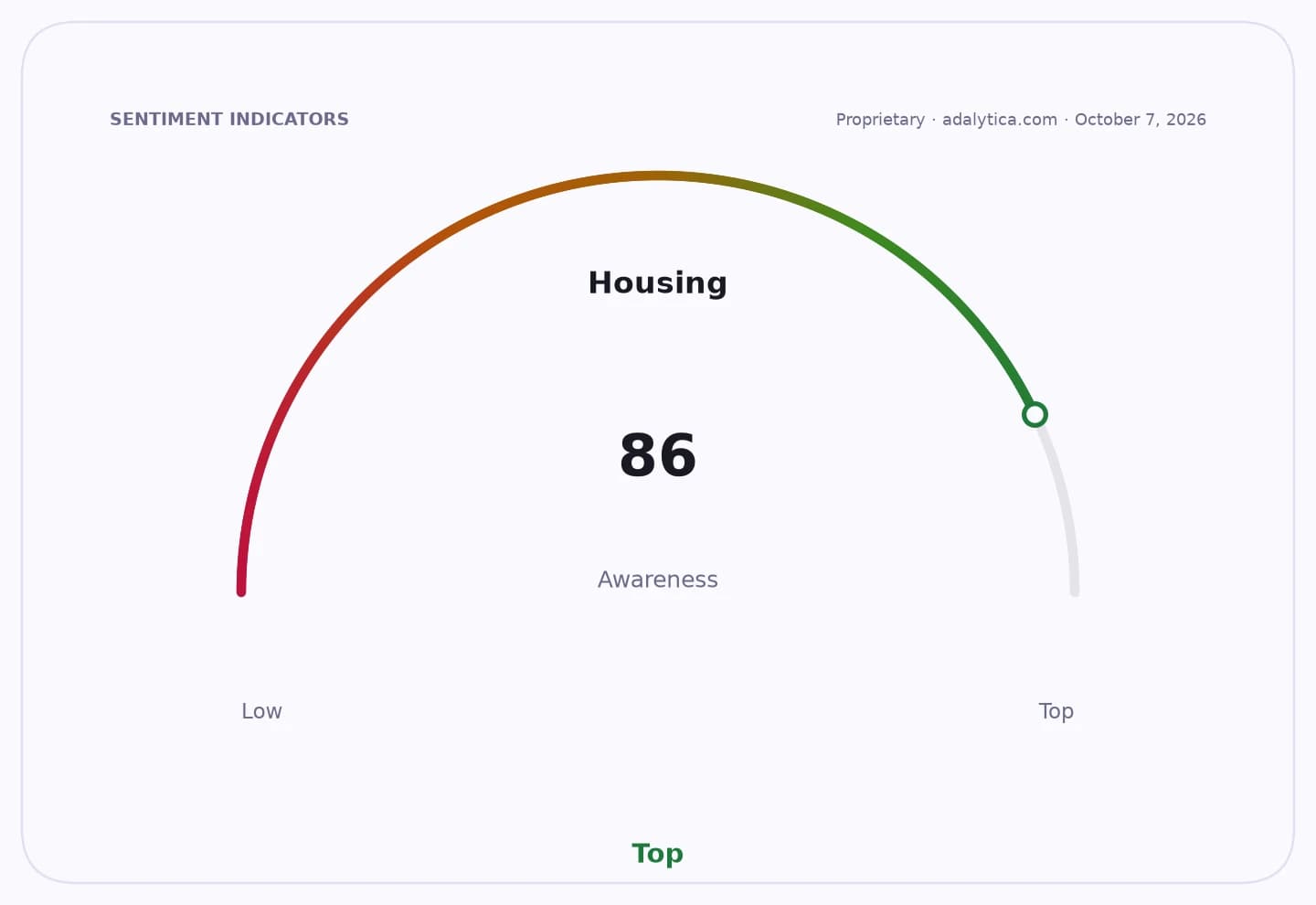
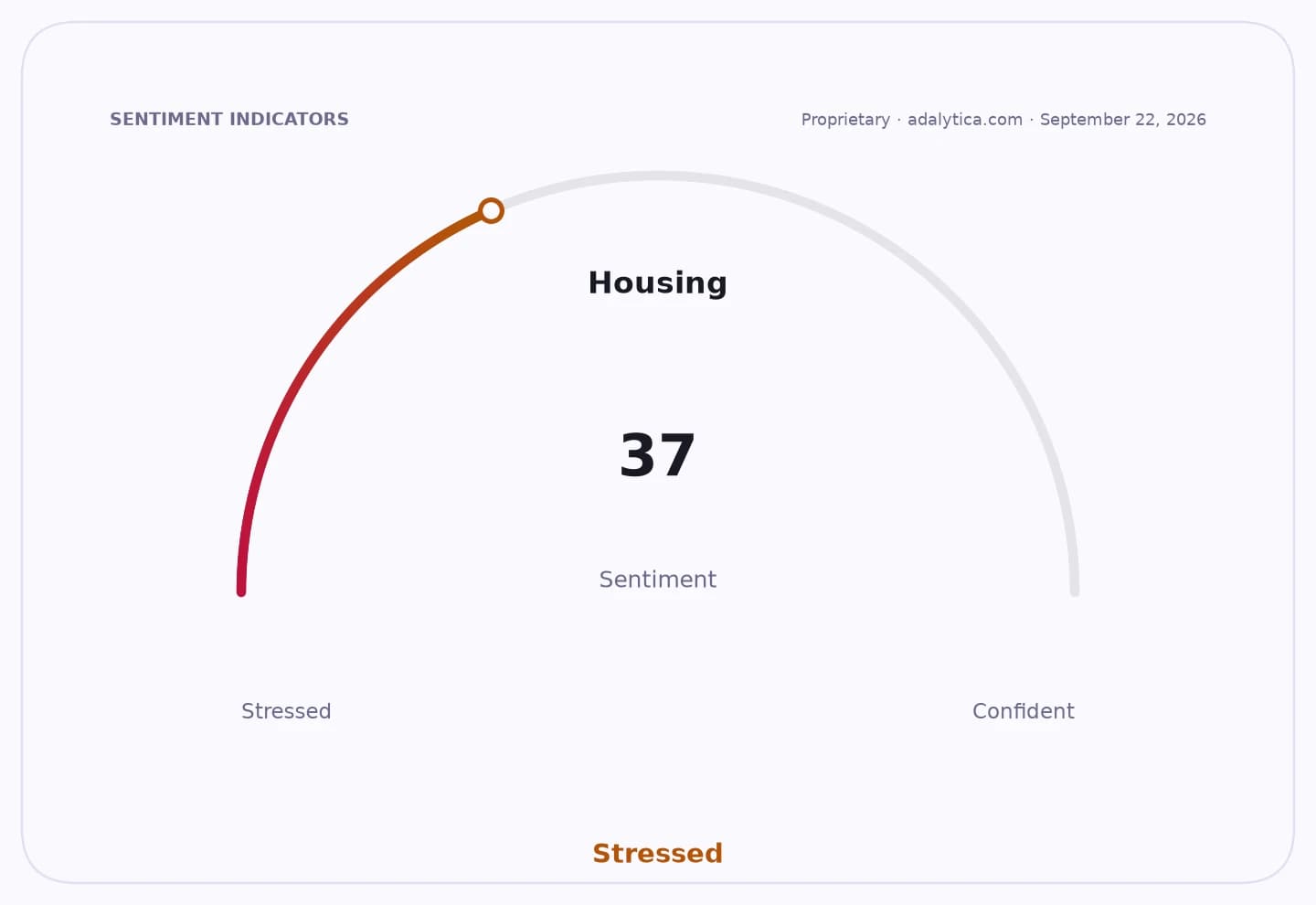
South Korea’s mortgage market just got more expensive again, and the squeeze is likely to spread quickly through household budgets and bank loan books.
South Korea COFIX Rises to 3.43% in September
The benchmark COFIX rate, which sets the floor for many variable-rate home loans, rose 0.25 percentage point in September to 3.43%, the sharpest monthly increase in 3 years and 10 months. That is the highest level since late 2022 and a clear sign that banks’ funding costs are still climbing even as borrowers hope for relief.
Sentiment IndicatorsⓘProprietary · adalytica.com · October 18, 2026
This is a snapshot — live sentiment, awareness and momentum for 130+ markets update continuously in the dashboard.Open AlphaPulse
The move matters because COFIX feeds directly into floating mortgage rates at the country’s major lenders. As soon as this week, banks are expected to lift new variable mortgage rates tied to the benchmark, and existing borrowers will feel the impact when their rate-reset dates arrive. In practical terms, the rise adds another layer of pressure to households already dealing with elevated living costs and stubborn rent inflation.
The scale of the increase is important for the broader economy. COFIX measures the average cost of funds raised by eight major banks through deposits, bank bonds and related products, so a jump of this size suggests funding conditions are tightening rather than easing. That can slow mortgage demand, cool housing turnover and raise debt-service burdens just as policymakers are trying to manage inflation without choking growth.
For investors, the key question is not whether lending margins widen immediately, but how long this higher-rate backdrop lasts. Banks may see some support to loan yields, but they also face the risk of weaker credit demand and rising repayment stress among households. Builders, housing-related retailers and consumer lenders are likely to feel the heat first, while borrowers with variable-rate debt remain the most exposed.
The recent sequence is telling: the new-loan COFIX has climbed for four straight months, and September’s rise pushed it 0.91 percentage point above a year earlier. Even the other COFIX measures moved higher, underscoring that the cost of funding is rising across the system rather than in one corner of the market.
The market message is straightforward. Korea’s mortgage repricing cycle is not easing yet, and that keeps pressure on housing affordability, consumer spending and credit quality into the next reset period. Investors should treat this as a reminder that the winners in a sticky-rate environment are the lenders with disciplined funding and pricing power, while leveraged households and rate-sensitive property plays remain vulnerable.
| Entity | Gains | Losses |
|---|---|---|
| Major Korean banks | ▲Higher loan pricing power | ▼Weaker mortgage demand |
| Variable-rate borrowers | ▲None | ▼Higher monthly repayments |
| Housing market | ▲Stable bank margins | ▼Affordability and turnover |
| Rate-sensitive sectors | ▲Select lenders | ▼Builders, consumer credit names |