MSCI’s stock has pushed to fresh highs after the index provider reported third-quarter results that showed revenue growth running well ahead of the broader market’s mood, giving investors a rare anchor in a tape defined by fear and volatility.
MSCI Shares Rise After Third-Quarter Results

The move matters because MSCI sits at the center of global asset allocation: when its business is expanding, it usually points to healthier demand for benchmark data, analytics and index-linked products across equities, ETFs and institutional portfolios. That makes the company less of a cyclical stock than a read-through on capital-market activity and the willingness of investors to keep paying for market infrastructure.
Sentiment IndicatorsⓘProprietary · adalytica.com · October 22, 2026
This is a snapshot — live sentiment, awareness and momentum for 130+ markets update continuously in the dashboard.Open AlphaPulse
MSCI said recurring subscriptions rose 11.1% in the quarter ended Sept. 30, according to its 10-Q, and operating revenue would have increased 18.0% after adjusting for acquisitions and currency swings. That has helped the shares climb to $604.46 on Oct. 21, up nearly 13% from Oct. 19 and more than 7% above the 50-day moving average, with the relative strength index at 75.4, a level that suggests the stock is technically stretched after the rally.
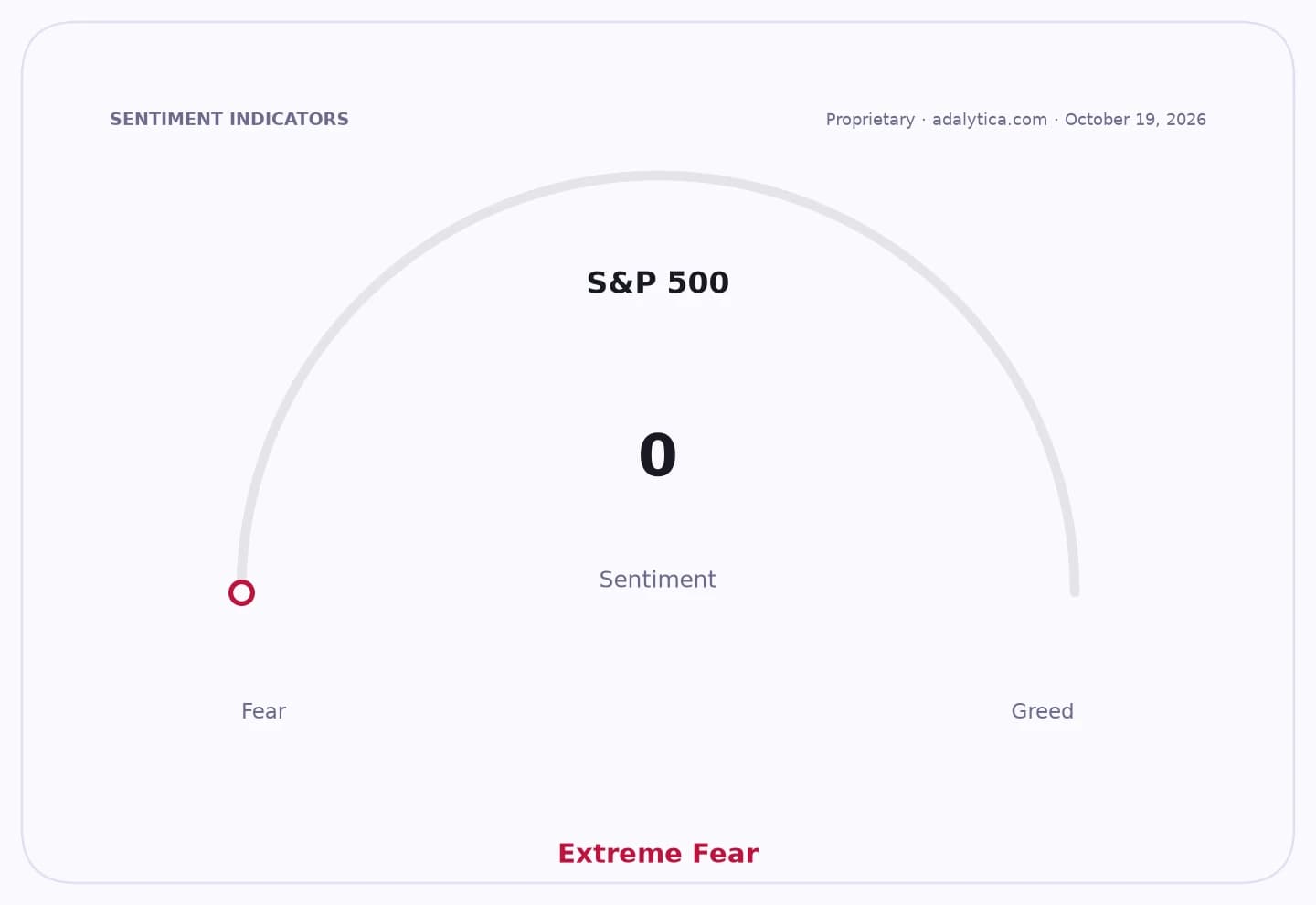
The gain comes as broader risk appetite remains fragile. Adalytica’s S&P 500 trade signals show “Extreme Fear” in sentiment even as awareness remains elevated, underscoring the gap between investor attention and conviction. In that kind of backdrop, a defensive-growth name with recurring revenue and global market exposure can attract buyers looking for earnings visibility rather than macro beta.
Emerging-market funds are also in focus. EEM, the iShares MSCI Emerging Markets ETF, has been trading near $58.18, below its 50-day average and with a subdued RSI, showing that investors are still cautious on the asset class even as MSCI itself benefits from the business of indexing those markets. That divergence highlights the narrative: markets may be shaky, but the plumbing that tracks them is still generating growth.
For investors, the next test is whether MSCI can keep translating index demand, analytics subscriptions and acquisitions into sustained earnings momentum without giving back too much of the recent technical run-up. The company’s post-earnings strength will likely stay tied to flows into passive products, institutional spending and the next broad move in global equities.
| Entity | Gains | Losses |
|---|---|---|
| MSCI | ▲Revenue momentum, stock breakout | ▼Short-term overbought risk |
| Passive index users | ▲Broader benchmark exposure | ▼Higher MSCI pricing power |
| EEM / EM investors | ▲Less direct | ▼Weak ETF price action |
| Broad equity bears | ▲— | ▼Better market infrastructure earnings |