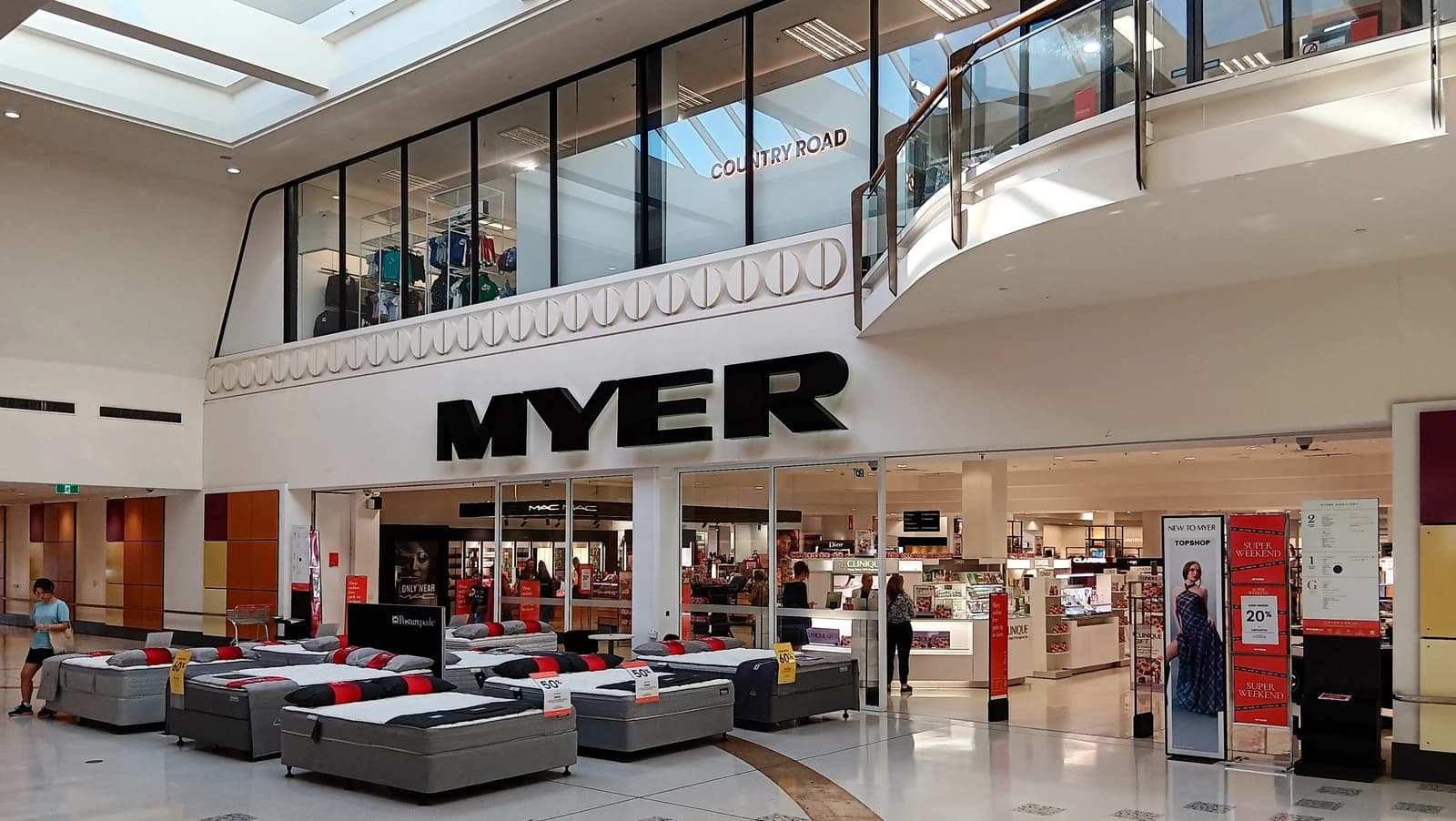
Myer’s long-running rivalry with David Jones is moving toward an abrupt end that could leave Australia with a de facto department store monopoly, a shift that matters far beyond the fate of two heritage retail brands.
Myer and David Jones rivalry nears end
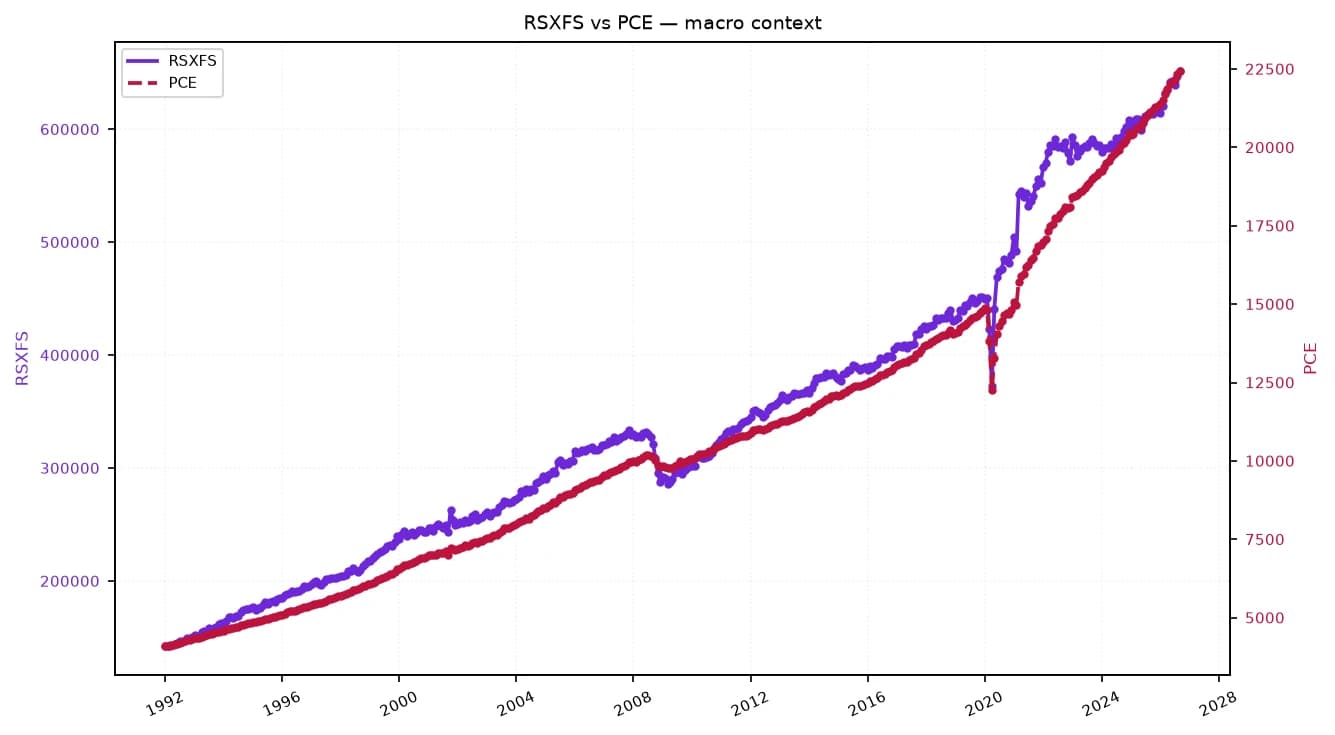
The immediate economic significance is that the collapse of David Jones would further shrink an already damaged segment of bricks-and-mortar retail, reducing competition in premium department stores just as consumer spending remains under pressure. For shoppers, that could mean less choice and weaker price competition. For landlords, suppliers and mall operators, it would deepen the strain on a channel that has been losing relevance to online shopping and specialty retail for years.
Sentiment Indicators
David Jones has been underperforming Myer for at least a decade, and the gap has widened into a survival question rather than a market-share contest. The latest trading backdrop in Myer’s stock reflects that tension. After a sharp run-up to 26 cents on Nov. 5, Myer has pulled back to 23 cents, still above its 200-day moving average of 26 cents? No — the price is below it, with the stock trading under both the 50-day and 200-day trend lines, a sign investors remain cautious even as the company stands to benefit from a weaker competitor. The recent rise in volume suggests the market is actively repricing the possibility that Myer could emerge as the dominant national department-store chain.
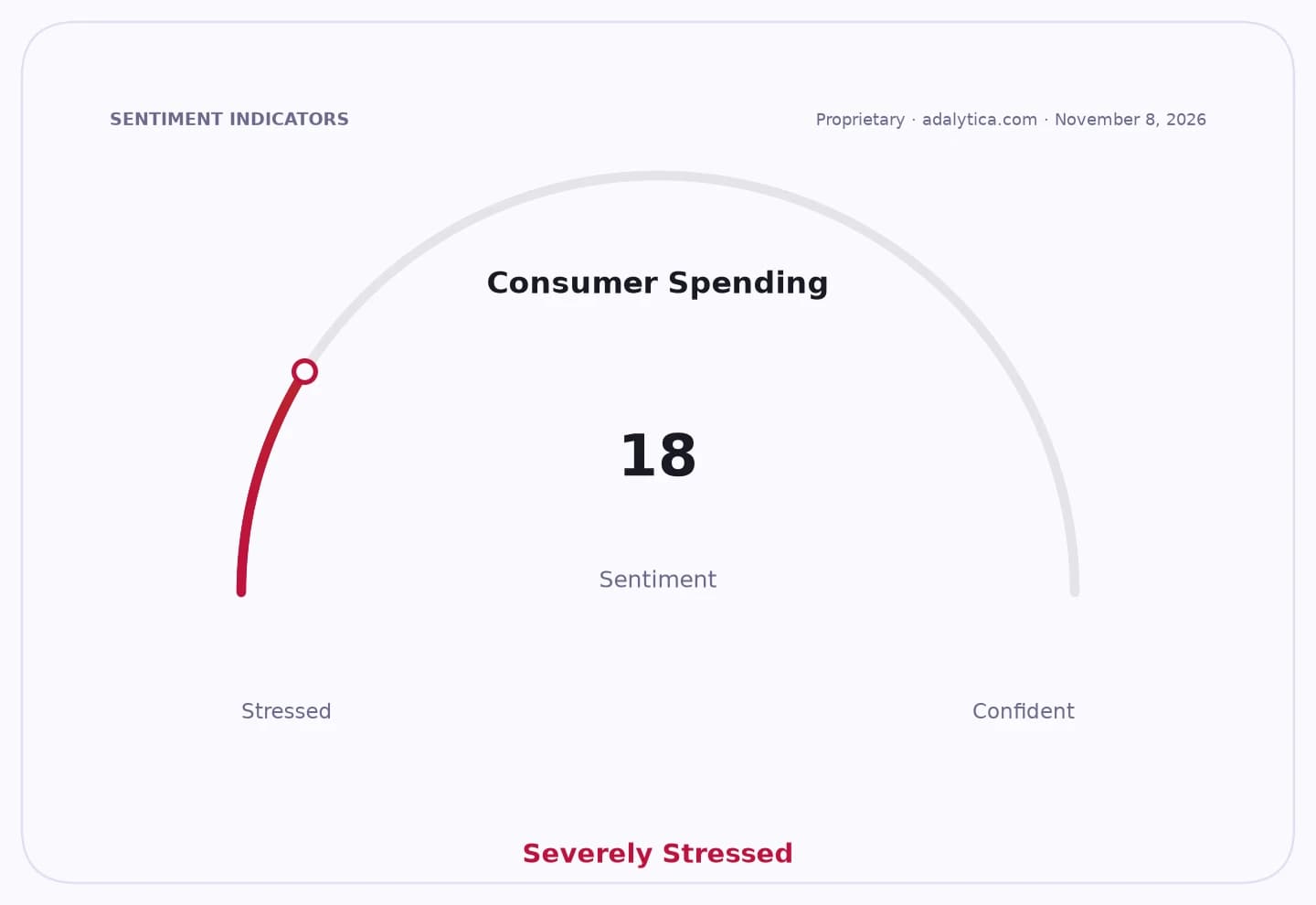
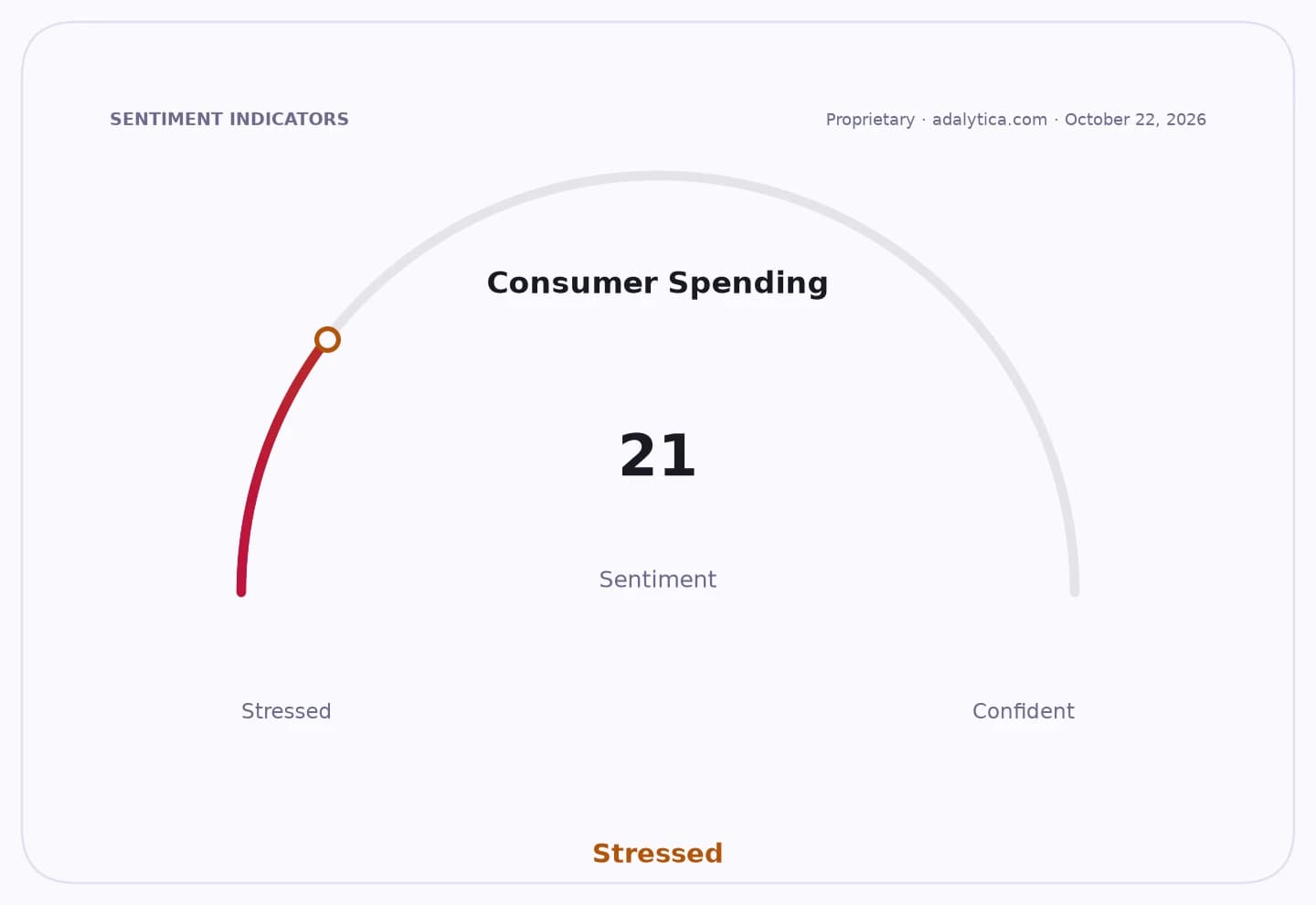
From an industry perspective, a David Jones exit would not represent healthy consolidation so much as the latest confirmation that the department-store format is structurally broken. The model depends on high foot traffic, broad brand appeal and enough pricing power to justify sprawling floor space. Those conditions have been eroded by e-commerce, rising operating costs and a consumer that is more selective about where and how it spends. Adalytica’s Consumer Spending Sentiment gauge is in “Extreme Fear,” underscoring the fragile demand backdrop facing discretionary retailers.
For investors, the key question is whether Myer would actually capture enough sales and margin improvement to offset the reputational and operational damage that comes with a weaker category. Bulls will argue that a dominant Myer could gain bargaining power with landlords and suppliers, rationalize store networks and take share from a failed rival’s customer base. Bears will note that winning by default in a shrinking market may not generate durable earnings growth, especially if consumers keep shifting spend online or to value-focused formats.
The broader market implication is that Australia’s premium department-store sector may be entering a terminal phase, with the final outcome likely to be determined by creditors, owners and landlords rather than by consumers. If David Jones disappears, Myer may inherit the field — but it would be inheriting a much smaller one.
| Entity | Gains | Losses |
|---|---|---|
| Myer | ▲Market share and pricing power | ▼Pressure to absorb a weak category |
| David Jones creditors/owners | ▲Potential recovery from restructuring | ▼Full loss if liquidation follows |
| Suppliers and landlords | ▲Short-term negotiation leverage if Myer expands | ▼Lower rents/orders if stores close |
| Consumers | ▲Simpler comparison shopping | ▼Less choice and weaker competition |