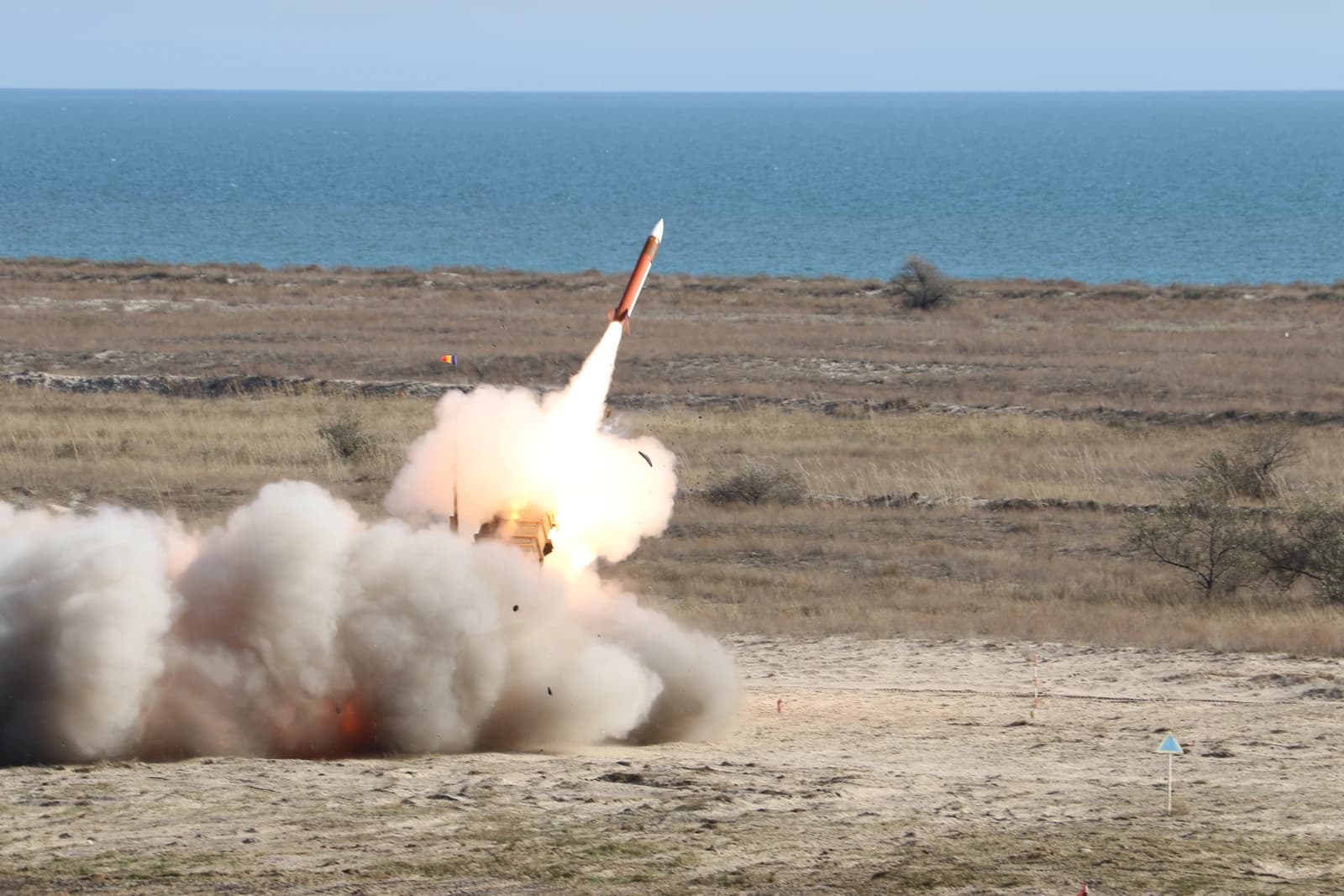
NATO’s air policing mission has been forced into near-daily action over the past two years, and that is the clearest sign yet that Europe’s security bill is still rising even as Washington pushes for diplomacy on Ukraine.
NATO Air Scrambles Lift Defense Spending Outlook
The alliance’s military committee chairman, Admiral Giuseppe Cavo Dragone, said NATO fighter jets were scrambled about 700 times to intercept Russian aircraft approaching allied airspace — a pace he described as “almost one per day.” The figure matters because it shows the war is no longer just a battlefield problem in Ukraine; it is a persistent industrial, military and fiscal drag on the entire NATO perimeter, from the Baltic to the Arctic.
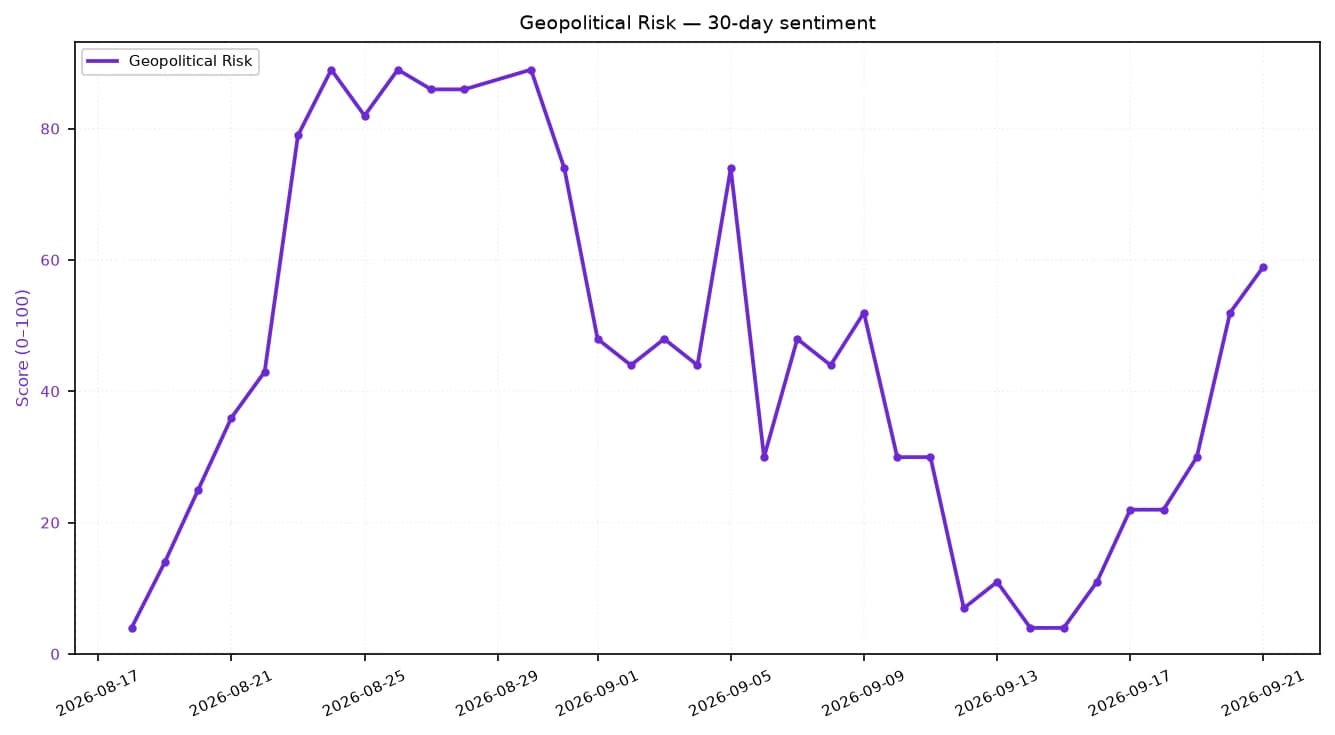
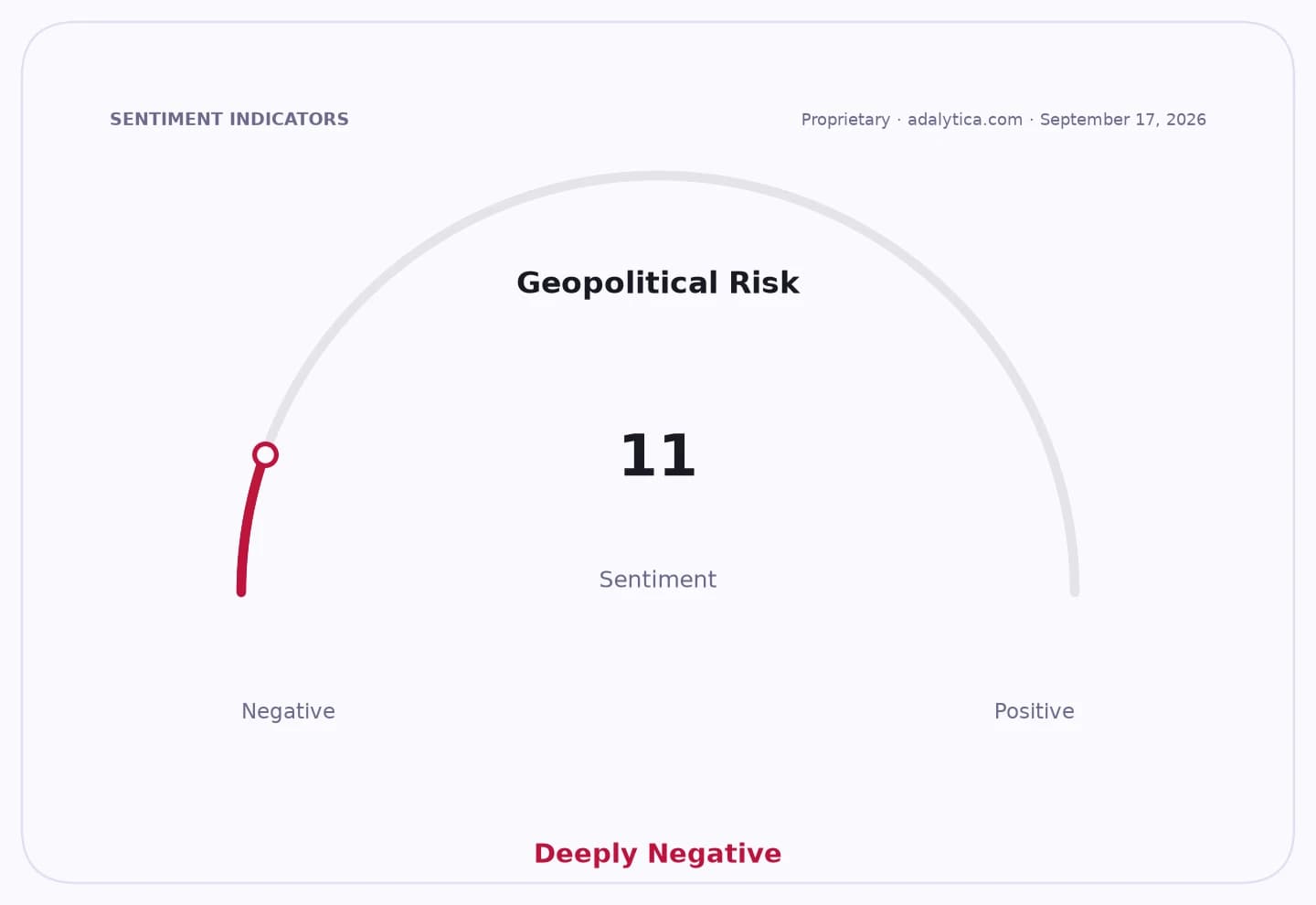
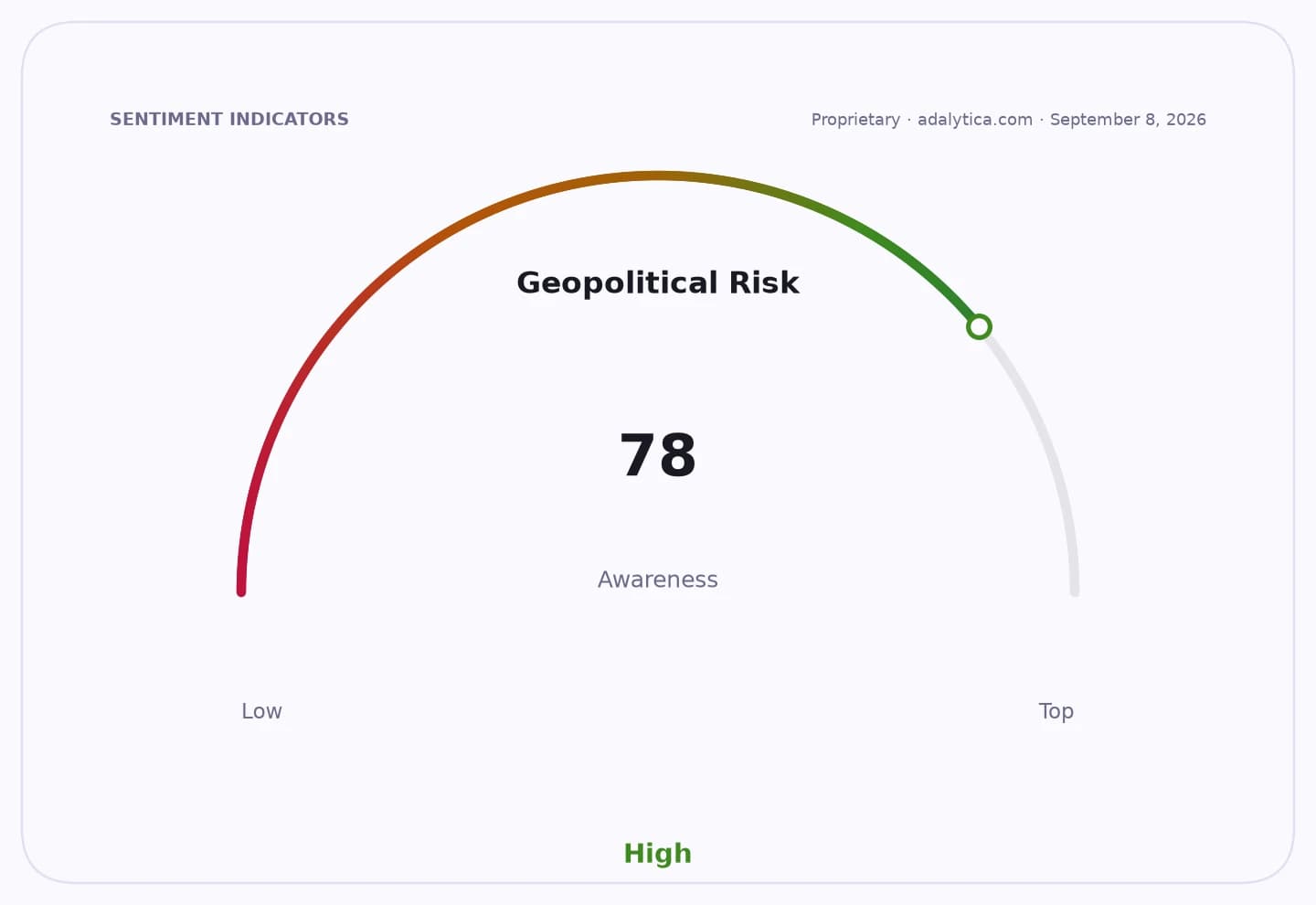
Sentiment IndicatorsⓘProprietary · adalytica.com · September 8, 2026
This is a snapshot — live sentiment, awareness and momentum for 130+ markets update continuously in the dashboard.Open AlphaPulse
For investors, the message is straightforward: the security supercycle is not fading. NATO members are being pushed to spend more on air defense, surveillance, munitions, sensors, command-and-control systems and border infrastructure, while governments also harden against hybrid warfare, disinformation and migration pressure. That creates a multi-year tailwind for defense primes, missile makers, radar specialists and border-security contractors, even if peace talks eventually reduce the intensity of the war itself.
The scramble count is especially important because it captures the grind of deterrence. These are not headline-grabbing combat sorties, but the day-to-day cost of preventing escalation. Every alert consumes pilots, readiness hours, maintenance cycles and fuel. It also reinforces the argument inside NATO that Europe must assume a larger role in its own defense, a theme Dragone framed as a “NATO 3.0” alliance built for conventional, hybrid, digital and Arctic threats.
That shift has real capital consequences. Europe is already moving to fortify its eastern flank, with Finland unveiling a 200-kilometer fence along its border with Russia and extending the logic of border barriers seen in the Baltics and Poland. At the same time, NATO members are under pressure to translate political promises into procurement: more interceptor aircraft, more air defense batteries, more drones, more space and cyber assets, and more resilience spending across civilian infrastructure.
The market has not fully priced how durable this demand can be. Defense shares have already rallied, but the underlying order book remains supported by a security environment that is getting broader, not better. Russia’s repeated air probing, its hybrid tactics at the frontier and the continued war in Ukraine all argue for sustained spending rather than a one-off surge.
That is why names with exposure to fighters, air and missile defense, and integrated command networks remain attractive. Lockheed Martin, Northrop Grumman and RTX all sit in the center of the procurement stack that Europe and the US will keep funding. The winners are not just the obvious missile and aircraft makers, but also the suppliers of radar, electronic warfare, border sensors, secure communications and drone defenses.
Put differently, investors should treat the 700 scrambles as evidence of a structural rearmament cycle, not a temporary spike in tension. As long as Russia keeps probing NATO airspace and weaponizing pressure below the threshold of open war, Europe will keep paying for readiness. The opportunity is to own the toll roads of that new security regime before the next procurement wave accelerates.
| Entity | Gains | Losses |
|---|---|---|
| Lockheed Martin | ▲fighter and interceptor demand | ▼peace-dividend expectations |
| Northrop Grumman | ▲air defense and sensors spending | ▼lower urgency for rearmament |
| RTX | ▲missile and radar orders | ▼delayed procurement cycles |
| NATO members | ▲greater deterrence | ▼higher defense budgets |