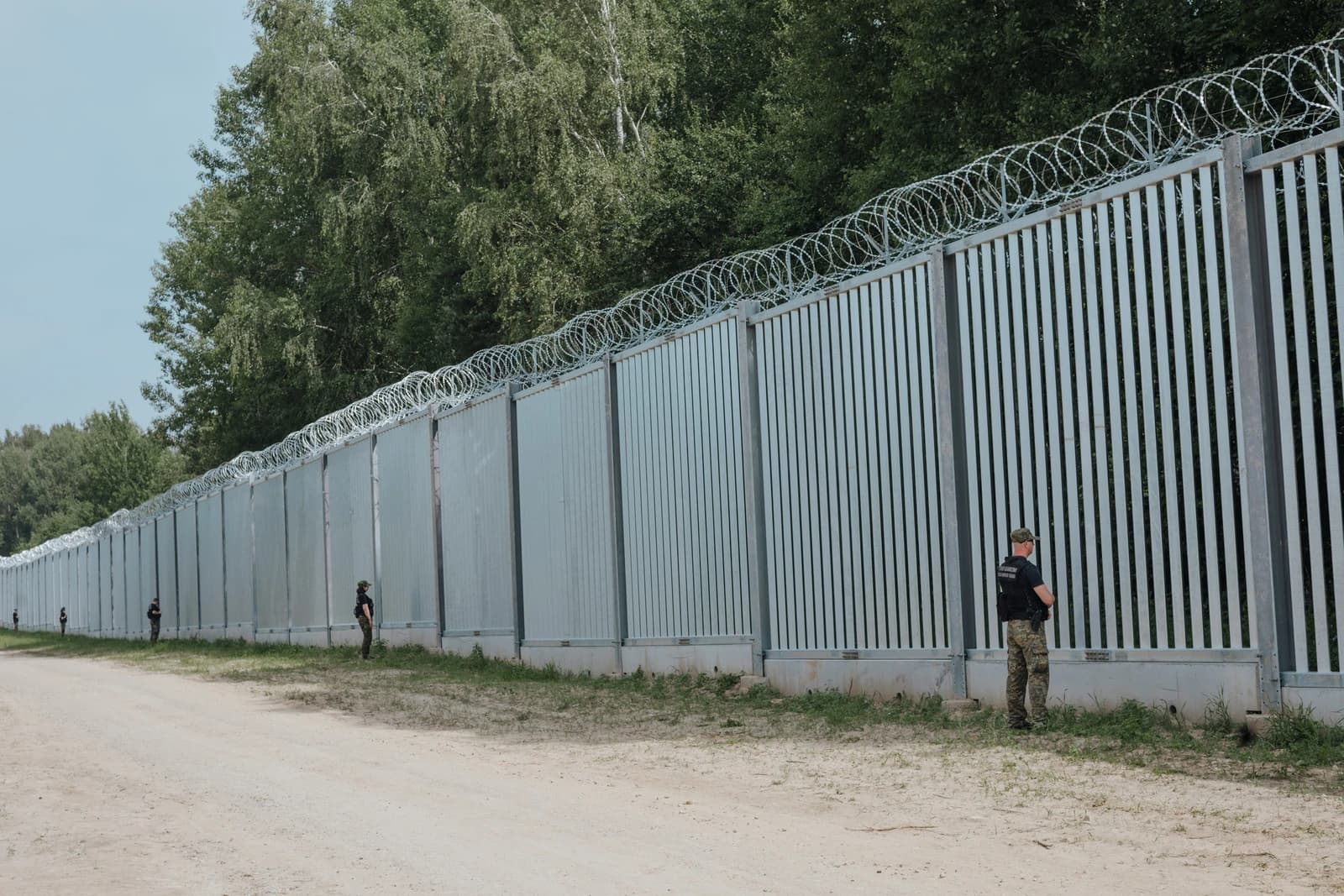
Donald Tusk’s warning that Russia is preparing “hybrid” attacks on NATO’s eastern flank matters because it points to a broadening risk for Europe: the war in Ukraine could increasingly damage neighboring allies’ security, logistics and economic resilience without crossing into a formal declaration of war.
Poland warns of Russian hybrid attacks near NATO border
For investors, that raises the premium on anything tied to defense, border security, air defense and infrastructure hardening, while also keeping pressure on regional risk assets that are most exposed to escalation. When a government says Moscow may try to make strikes look accidental, the concern is not just military — it is that uncertainty itself becomes a cost of doing business across Eastern Europe.
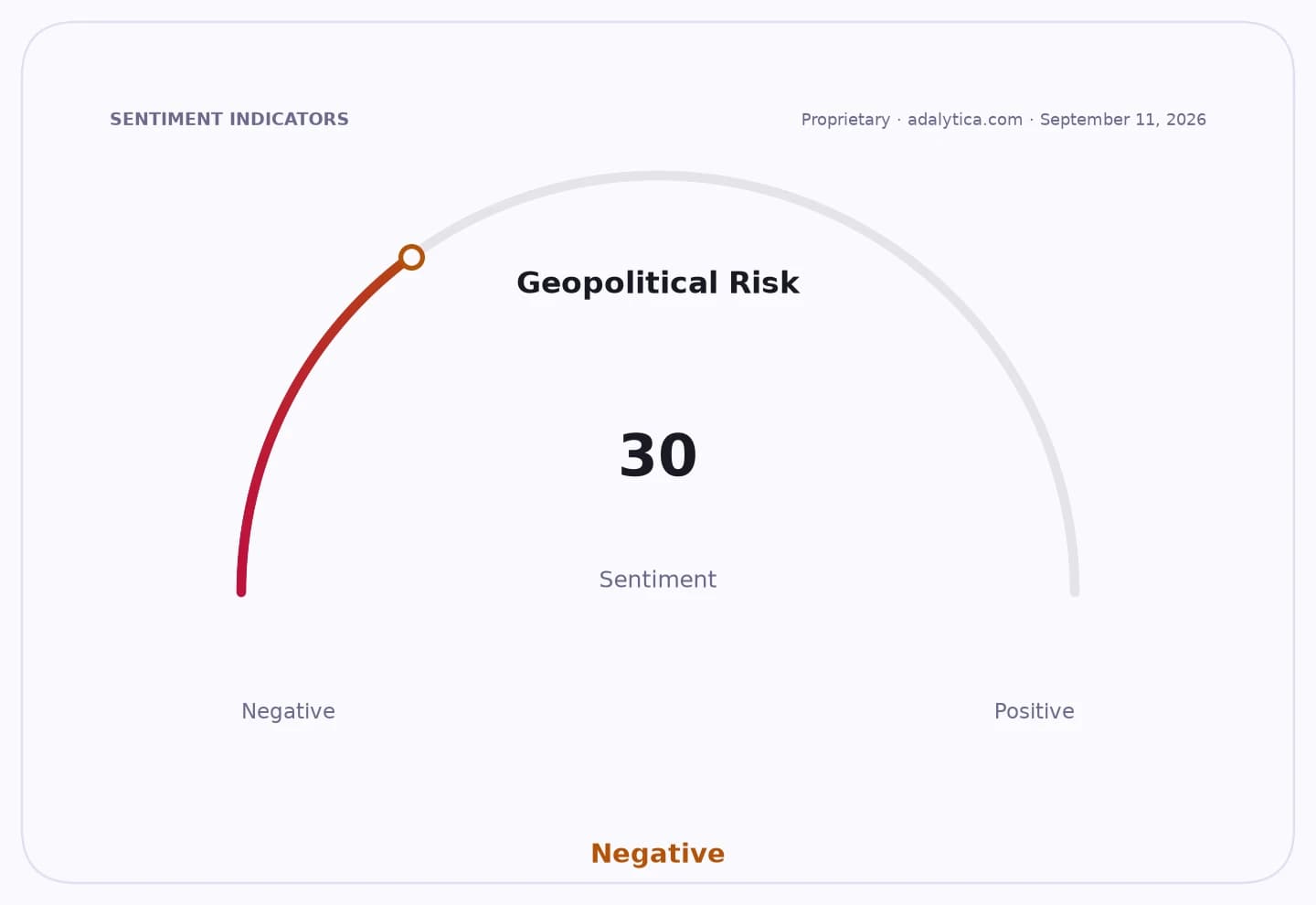
Sentiment IndicatorsⓘProprietary · adalytica.com · September 22, 2026
This is a snapshot — live sentiment, awareness and momentum for 130+ markets update continuously in the dashboard.Open AlphaPulse
Tusk told lawmakers that intelligence from NATO, Ukraine and the United States suggests Russia could use drones or missiles to hit countries on the eastern edge of the alliance, then frame the incidents as mistakes to discourage any NATO response. He said the threat is complicated by Russia’s growing use of jet-powered drones, which fly faster and higher and are harder for air defenses to detect in time.
That is a meaningful shift in the security equation for Poland, the Baltic region and other countries bordering Ukraine. A war that already has devastated Ukrainian infrastructure is now being described by one of Kyiv’s closest allies as a campaign that could spill into allied territory in a way designed to stay just below the threshold of collective defense. That kind of ambiguity is exactly what markets dislike, because it clouds the outlook for transport corridors, energy flows and cross-border supply chains.
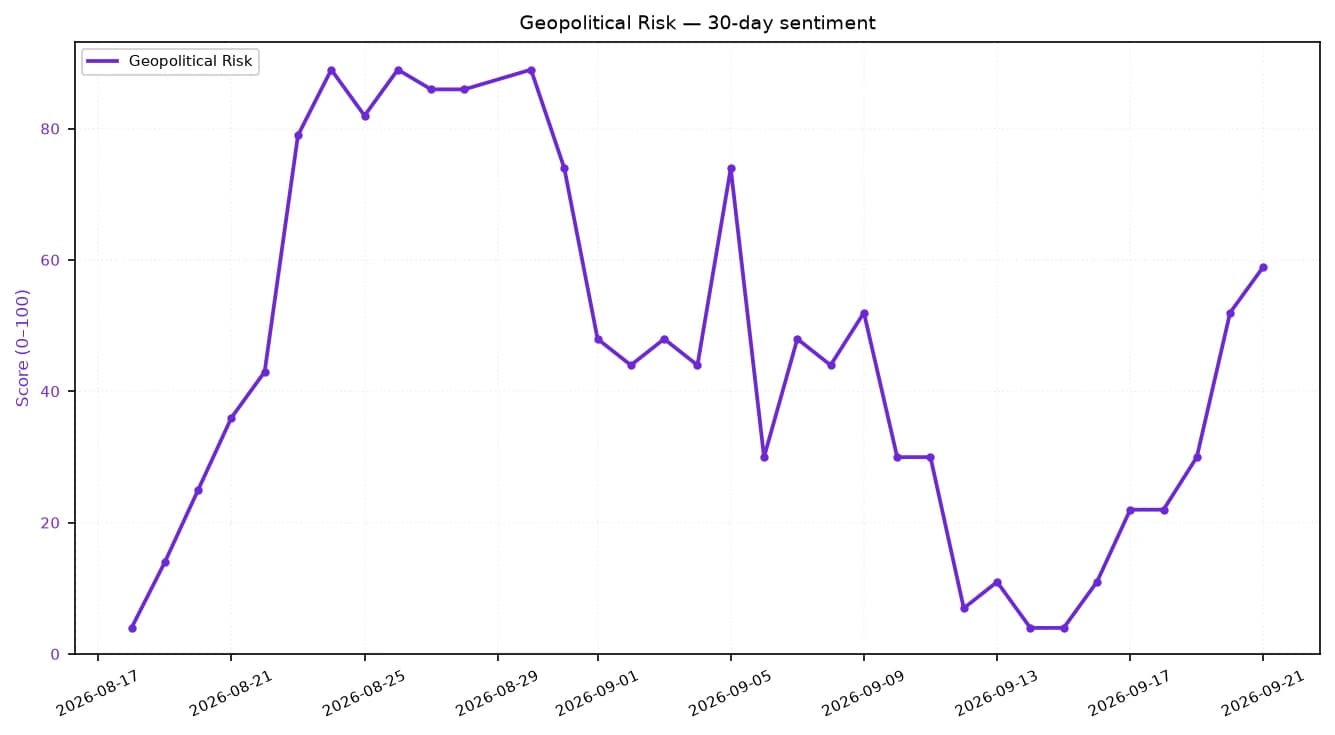
Geopolitical Risk — 30-day sentimentadalytica.com
Explore this data interactively — full history, time series and cross-market comparisons.Open AlphaPulse
The warning came after Poland scrambled military aircraft following Russian strikes in western Ukraine near its border. Airports in Rzeszów and Lublin were briefly closed, and air alerts were triggered in two eastern regions of Poland. Local media reported sirens and schoolchildren taking shelter. A few days earlier, a Russian drone hit a passenger train in Ukraine just kilometers from Poland, narrowly missing European leaders traveling nearby.
Warsaw has responded by stepping up aerial protection, with defense minister Władysław Kosiniak-Kamysz saying the country had increased F-16 and helicopter activity and reinforced air defense and rapid-response systems. That is a reminder that every new layer of tension in this war carries a direct fiscal cost: more interceptors, more patrols, more spending on systems that can spot and stop low-cost drones before they become strategic disruptions.
Tusk also said Russia may be trying to hit border crossings between Ukraine and its neighbors to choke off Kyiv’s supply routes and energy support. That matters economically because the war effort depends not only on battlefield weapons but on roads, rail links and logistics hubs. If those nodes are threatened, the cost of sustaining Ukraine rises, and the spillover risk for companies moving goods through Central and Eastern Europe rises with it.
The broader political message was just as pointed. Tusk suggested Moscow could be counting on shifts in European politics that give more influence to parties calling for peace on terms that would amount to surrender for Ukraine. In other words, the Kremlin may be betting that military pressure and political fatigue can work together. For investors, that makes the conflict less about one-off battlefield headlines and more about a prolonged security regime in Europe.
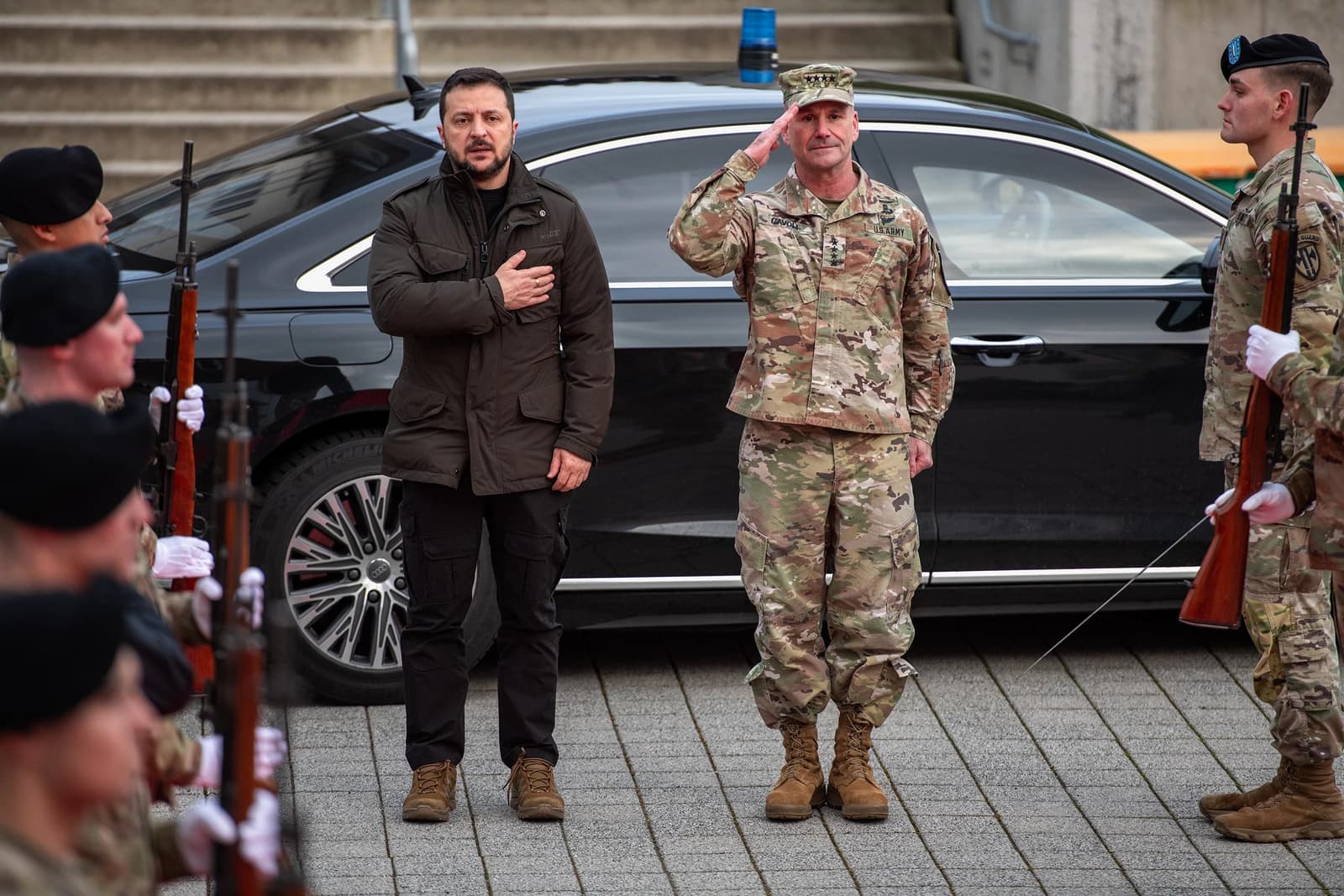
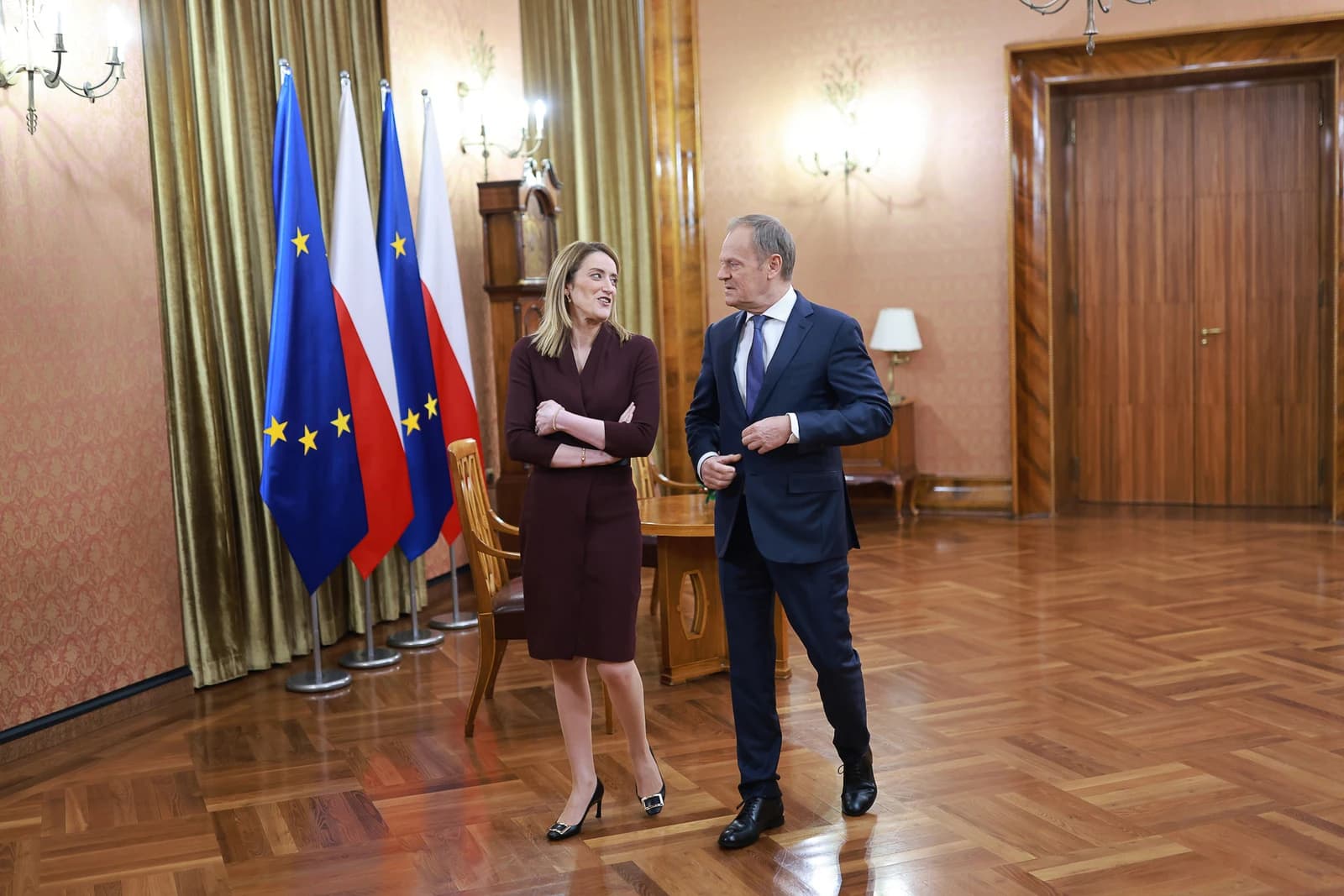
The meeting later in Kiev between Tusk and President Volodymyr Zelensky underscored how seriously Warsaw is taking the threat. The two discussed countering new Russian drones, tighter sanctions and work in a ballistic missile defense coalition developing a lower-cost alternative to the U.S. Patriot system. That is a long-term investment theme in itself: Europe is being pushed to build out cheaper, faster air-defense capacity as a matter of industrial policy as much as military necessity.
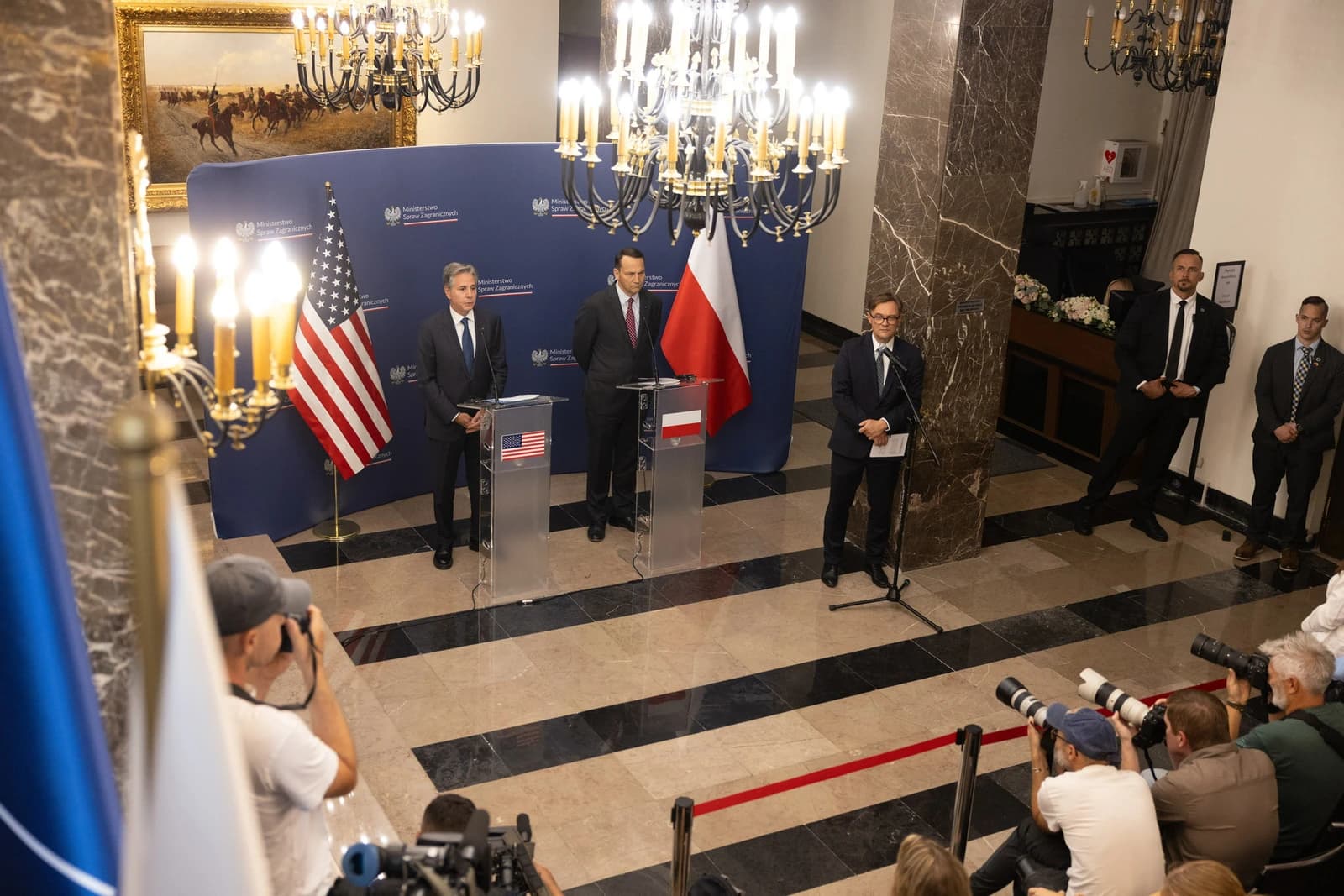
There was also a separate sign of how Poland’s role as a front-line ally is evolving. President Donald Trump said major progress was being made toward a U.S. Army base in Poland, calling it a historic step in the alliance. For Warsaw, a permanent American presence would deepen deterrence. For markets, it would reinforce the idea that Poland is becoming one of Europe’s most strategically important defense hubs.
| Entity | Gains | Losses |
|---|---|---|
| Defense contractors | ▲More air-defense spending | ▼None directly |
| Poland and NATO eastern flank | ▲Stronger deterrence | ▼Higher security costs |
| Ukraine | ▲More allied support | ▼Border logistics disruption |
| Regional transport and logistics firms | ▲Resilience upgrades | ▼Route closures and delays |