Natural gas markets are being priced for a more constrained 2027, with European supply stress and US producer consolidation both reinforcing the case for firmer prices rather than a sustained retreat.
Natural gas prices rise on Europe supply stress
That matters because gas is increasingly setting the tone for power prices, industrial margins and energy security on both sides of the Atlantic. Europe’s benchmark prices have climbed to nearly 100 euros per megawatt-hour, the highest since the 2022 crisis, while regional inventories are at their lowest for this time of year in 17 years. At the same time, the US gas complex is flashing a bullish technical backdrop even after a sharp pullback, suggesting traders are still positioning for tighter balances rather than a collapse in demand expectations.
Sentiment IndicatorsⓘProprietary · adalytica.com · October 28, 2026
This is a snapshot — live sentiment, awareness and momentum for 130+ markets update continuously in the dashboard.Open AlphaPulse
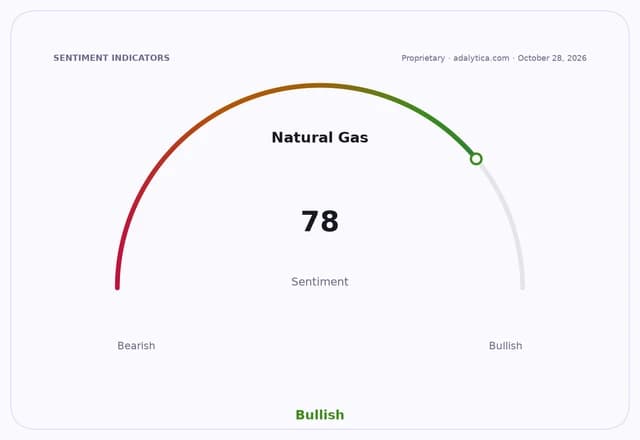
The move is economically significant because Europe’s storage shortfall raises the risk that the continent must bid more aggressively for liquefied natural gas cargoes heading into winter and into 2027. That would support global gas pricing, squeeze importers and amplify volatility in power markets, especially if weather turns colder or supply disruptions persist. The latest surge also shows how quickly gas prices can reprice when inventories are thin and geopolitical risk is elevated, from Middle East conflict to shipping-route disruptions.
In the US, the largest natural gas producer is now set to get bigger after EQT’s agreement to buy Range Resources, a deal that consolidates output at a time when producers are trying to improve scale, capital discipline and bargaining power. The transaction underscores a sector-wide response to volatile prices: less focus on growth for its own sake, more emphasis on surviving a market where export demand, storage swings and policy uncertainty can move prices sharply. For investors, that makes the largest, lower-cost producers more attractive than smaller names that lack balance-sheet flexibility.
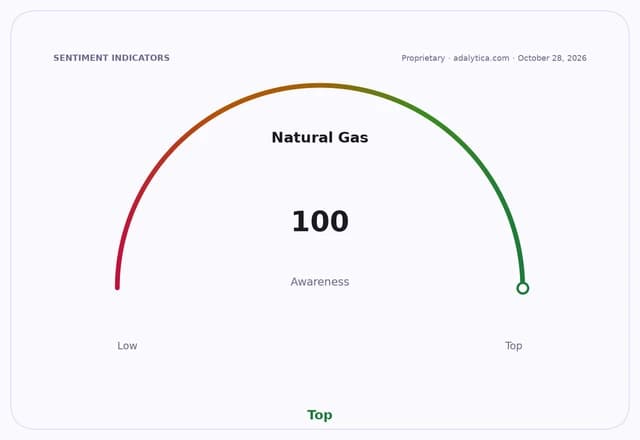
Market signals suggest the rally has not been fully unwound. UNG, the US natural-gas ETF, remains below its 50-day moving average and well under its recent highs, but its relative strength index has fallen to 26.9, a level that often indicates oversold conditions after a heavy selloff. By contrast, energy equities have held up better: XLE is still comfortably above its 50-day and 200-day moving averages, while XOP remains far above both, showing investors continue to prefer oil and gas exposure tied to tight supply and capital return over pure commodity beta.
The bear case is that a mild winter, faster storage rebuilds or weaker industrial demand could cap the upside. The bull case is that Europe’s low inventories, elevated geopolitical risk and stronger LNG pull leave little room for error, keeping 2027 gas prices supported unless supply growth accelerates materially. For now, the market narrative is clear: gas is no longer being traded as a simple cyclical input, but as a security-sensitive commodity whose price path is increasingly shaped by politics, infrastructure and consolidation.
| Entity | Gains | Losses |
|---|---|---|
| LNG exporters | ▲Higher cargo prices | ▼Stronger competition for supply |
| European importers | ▲Supply access if secured | ▼Higher energy costs |
| Large US producers | ▲Scale, pricing power | ▼Smaller rivals |
| Gas consumers | ▲— | ▼Volatile fuel and power bills |