Netflix is cutting about 1,000 jobs, its biggest round of layoffs since 2022, as the streaming giant moves to keep margins and cash generation intact while it searches for the next leg of growth.
Netflix Cuts 1,000 Jobs to Trim Costs
The reduction, roughly 6% of the company’s workforce, is less about distress than discipline. Netflix said the business is still expanding and left its full-year outlook unchanged, but it is clearly trying to run a tighter operation after years of heavy spending on programming, product development and new ventures. For investors, that matters because the streaming leader’s valuation has always depended on whether growth can eventually translate into durable earnings power.
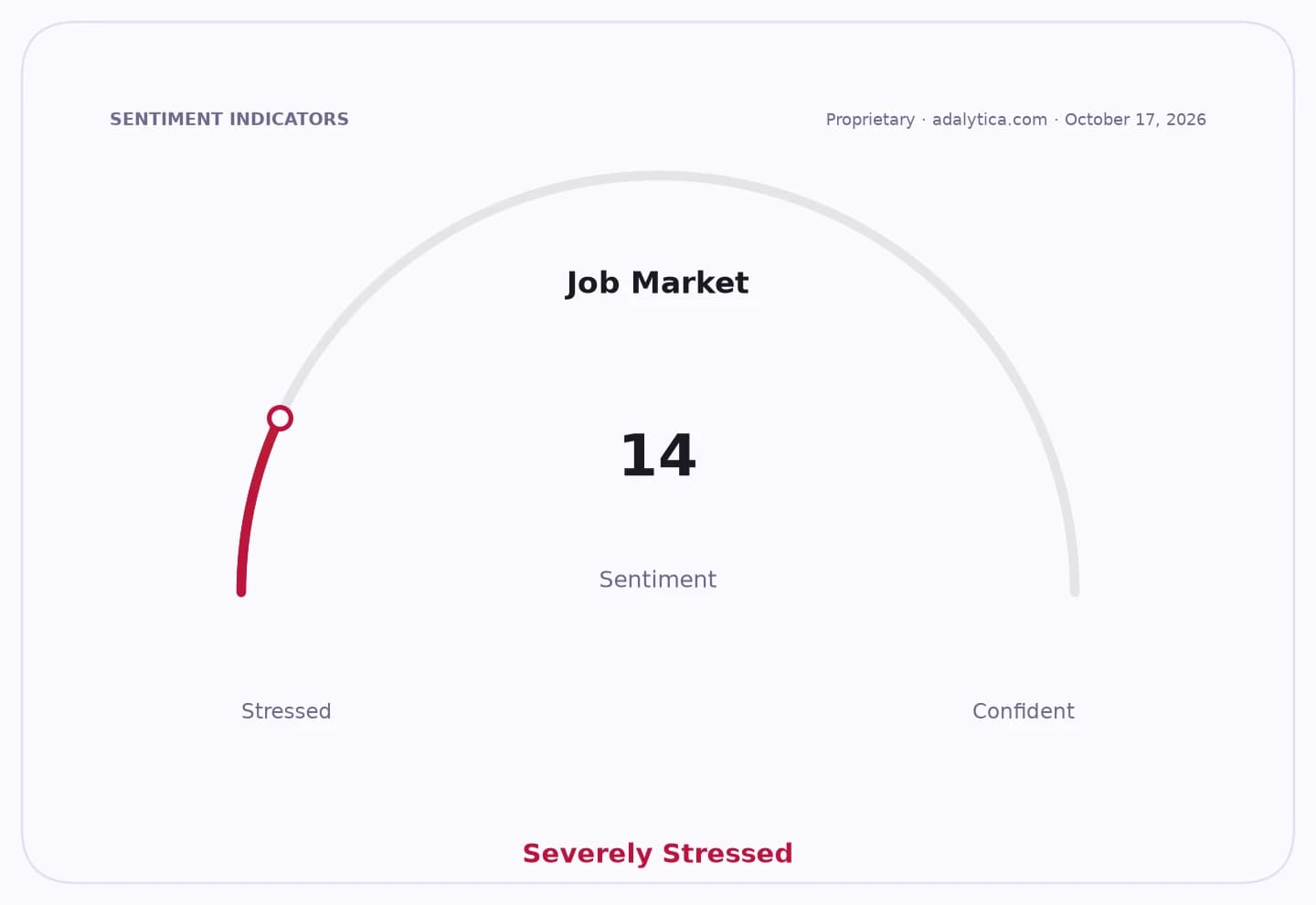
Sentiment IndicatorsⓘProprietary · adalytica.com · October 17, 2026
This is a snapshot — live sentiment, awareness and momentum for 130+ markets update continuously in the dashboard.Open AlphaPulse
Most of the cuts are hitting product development, technology, legal and people operations. Those are support functions, but they are also the plumbing that helps Netflix move fast in a crowded market. When a company trims those areas, it is usually a sign that management wants more output from each dollar spent. That is a rational move for a business that is no longer in the early land-grab phase of streaming and now has to justify every incremental investment.
The backdrop is tougher than it was when Netflix was still the undisputed growth stock of the sector. It is competing not only with Disney and other entertainment platforms, but also with YouTube and TikTok, which soak up hours of user attention with free content. That shift matters economically because investors are no longer judging Netflix only by subscriber additions; time spent on the platform, ad growth and engagement are becoming just as important. In other words, the streaming wars have moved from acquiring users to monetizing attention.
Netflix is also broadening its ambitions beyond the core subscription model. It has been pushing into advertising, live events and video games, all of which could become meaningful new revenue streams over time if the company can scale them without bloating costs again. That is the long-term story investors should focus on: a company trying to turn a mature streaming base into a more diversified media platform.
The market has already been telling a cautionary story. Netflix shares have been under pressure in recent months, and the stock’s technical picture has weakened, with the shares trading below both the 50-day and 200-day moving averages in the data provided. Its relative strength index readings have also been soft, a sign the market has been skeptical about near-term momentum. At the same time, Disney has held up better on the charts, underscoring how competitive positioning still matters in media.
There is also a strategic angle. Netflix’s failed push for Warner Bros. Discovery assets left questions about how aggressively it wants to buy growth versus building it organically. Management’s answer, at least for now, is to lean on efficiency. That is not as exciting as a blockbuster acquisition, but for long-term investors it may be the more sustainable path.
The key takeaway is that Netflix is behaving like a company entering a more mature phase: still growing, still innovating, but increasingly focused on returns on capital rather than headcount or sheer scale. If management can keep that balance, the layoffs may prove to be a sign of discipline rather than weakness. For investors with a multiyear horizon, Netflix remains worth watching — but the real test will be whether new revenue streams can compound without reigniting costs.
| Entity | Gains | Losses |
|---|---|---|
| Netflix shareholders | ▲Leaner cost base | ▼Near-term morale hit |
| Netflix management | ▲More operating flexibility | ▼Execution pressure |
| Netflix competitors | ▲Talent spillover, distraction | ▼Tougher rivalry for attention |
| Laid-off workers | ▲Severance, possible new roles | ▼Job loss |