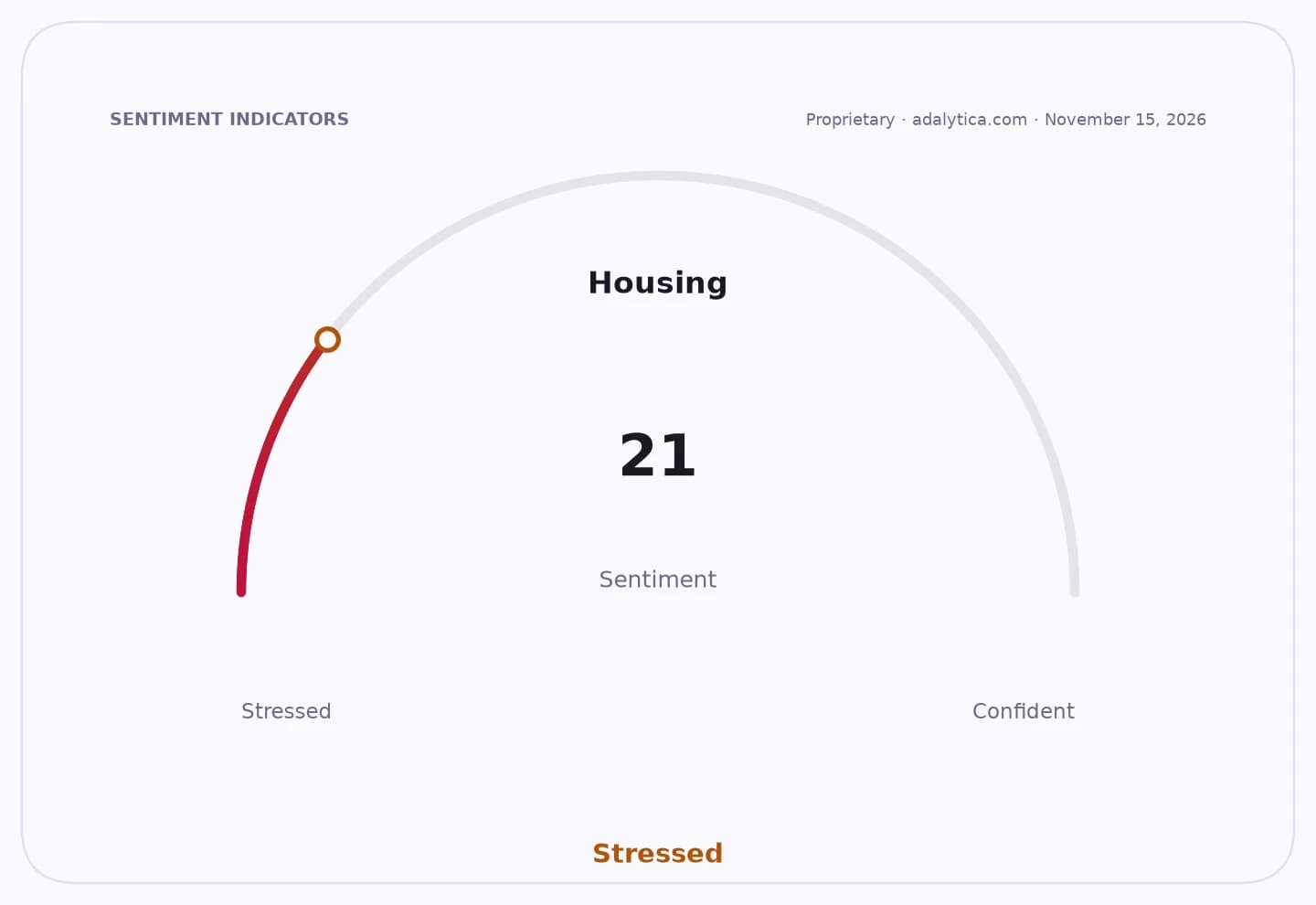
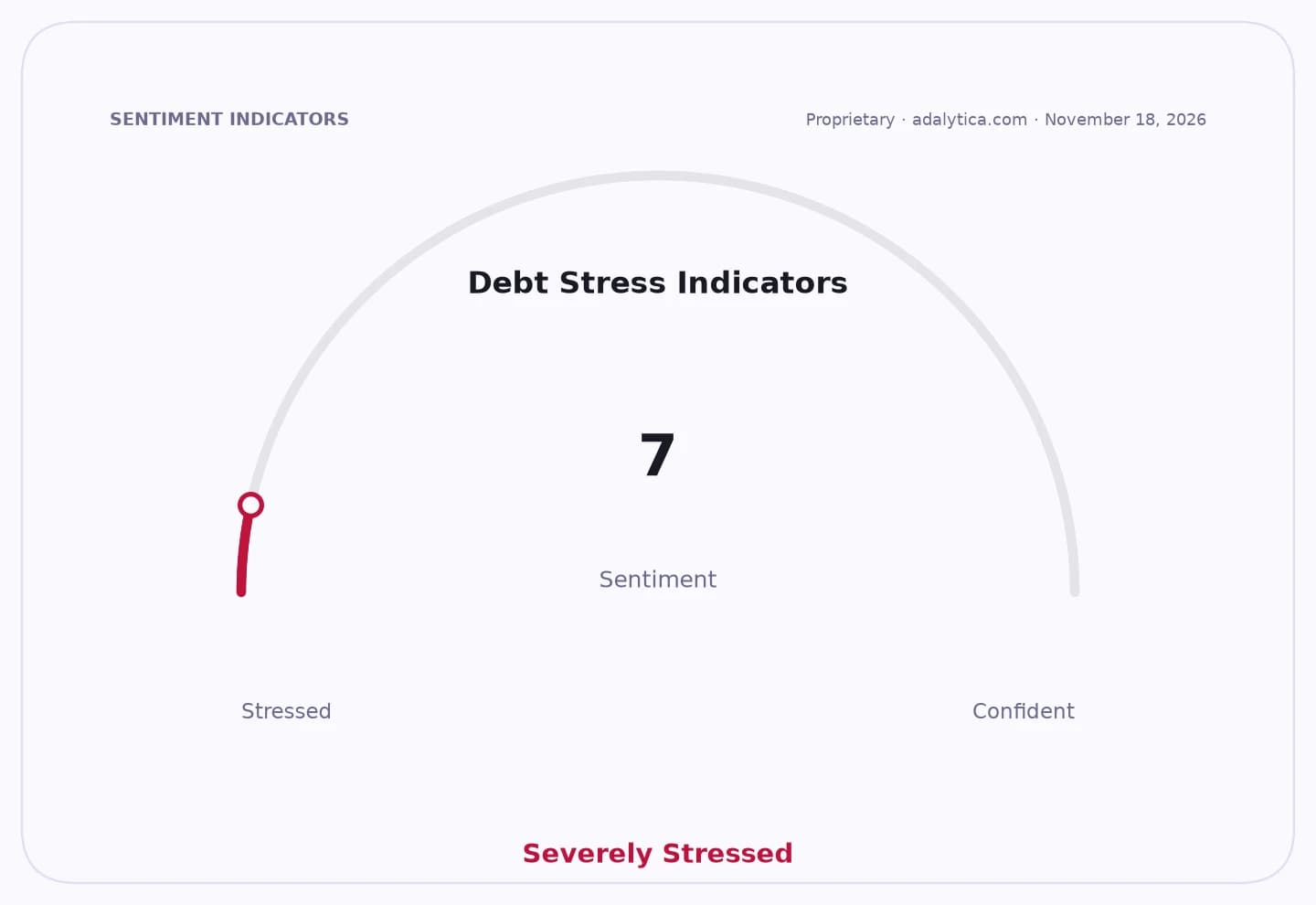
Persistent inflation is doing more than squeezing household budgets in New Hampshire — it is pushing younger adults into debt traps that can linger long after prices cool.
New Hampshire youth debt delinquency rises
New data from the Urban Institute show 10% of Granite State residents ages 18 to 24 have at least $1,800 in debt delinquency, while 17% of all adults have at least $3,200 in debt collection. That matters because delinquency is not just a temporary cash-flow problem. It can block access to car loans, apartment rentals and mortgages, slowing the financial start that many young workers need to build wealth.
Sentiment Indicators
The story here is not just that prices are high; it is that the damage compounds. Young adults entering the labor market with entry-level wages are being forced to rely on credit cards, student loans and even “buy now, pay later” plans to cover everyday expenses. Once those balances go overdue, interest costs make it even harder to catch up. For investors, that is an important read on the health of the U.S. consumer: the economy can look stable on the surface while a younger, more fragile cohort is quietly losing financial flexibility.
The backdrop is a mix of lingering inflation and tighter borrowing conditions. The consumer price index has risen sharply in recent years, and even with the labor market still relatively solid — unemployment is running around 4.1% — wage growth has not fully restored purchasing power for many households. Federal student loan payments and collections, paused for more than three years during the pandemic, resumed in late 2023, adding another bill just as rent, food and borrowing costs remained elevated.
That combination is especially punishing for younger adults, who are less likely to qualify for food or housing assistance but also less likely to have savings buffers. The result is a cycle investors should know well: more revolving credit use, more missed payments and a higher risk that consumer lenders eventually face slower growth or rising charge-offs. In that sense, the pain in New Hampshire is a local snapshot of a broader national problem.
For banks and finance companies, the implication is straightforward. If inflation remains sticky and young consumers stay stretched, delinquency pressure could show up in credit-card losses, used-car lending, buy-now-pay-later portfolios and other consumer credit products. Capital One and Ally Financial are among lenders most exposed to the health of everyday borrowers, and neither can rely on a quick rebound in household balance sheets. Even if the broader economy improves, years of accumulated debt can keep families under pressure.
For long-term investors, the lesson is less about trading a headline and more about understanding where the stress is building. Consumers with savings, steady income and low debt can keep spending. Consumers who entered adulthood with high prices and high borrowing costs may not recover so quickly. That makes this an important story to watch for signs of credit deterioration — and a reminder to favor financially resilient businesses over those depending on the weakest borrowers to stay current. Worth watching for anyone focused on consumer credit and the long game.
| Entity | Gains | Losses |
|---|---|---|
| Young adults with savings | ▲More financial resilience | ▼Little direct benefit |
| Young adults with delinquent debt | ▲None | ▼Credit damage, higher costs |
| Consumer lenders | ▲Tighter underwriting discipline | ▼Rising losses, slower growth |
| Landlords and auto lenders | ▲Better screening of applicants | ▼More rejected or risky borrowers |