New York City is banning student use of artificial intelligence through eighth grade for one year, a move that puts the nation’s largest school system squarely in the middle of the fight over how fast AI should enter classrooms.
New York City Schools Ban AI for Students Through Grade 8
The policy matters because it affects nearly 600,000 public school students and could shape school rules far beyond the city. With only high school students allowed to use AI in limited pilot programs, New York is taking a more cautious stance than the initial framework it published in March, which had permitted AI for research, exploration and creative work and drew backlash from parents and teachers.
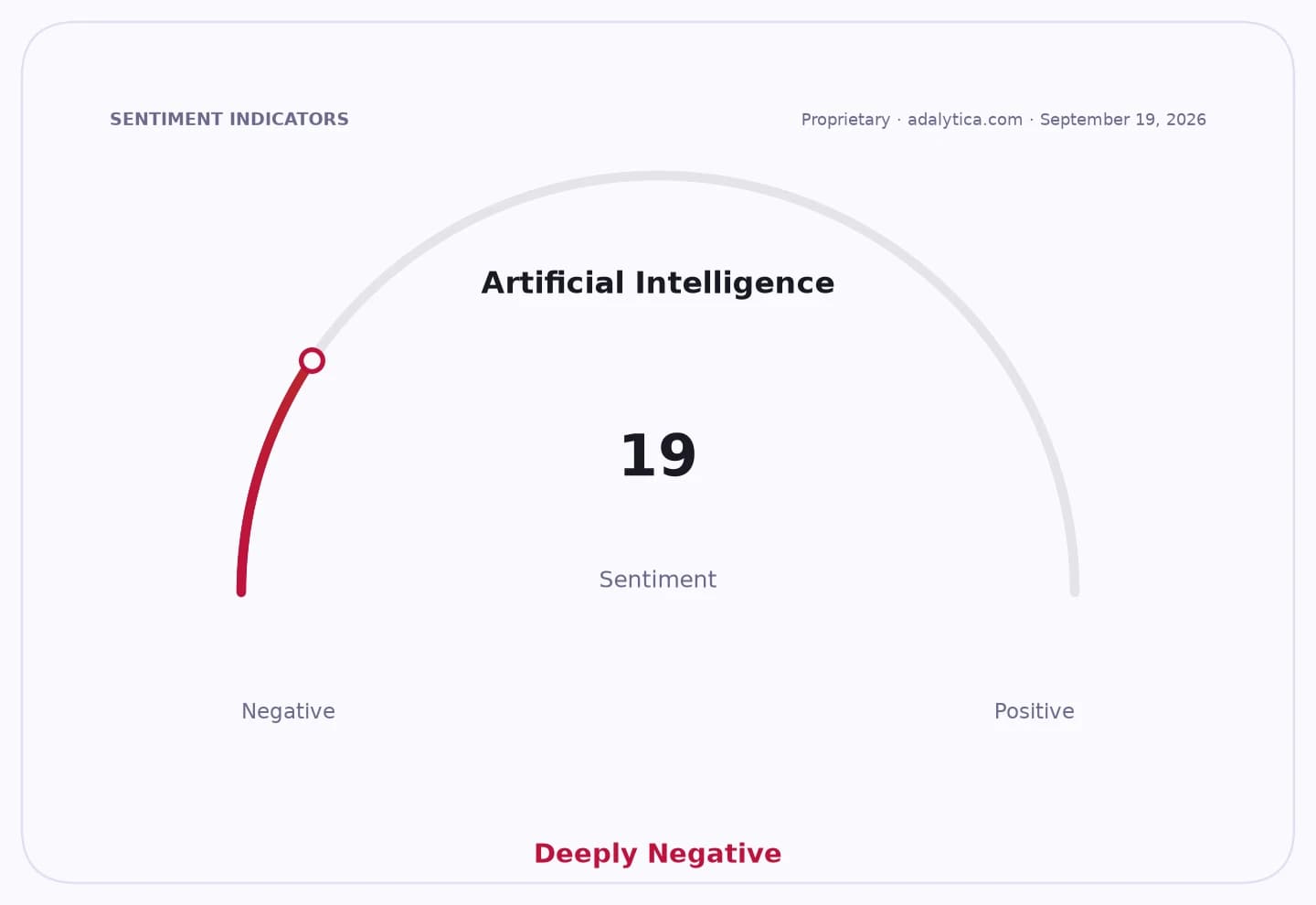
Sentiment IndicatorsⓘProprietary · adalytica.com · September 3, 2026
This is a snapshot — live sentiment, awareness and momentum for 130+ markets update continuously in the dashboard.Open AlphaPulse
For investors, the immediate market impact is limited, but the symbolism is significant. The decision highlights growing political and social resistance to consumer AI use in sensitive settings, even as Microsoft, Alphabet and Meta continue pouring money into the technology and arguing for broader adoption. The stock reaction in those names was not clearly tied to the policy, though Microsoft and Meta have recently been trading with elevated volatility and both have conventional technical indicators that show mixed momentum, including Microsoft’s 50-day moving average below its recent price and Meta’s shares hovering near that level.
Teachers will still be allowed to use AI for lesson planning and administrative tasks, but the ban on so-called companion chatbots across all grades underscores where regulators now see the greatest risk: emotional dependency, data exposure and possible harm to children’s mental health. That makes New York an early test case for whether AI can be folded into education without triggering stricter guardrails.
The move also places pressure on AI vendors and education-tech firms that have been pitching school districts on classroom tools. If the country’s biggest district tightens access, other states and districts may follow, slowing procurement decisions and forcing companies to prove safety, not just productivity.
A task force will review the moratorium during the 2026-2027 school year before publishing findings, leaving open the possibility that the rules evolve. The broader message for investors is that AI adoption is still expanding, but in education — one of the most politically sensitive end markets — the rollout is likely to be slower, more regulated and more uneven than the industry has hoped.
| Entity | Gains | Losses |
|---|---|---|
| New York City schools | ▲tighter safeguards | ▼faster AI rollout |
| Teachers | ▲AI for admin tasks | ▼classroom experimentation |
| AI vendors | ▲policy clarity | ▼near-term school adoption |
| Parents and critics | ▲stricter child protections | ▼fewer AI tools in schools |