A review of the Reserve Bank’s pandemic-era policy is giving New Zealand’s election campaign a fresh argument over whether the central bank should be judged only on inflation or also on jobs, with Finance Minister Nicola Willis using the findings to defend a return to a single mandate.
New Zealand Reserve Bank mandate debate after review
That matters because the report goes to the core of how aggressively the Reserve Bank should ease or tighten policy in a shock: a broader employment mandate can justify keeping stimulus in place for longer, but it can also delay the withdrawal of support when inflation is already turning higher. For investors, the debate is not academic. It shapes expectations for the Bank’s reaction function, the path of interest rates and, by extension, the kiwi dollar, local bond yields and rate-sensitive sectors.
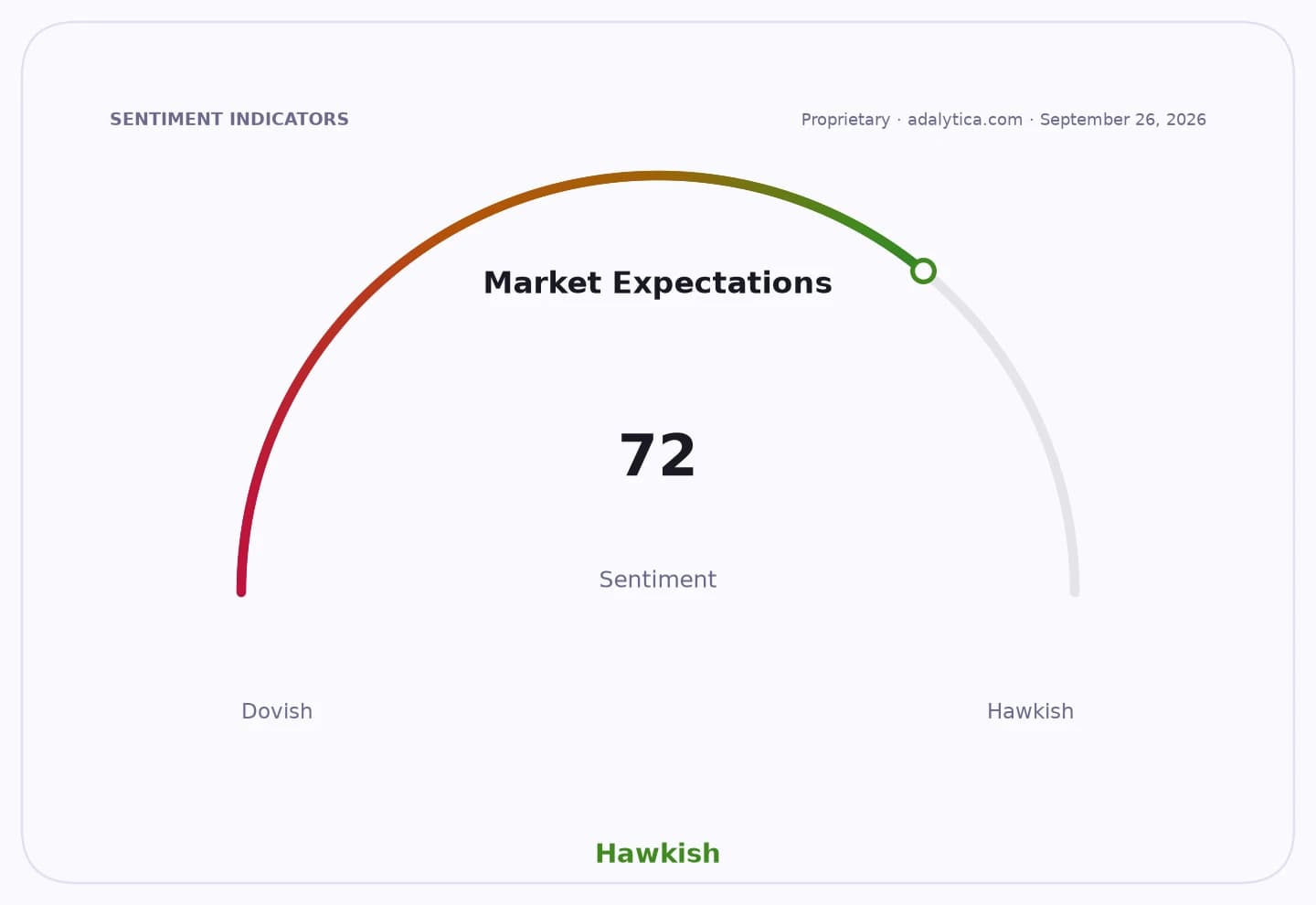
Sentiment IndicatorsⓘProprietary · adalytica.com · September 26, 2026
This is a snapshot — live sentiment, awareness and momentum for 130+ markets update continuously in the dashboard.Open AlphaPulse

The independent review by Massachusetts Institute of Technology professor Athanasios Orphanides and former Reserve Bank assistant governor David Archer said the Bank’s first response to Covid-19 was appropriate, but that monetary stimulus stayed in place too long after the economy recovered more strongly than expected. The report said the Bank’s policy became “increasingly flexible” under the dual mandate framework introduced in 2018, adding that the flexibility “facilitated the large policy mistakes” of the period.
Willis said the findings validated the coalition government’s decision, made in its first bill after taking office in 2023, to restore a single inflation-focused mandate. She argued that the previous government had removed “important guardrails” and that a narrower target would help avoid similar errors in future. Opposition Labour leader Chris Hipkins pushed back, saying the report’s headline findings were not new and defending the dual mandate as consistent with practice in other countries.
The row is politically charged because it sits at the intersection of central bank independence and accountability. The report also highlights a broader issue investors watch closely in every advanced economy: whether fiscal policy and monetary policy are working in tandem or at cross purposes. Green Party co-leader Chlöe Swarbrick said the review pointed to weak coordination between the two, even as she criticised the government for using the document to narrow the Reserve Bank’s scope.
Market implications are indirect but still important. A single mandate generally implies a faster response to inflation and less tolerance for overshooting growth or employment objectives, which can support higher real yields and a firmer currency in tightening cycles. A dual mandate can produce the opposite, especially when policymakers are under pressure to protect jobs during a downturn. For New Zealand, where the central bank’s credibility was tested by the post-pandemic inflation surge, the debate will shape how much room investors think the Bank has to tolerate future inflation shocks before acting.
That makes the report less a postmortem than a live policy signal. With the election nearing and both major parties staking out positions on the Bank’s remit, traders and borrowers alike will be watching whether the next government keeps the single mandate in place or reopens the fight over how far the Reserve Bank should go beyond inflation.
| Entity | Gains | Losses |
|---|---|---|
| Finance Minister Nicola Willis | ▲Single-mandate case | ▼Dual-mandate critics |
| Reserve Bank | ▲Clearer guardrails | ▼Policy flexibility |
| Borrowers with fixed-rate debt | ▲Lower long-term policy drift | ▼Faster inflation response |
| Labour / Greens | ▲Jobs-focused policy argument | ▼Central bank narrowing |