Wages in New Zealand have fallen 6.4% in real terms since 2021, the steepest drop in the OECD, and that squeeze is starting to shape everything from household spending to bank profits and the country’s investment case.
New Zealand Wage Squeeze Reshapes Market Winners
For investors, the key point is not just that pay packets have been eroded by inflation. It’s that a weaker labor market and slower wage growth can change the path of the entire economy. When workers lose purchasing power, consumers spend less, retailers feel it first, and companies tied to discretionary demand get more cautious. That can slow growth, but it can also help keep inflation under control and give the Reserve Bank more room to ease policy if the economy weakens further.
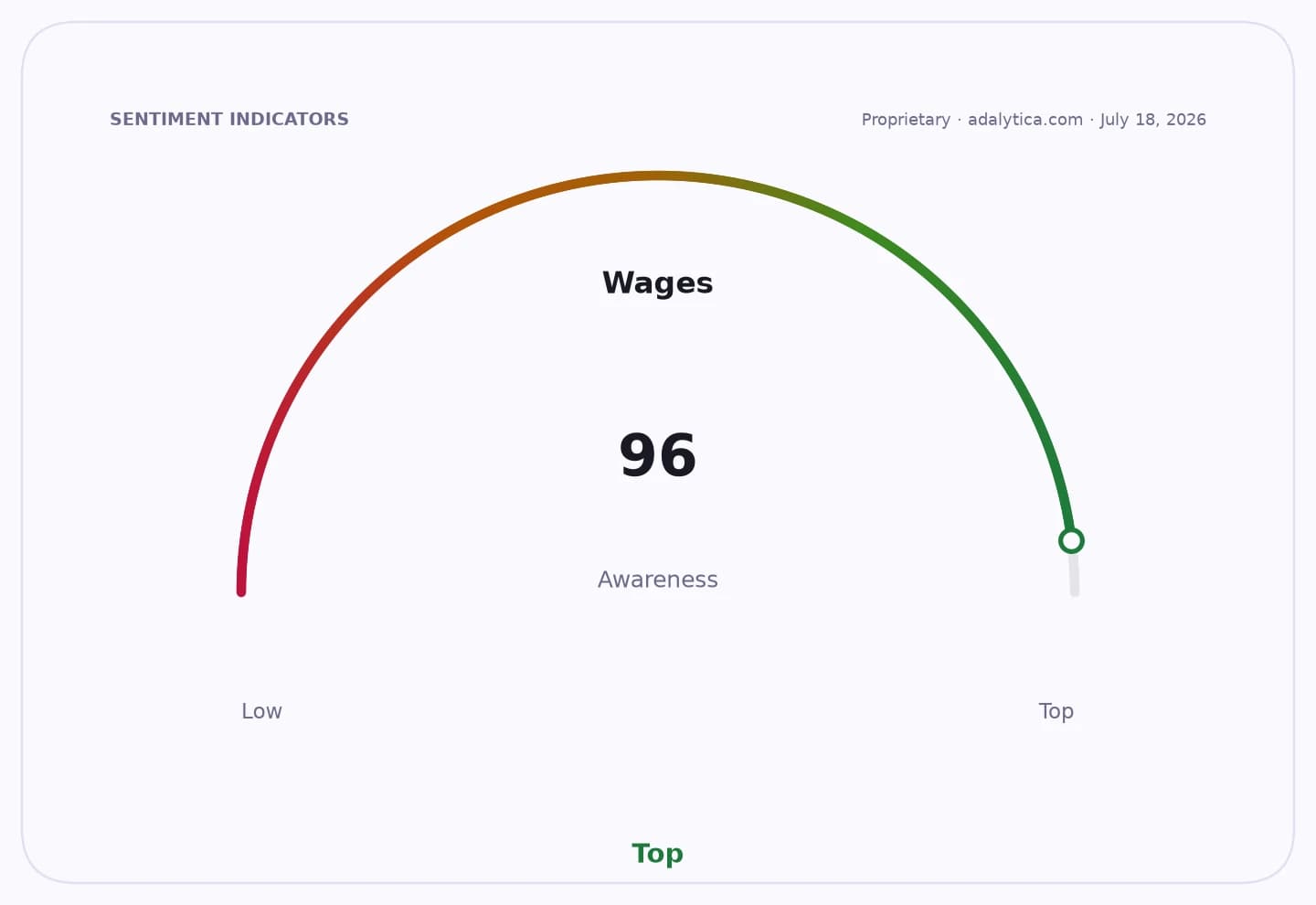
Sentiment IndicatorsⓘProprietary · adalytica.com · July 18, 2026
This is a snapshot — live sentiment, awareness and momentum for 130+ markets update continuously in the dashboard.Open AlphaPulse
The macro backdrop tells the story. New Zealand’s unemployment rate is still relatively contained at about 4.2%, with forecasts pointing to 4.18% next month, but that has not translated into healthy pay growth. Inflation, meanwhile, has surged from 2021 levels, leaving real wages badly damaged even as the headline economy has avoided a collapse. That combination is brutal for households: prices stay elevated while incomes fail to keep up.
The winners and losers are becoming clearer. The banks, for one, have been making tens of billions of dollars, helped by a system that has remained profitable even as consumers got squeezed. Air New Zealand has posted a profit surge and is cutting 180 jobs, a reminder that companies under pressure are still forcing costs down. At the same time, the fortunes of the super-rich have hit record levels, underscoring how uneven the recovery has been. That gap matters politically as well as economically, because persistent inequality can drive pressure for higher taxes, tighter regulation or a stronger social response.
Wages — 30-day sentimentadalytica.com
Explore this data interactively — full history, time series and cross-market comparisons.Open AlphaPulse
From an investing standpoint, wage compression is a double-edged sword. It supports margins for some businesses, but it also caps the ability of consumers to keep driving growth higher. That makes New Zealand more of a selective market than a broad beta trade. Investors should focus on firms with pricing power, export exposure, or structural demand tailwinds, rather than companies that depend heavily on domestic spending.
The long-term question is whether this is a temporary post-inflation hangover or a deeper sign that New Zealand’s economy is stuck with weaker household income growth. If wages recover, consumer demand can stabilize quickly. If they do not, the country could face a slow-growth environment that rewards disciplined companies and punishes overleveraged ones. Either way, this is the kind of setup long-term investors should keep on the watchlist.
| Entity | Gains | Losses |
|---|---|---|
| Banks | ▲Wider margins, steady profits | ▼Public backlash |
| Households | ▲Lower inflation over time | ▼Real income squeeze |
| Exporters | ▲Weak local-cost pressures | ▼Softer domestic demand |
| Domestic retailers | ▲Lower input costs | ▼Weaker consumer spending |