Osun State Governor Ademola Adeleke is pressing the Federal Government and state administrations to pivot toward local production and job creation, arguing that Nigeria’s economic recovery will not matter unless it lowers living costs and lifts household purchasing power.
Nigeria pushes local production and job creation
Adeleke said governments should back businesses, direct borrowing into development projects and manage public resources more responsibly, as inflation and weak demand continue to squeeze consumers. His remarks underscore a broader policy debate in Nigeria over whether recent reforms are stabilizing key macro indicators faster than they are improving everyday welfare.
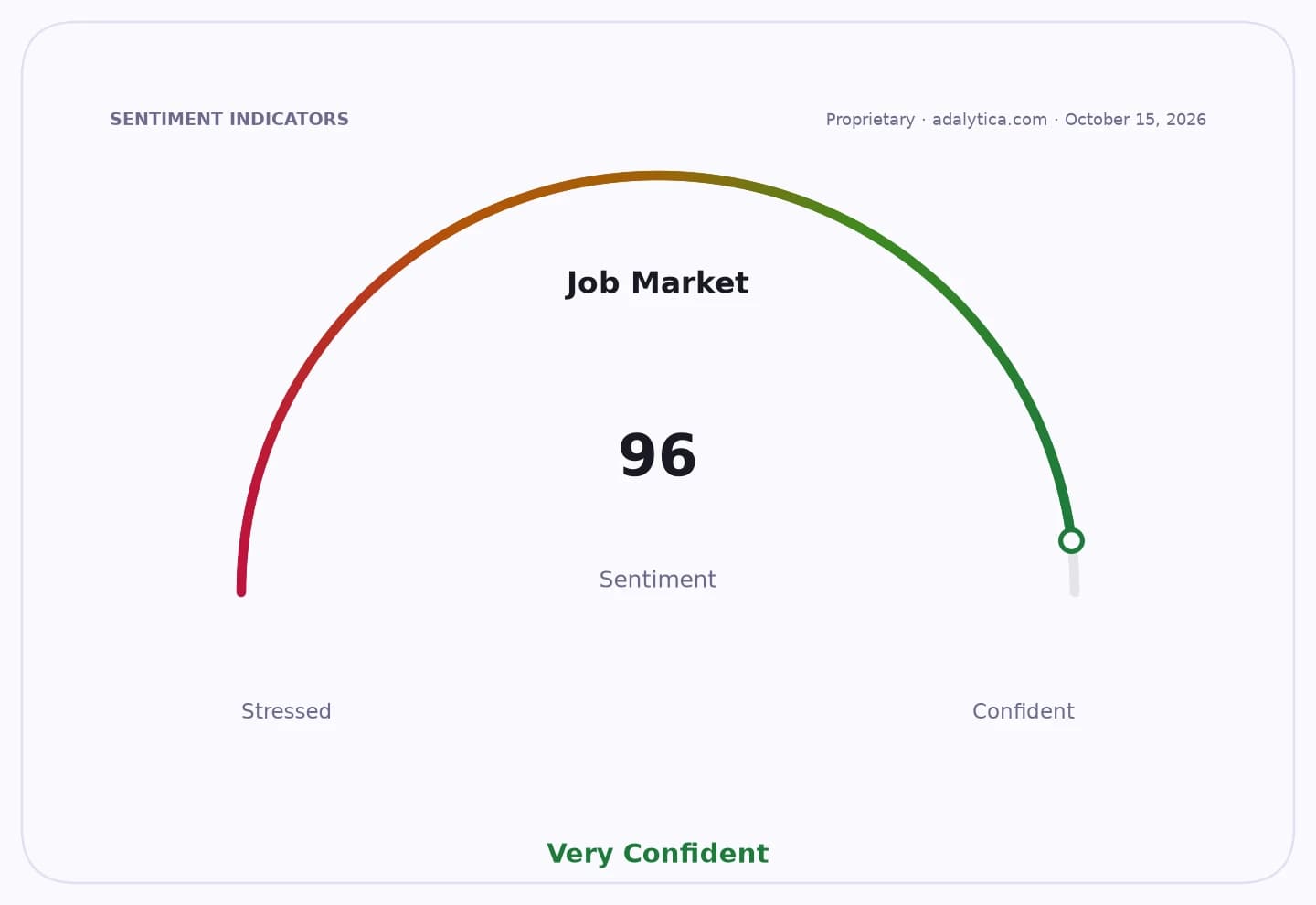
Sentiment IndicatorsⓘProprietary · adalytica.com · October 15, 2026
This is a snapshot — live sentiment, awareness and momentum for 130+ markets update continuously in the dashboard.Open AlphaPulse
The governor said insecurity is now an economic variable as much as a security problem, noting that attacks on farms, roads and markets can disrupt production, discourage investment and slow recovery. For investors and lenders, that is a direct warning that supply chains, rural output and consumer demand remain vulnerable even when headline reforms point in the right direction.
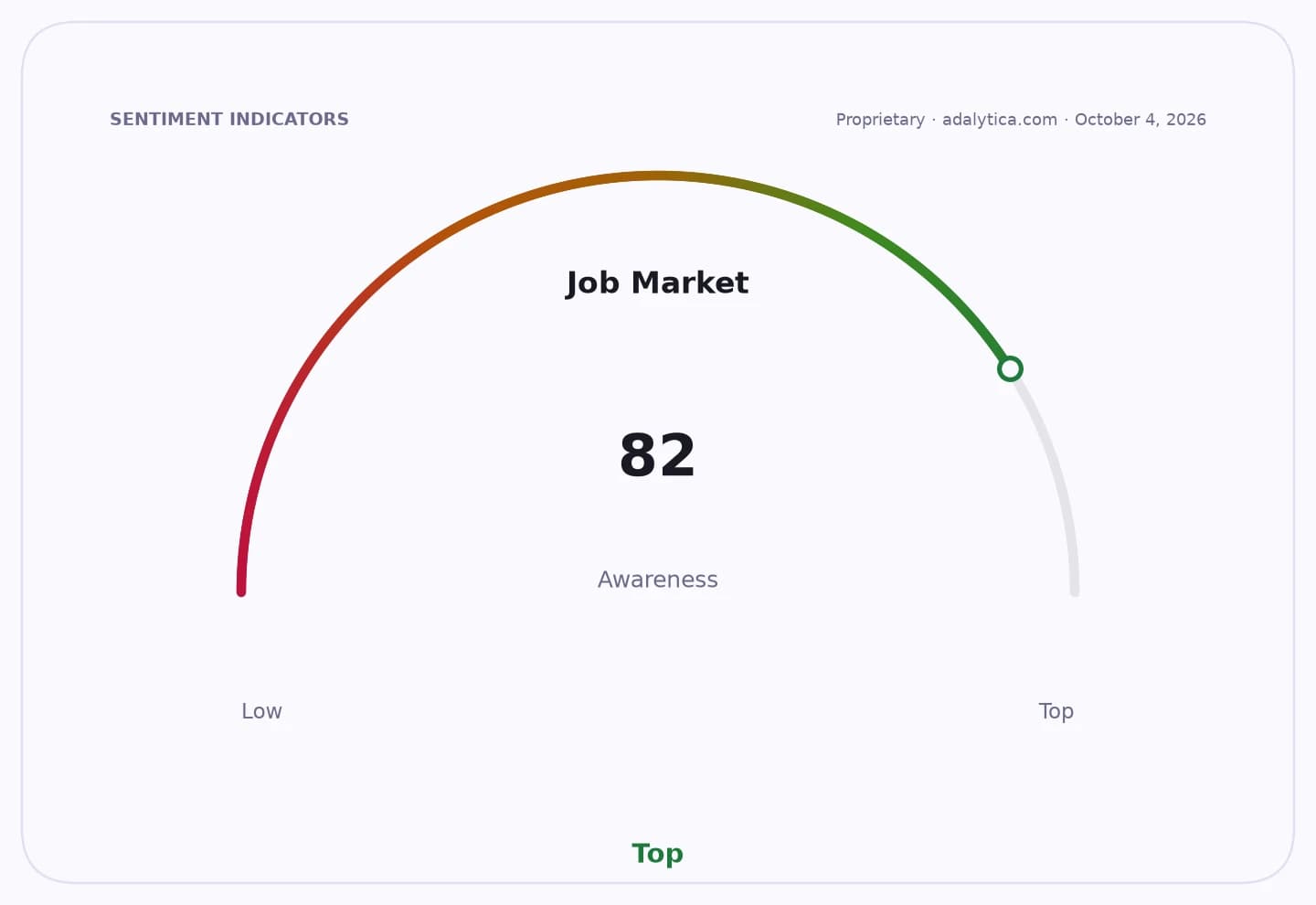
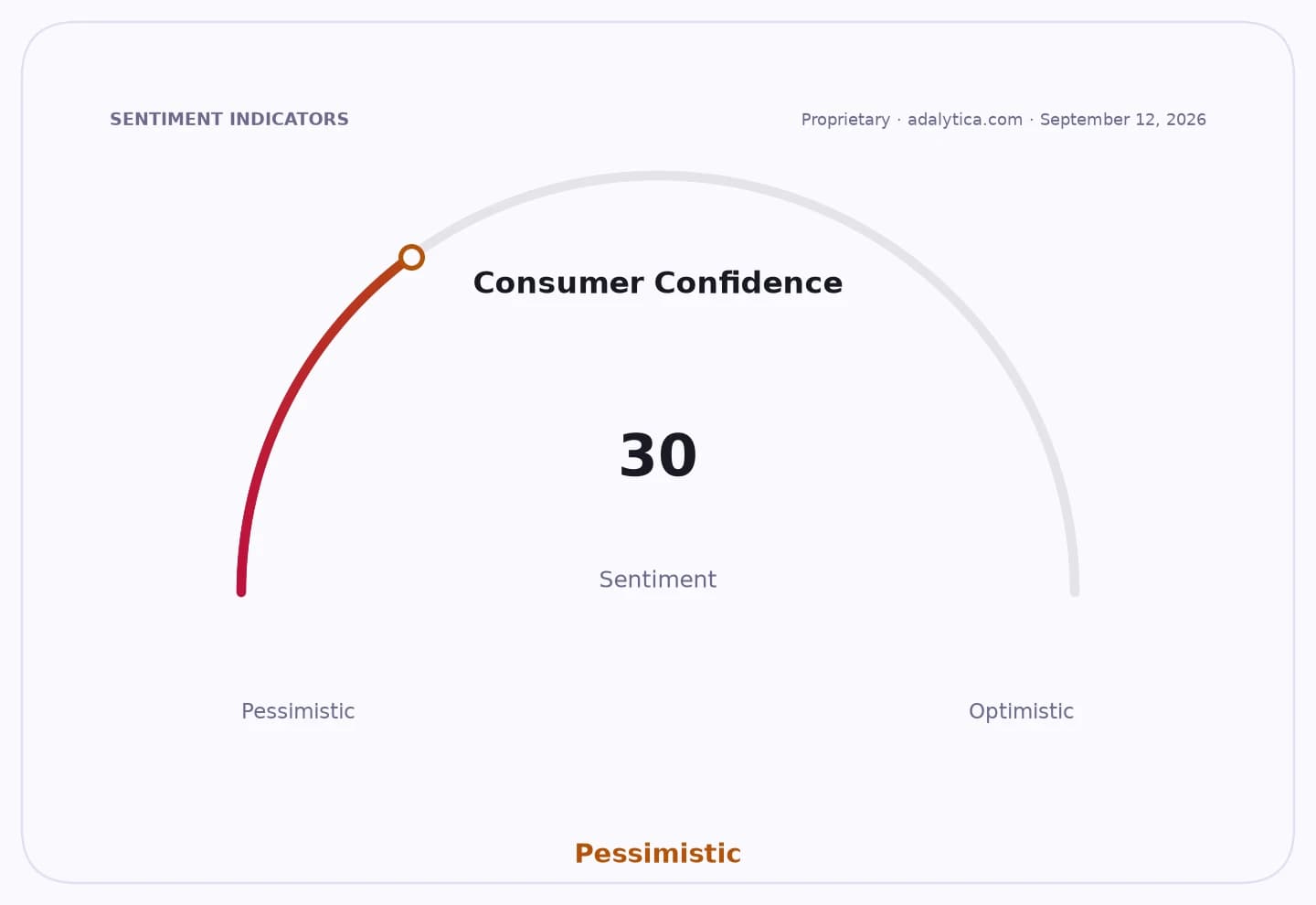
His comments come as Adalytica’s consumer confidence recession sentiment gauge shows fear at 29, while job market sentiment reads 96, or “Extreme Greed,” suggesting a wide gap between labor optimism and household confidence. That split matters for policymakers because strong employment expectations do not automatically translate into stronger consumption if inflation and insecurity keep eroding real incomes.
At a public lecture in Ilesa, the governor’s message was echoed by Institute of Chartered Accountants of Nigeria President Queensley Seghosime, who said reforms should be judged by their effect on households and businesses, not by macroeconomic gains alone. She called for higher agricultural output, more reliable power, better transport and storage, and stronger domestic production to tackle inflation at its source.
For investors, the narrative is clear: Nigeria’s reform story now depends less on stabilization alone and more on whether policy can translate into real-sector growth, job creation and lower cost pressures. The next test will be whether governments pair fiscal restraint and revenue reforms with spending and infrastructure that can raise production before household strain turns into weaker demand.
| Entity | Gains | Losses |
|---|---|---|
| Households | ▲Lower prices, higher incomes | ▼Erosion of purchasing power |
| Local producers | ▲More demand, better policy support | ▼Import competition, weak infrastructure |
| Governments | ▲Political credit for jobs and growth | ▼Pressure over inflation and insecurity |
| Investors in real economy | ▲Better growth prospects | ▼Policy delay, supply-chain disruption |