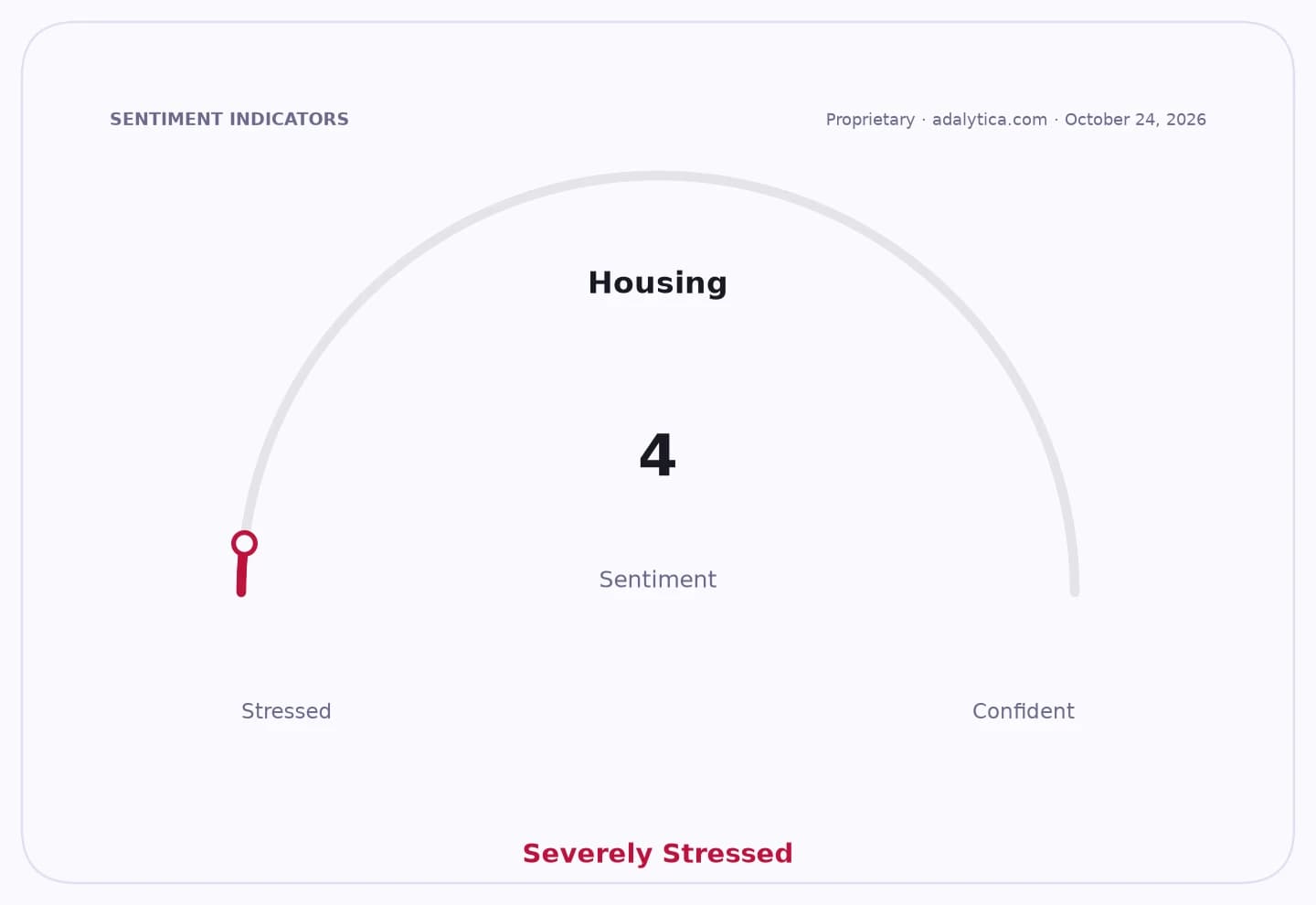
Nigeria’s lawmakers are moving to close one of the biggest structural gaps in the country’s housing market: weak oversight that has left homebuyers exposed to fraud and kept capital on the sidelines.
Nigeria real estate bill targets fraud and trust gap
Housing
The House of Representatives is backing a new National Real Estate Regulatory Authority, arguing that a clearer national framework would protect consumers, standardize developer conduct and make the sector more investable. That matters because real estate is already one of Nigeria’s largest economic contributors, yet it continues to operate with patchy enforcement, overlapping institutions and low trust — all of which raise transaction risk and discourage long-term financing.
Sentiment Indicators
At the center of the case is fraud. Legislators say buyers can still hand over money to developers or brokers with little institutional way to verify credentials, project capacity or land titles. House housing committee chairman Abdulmumini Jibrin said the sector has long suffered from “institutional gaps” and duplication of functions, while Speaker Tajudeen Abbas said Nigeria’s problem is not a lack of property but a lack of trust in property.
That trust deficit has direct economic costs. Nigeria has a housing shortfall the ministry put at more than 50 million units, but mortgage penetration remains below 10%, far behind levels cited for Malaysia and South Korea. In practice, that means households rely more on cash purchases, private arrangements and informal structures, limiting the flow of bankable demand that could support large-scale development. A more credible regulatory regime could improve underwriting, reduce disputes and expand the pool of buyers willing to commit capital up front.
The debate is also about whether regulation can be tightened without choking supply. Ministry of Finance Incorporated chief executive Armstrong Takang warned against overregulation that would raise recurrent costs or deter private investment. That tension will be central to the bill’s passage: investors want stronger title verification, dispute resolution and consumer protection, but they also want fewer bureaucratic obstacles and less policy uncertainty.
For investors, a successful reform would be most relevant through three channels. It could lower fraud risk in property transactions, improve the visibility of projects and counterparties, and make it easier for mortgage lenders and developers to scale. It would also support demand for formal housing finance, which is still underdeveloped in Africa’s most populous country. The upside case is that a regulator with digital records, identity links and clear standards could widen access to credit and attract institutional capital. The downside is that a new agency could become another layer of bureaucracy if it is not properly integrated with existing ministries, states and professional bodies.
The timing matters because housing demand remains large while confidence is fragile. If lawmakers can pair regulation with land administration reform, mortgage policy and better transaction data, Nigeria’s real estate market could begin to move from speculative, opaque activity toward a more financeable asset class. If they cannot, the sector is likely to remain one of the economy’s biggest opportunities and one of its most mistrusted markets.
| Entity | Gains | Losses |
|---|---|---|
| Homebuyers | ▲Better protection | ▼Less room for fraud |
| Legitimate developers | ▲Higher trust | ▼More compliance burden |
| Mortgage lenders | ▲Better underwriting | ▼More regulatory scrutiny |
| Fraudsters/speculators | ▲Less opportunity | ▼Tighter enforcement |