Rising housing costs are turning Africa’s property market into a demand problem for developers, with a new report warning that luxury-focused supply, weak mortgage access and incomes that lag construction costs are leaving many homes unsold and investment returns under pressure.
Africa housing report flags luxury supply mismatch
The Housing Development Advocacy Network said the issue is not a shortage of demand, but a mismatch between what developers are building and what most households can afford. In many African cities, the report said, builders are concentrating on high-end apartments and gated estates while low- and middle-income earners struggle to finance even modest homes.
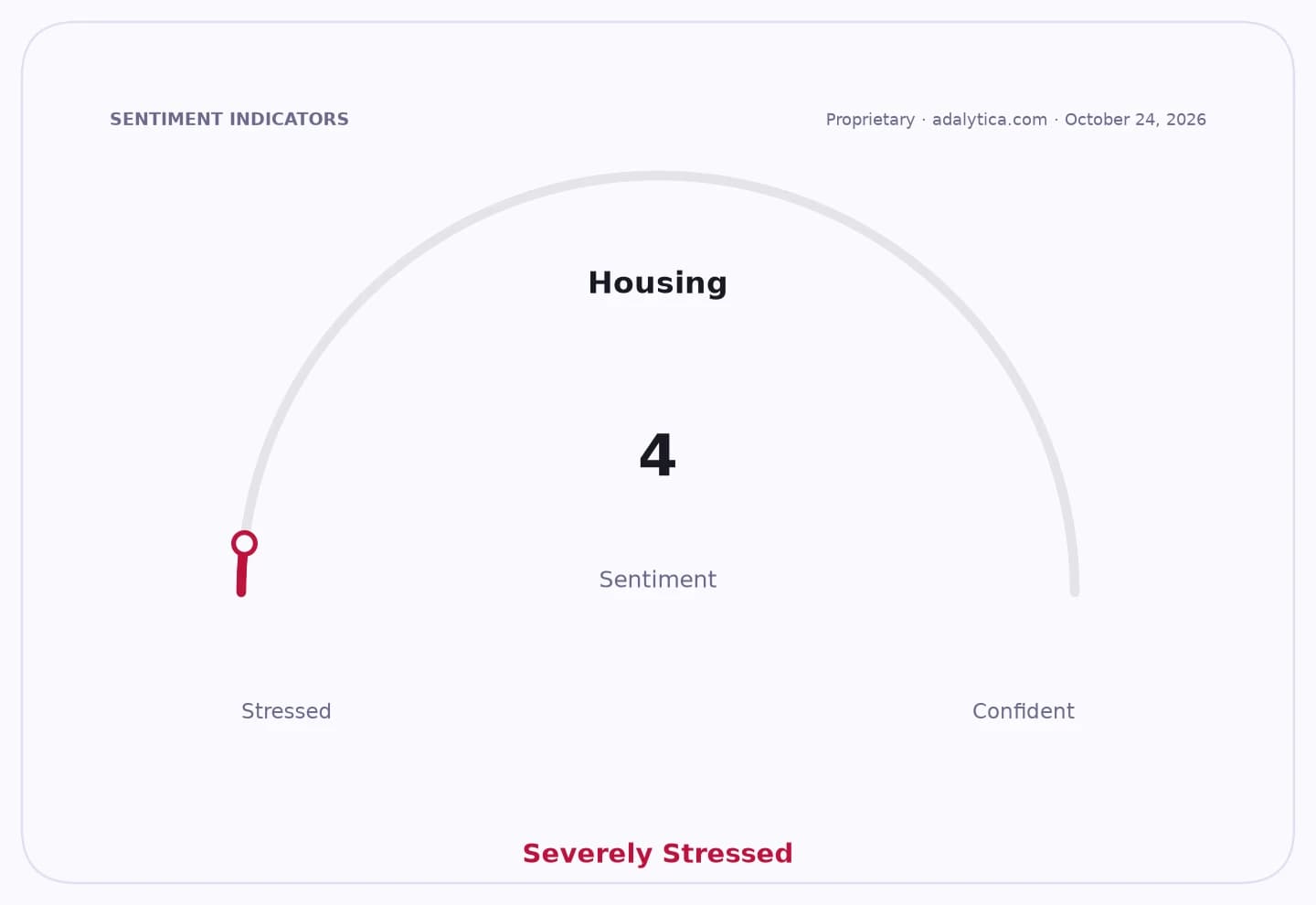
Sentiment IndicatorsⓘProprietary · adalytica.com · October 24, 2026
This is a snapshot — live sentiment, awareness and momentum for 130+ markets update continuously in the dashboard.Open AlphaPulse
That matters economically because housing is one of the clearest tests of whether real estate can generate durable cash flow. When construction costs, land prices and financing expenses rise faster than household incomes, developers are forced to lift selling prices to protect margins. But higher prices narrow the pool of buyers, particularly where mortgage markets are shallow or inaccessible. The result, according to the report, is a market that can look healthy on the supply side while remaining weak on actual sales.
For investors, that raises a familiar but regionally acute risk: capital tied up in the wrong product mix. Projects aimed at the top end may deliver stronger headline pricing, but they also face longer marketing periods, a larger inventory overhang and the possibility of unsold units sitting on balance sheets. That can delay returns and reduce the capital available for new developments, especially in markets where financing is expensive and exit liquidity is limited.
The report’s warning also points to a broader structural problem in African housing finance. Where mortgages remain out of reach for a large share of the population, real estate becomes less a broad-based consumption market than a narrow luxury segment. That dynamic may support a handful of premium developers, but it leaves the larger market underpenetrated and less investable over time.
The implication is that the sector’s growth will depend less on building more units than on building the right units. Smaller homes, lower-cost construction methods, better-located developments and partnerships that widen access to mortgages could improve absorption and returns. Without that shift, the report said, rising housing costs will keep excluding millions of households from formal homeownership while undermining real estate investment across the continent.
The backdrop is consistent with broader housing stress elsewhere, where affordability pressures are squeezing tenants and buyers even in markets with stronger financing systems. For Africa, the combination of rapid urbanization, expensive land and limited credit makes the adjustment more urgent: developers that fail to align supply with local incomes may find that demand is there in theory, but not in a form that can be monetized.
| Entity | Gains | Losses |
|---|---|---|
| Affordable housing developers | ▲Faster absorption | ▼Luxury-focused peers |
| Mortgage lenders | ▲Broader borrower base | ▼Cash-only buyers |
| Low- and middle-income households | ▲Cheaper entry points | ▼High-end property sellers |
| Developers of luxury estates | ▲Higher sticker prices | ▼Slower sales and unsold inventory |