Egypt’s property market may be entering a period of correction, but that does not mean it is facing a bubble burst, according to billionaire developer Samih Sawiris, who says the country still needs at least 500,000 new homes a year.
Egypt property market may correct, Sawiris says
That is the key investing takeaway for anyone watching Egypt’s real estate cycle. In a market where sentiment can swing quickly, the difference between a healthy reset and a genuine crash is whether demand is structural. Sawiris argues it is. Egypt’s population growth, he said, keeps the country short of housing even if builders pause, and a four-year halt in construction would leave a deficit of roughly 2 million units.
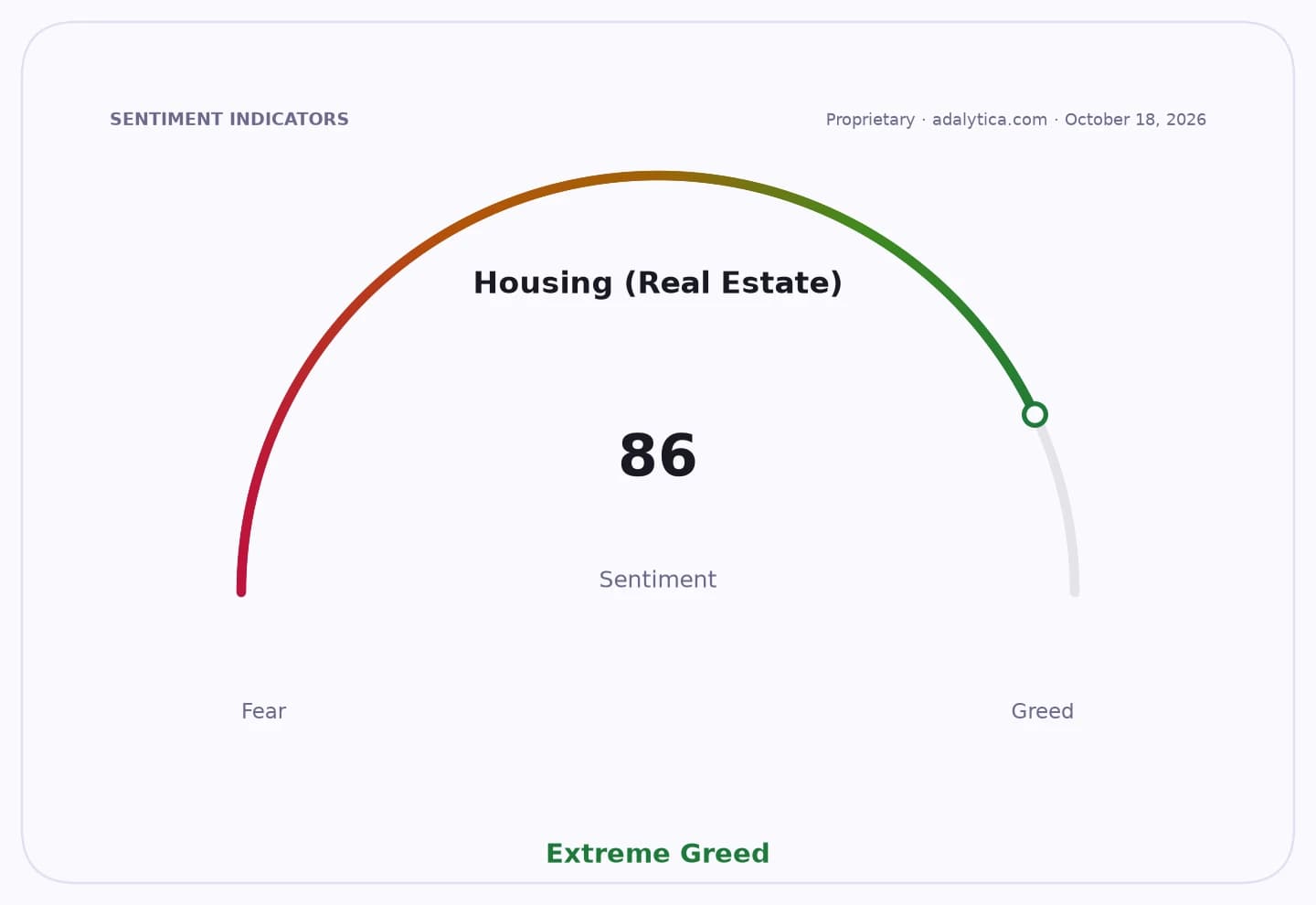
Sentiment IndicatorsⓘProprietary · adalytica.com · October 18, 2026
This is a snapshot — live sentiment, awareness and momentum for 130+ markets update continuously in the dashboard.Open AlphaPulse
That matters economically because housing is not just a property story in Egypt; it is a broader growth engine tied to employment, cement, steel, banking, land sales and urban expansion. A market correction, in Sawiris’ telling, would not be a collapse in underlying demand but rather the exit of weaker players — those relying on excessive borrowing or unable to deliver projects on time. In other words, the industry could become more disciplined without losing its long-term growth case.
For investors, that distinction is crucial. The winners in a shakeout are usually the companies with real balance-sheet strength, disciplined execution and a track record of delivering homes. The losers are speculative developers and highly leveraged sellers chasing short-term gains. That is consistent with the broader housing backdrop: demand for affordable and mid-income units remains resilient, while government programs continue to support supply with hundreds of thousands of units already completed or occupied.
There is also a market message here beyond Egypt. When housing demand is driven by demographics rather than easy credit, valuations may reset, but the sector can still compound over time. That makes the current “correction” less of a warning to abandon the sector and more of a filter for quality.
For long-term investors, the real question is not whether Egypt will have a property slowdown. It is which developers can survive it and use it to gain share. That is where the durable opportunity lies, and it is why the sector remains worth watching rather than fearing.
| Entity | Gains | Losses |
|---|---|---|
| Strong Egyptian developers | ▲Market share in a correction | ▼Speculative rivals |
| Homebuyers | ▲Better pricing discipline | ▼Frothy pricing |
| Banks with prudent lending | ▲Lower credit stress | ▼Overexposed lenders |
| Egypt’s housing market | ▲Cleaner long-term supply | ▼Weak, leveraged builders |