Norway’s offshore oil and gas sector is heading toward a major structural decline unless it can rediscover the kind of large fields that built the country’s energy wealth, with Rystad Energy warning that output could fall short by 1.9 million barrels of oil equivalent per day by 2040.
Norway Offshore Oil Faces 2040 Output Shortfall
That is the real investment story: Norway is still finding oil and gas, but it is finding too little of it. Smaller tiebacks close to existing infrastructure have helped sustain production in the near term, yet they are not large enough to offset the decline from mature fields. The result is a widening gap between what the Norwegian Continental Shelf can produce and what it must replace to keep volumes stable.
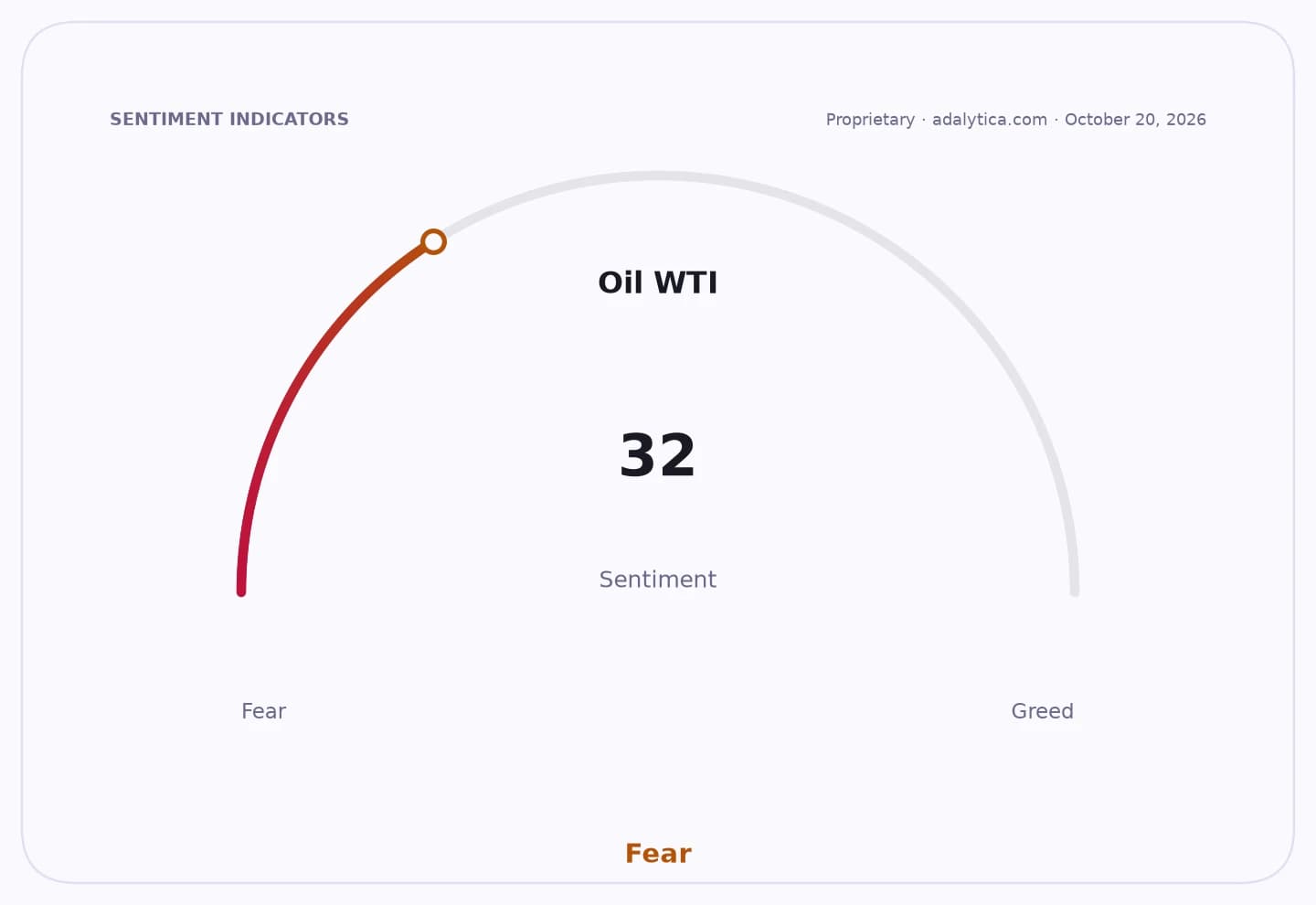
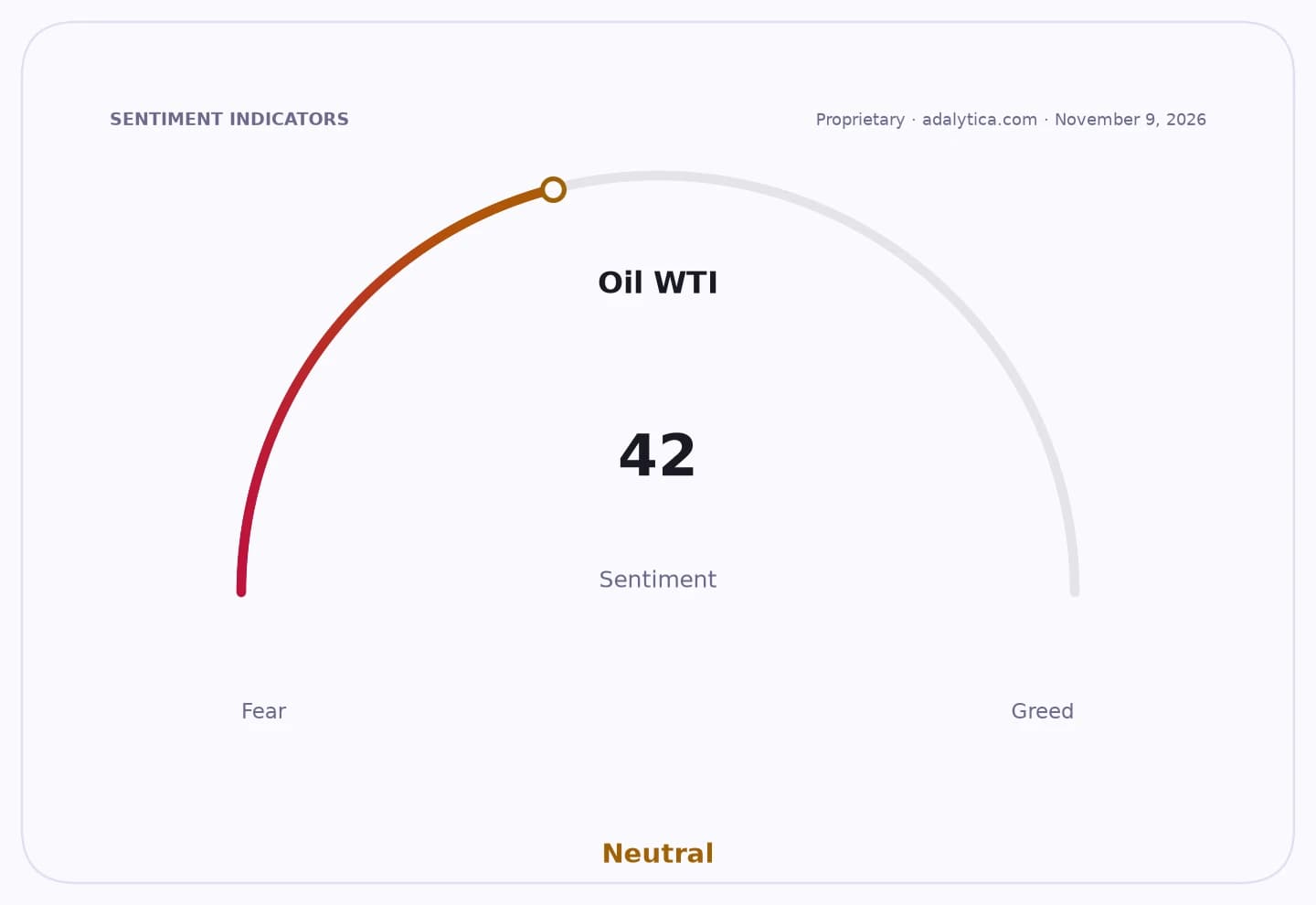
Sentiment Indicators
The scale of the challenge matters because Norway remains one of Europe’s most important non-Russian energy suppliers, and its upstream sector still anchors jobs, tax receipts and capital spending across the country. Rystad’s base case says the shortfall reaches 1.9 million boepd by 2040 even before assuming a collapse in exploration. If exploration over the next decade merely matches the previous one, the gap widens to 2.2 million boepd. Even more aggressive assumptions — doubling exploration volumes and halving development timelines — still leave a 1.4 million boepd deficit.
That tells investors the issue is not simply speed, but scale. Norway’s petroleum tax regime already cushions much of the exploration cost, and finding costs are near global averages. The bottleneck is discovery size. Since 2016, exploration has yielded about 3.2 billion boe, or roughly 320 million boe a year, but the country still holds an estimated 11 billion boe of resources waiting to be found. At the current pace, it would take more than 30 years to find them all — too slow for a basin whose production base is already ageing.
For equity holders, that creates a clear split between the winners and the stranded. Equinor, TotalEnergies and bp can still generate cash from Norway, but the market should not assume the shelf can continue to throw off the same production base without a step-up in wildcat drilling and frontier risk-taking, especially in the Barents Sea. Recent discoveries are mostly smaller tiebacks with shorter plateau lives, and even Rystad says they would cover only about a third of the 1.9 million boepd gap at peak output. That is a slowing mechanism, not a replacement engine.
What could change the trajectory is a modest but meaningful shift in behavior. Three of the largest operators on the NCS have agreed to drill around five high-impact wells a year over the next five years, while Norway has offered 70 new blocks in its APA licensing round. That is the right direction, but it is not yet enough to reset the long-term decline thesis. The country still needs more acreage, more risk capital and a greater willingness by operators to chase standalone prospects rather than incremental tiebacks.
The geopolitical backdrop is also becoming slightly less restrictive. The European Union’s updated Arctic policy kept its opposition to Arctic oil and gas, but dropped its earlier call for a multilateral legal ban on new hydrocarbon development. That matters because a large share of Norway’s undiscovered potential lies in the Barents Sea, where fresh finds would require long lead times and significant investment. In practical terms, the policy shift does not guarantee a drilling boom, but it removes one more obstacle from a basin that needs every possible catalyst.
My view is that the market still underestimates how much Norway’s upstream future depends on a narrow window of exploration decisions made over the next two to three years. With an average 6.7 years from discovery to first production, today’s drilling program largely determines what volumes can arrive before 2035. If the shelf keeps prioritizing smaller, faster tiebacks, production will keep sliding. If operators lean into higher-impact exploration, the decline can be slowed — but not erased.
For investors, that means the opportunity is not in chasing Norway as a growth story. It is in owning the companies best positioned to harvest cash while selectively funding the frontier drillers and infrastructure-linked names that can still unlock high-return barrels. Equinor remains the clearest domestic lever, while TotalEnergies and bp have optionality from Norway without relying on it. The real upside, however, belongs to the service, drilling and infrastructure names that can monetize a renewed push for high-impact wells and Arctic acreage. Norway is not running out of resources. It is running out of big discoveries — and that is a far more important problem for the market.
| Entity | Gains | Losses |
|---|---|---|
| Equinor | ▲near-term cash flow | ▼long-term volume growth |
| TotalEnergies & bp | ▲Norway optionality | ▼reserve replacement pressure |
| Drilling and service firms | ▲more exploration wells | ▼if capex stays tied to tiebacks |
| Norway’s state finances | ▲continued near-term taxes | ▼future production base |