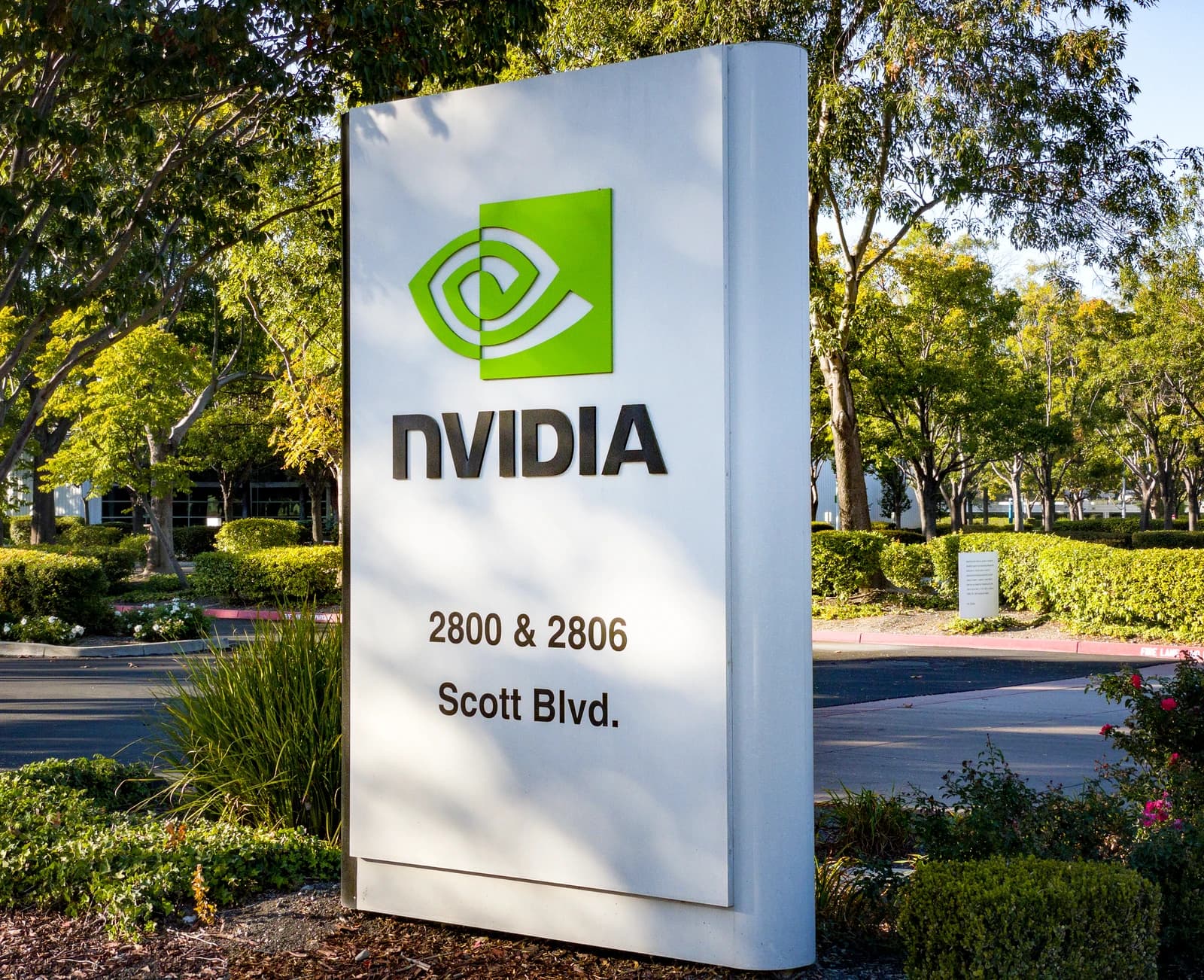
Nvidia remains the clearest barometer of the AI spend cycle, while Apple and Tesla show how much harder it is for megacap growth names to justify premium valuations once momentum cools and investors turn selective.
Nvidia, Apple, Tesla, SK Hynix on AI spend cycle

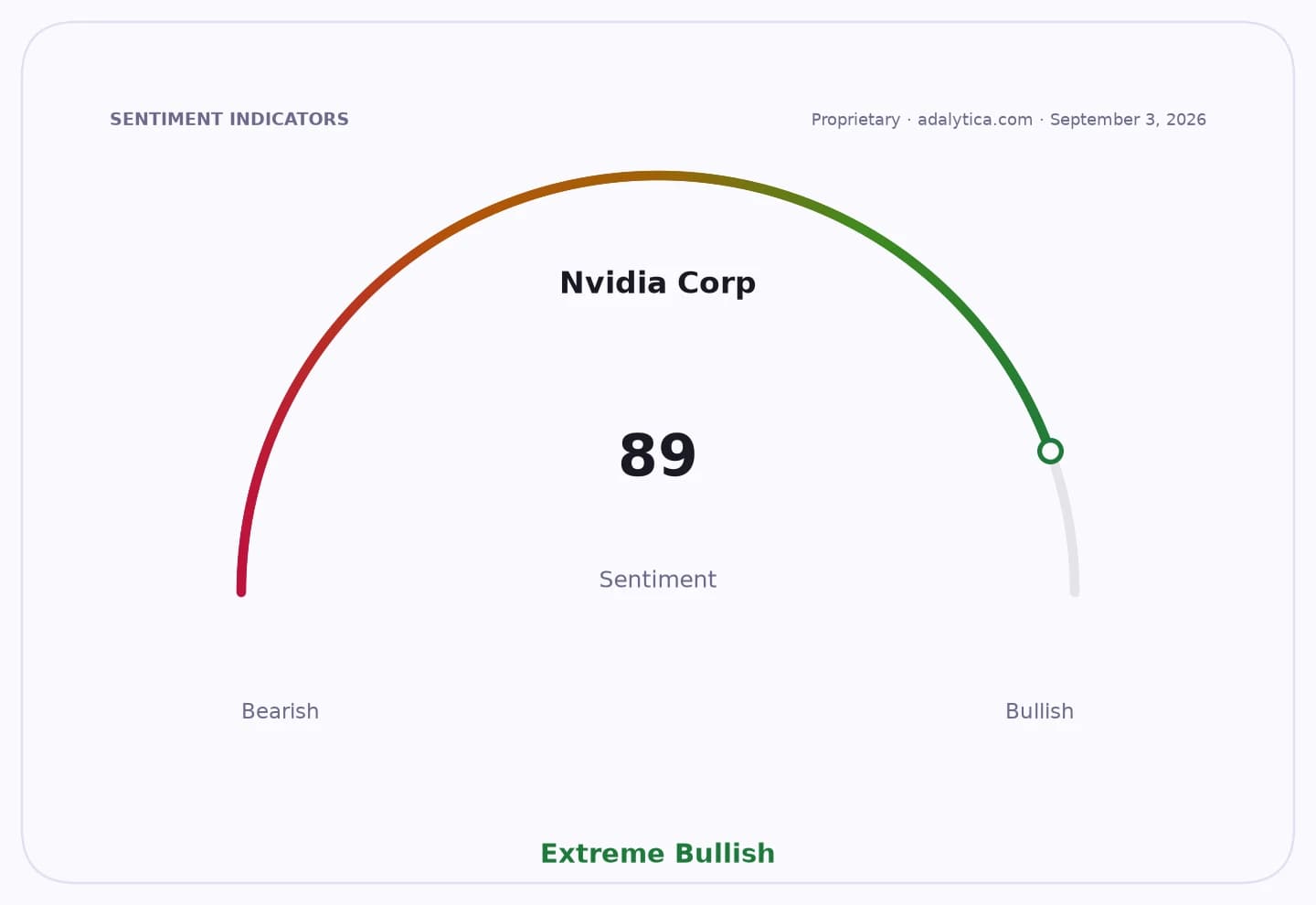
The latest price action points to a market that still rewards AI exposure, but only when earnings and positioning line up. Nvidia closed at $223.67, down from a recent high above $235, yet it remains well above its 200-day moving average near $196.94, a sign the long-term uptrend is intact even after a pullback. Its 50-day average at $211.80 is now close enough to act as a tactical support level, while RSI readings around 54 suggest the stock is neither washed out nor overextended. Adalytica’s NVIDIA Earnings Sentiment gauge sits at 100, or “Extreme Greed,” underscoring how crowded the AI bull case has become.
Sentiment IndicatorsⓘProprietary · adalytica.com · September 9, 2026
This is a snapshot — live sentiment, awareness and momentum for 130+ markets update continuously in the dashboard.Open AlphaPulse

That matters because Nvidia’s valuation and market leadership now depend less on the existence of AI demand than on the pace of capex conversion into revenue. The company’s latest 10-Q showed gross margin improved to 75.0% in the fiscal second quarter, helped by Blackwell Ultra mix, but it also disclosed $1.0 billion of inventory and purchase-obligation provisions in the quarter and $6.3 billion in the first half. That is a reminder that even the industry’s strongest AI franchise is managing real execution risk as it scales new architectures. Investors are buying not just growth, but the ability to sustain that growth without margin erosion or inventory overhang.
The supplier side tells the same story from a different angle. SK Hynix remains one of the most leveraged ways to play AI memory demand, since high-bandwidth memory is central to Nvidia’s systems and broader AI infrastructure. For equity investors, that makes the chip supply chain a second-order beneficiary of the same trade, with memory pricing and capacity discipline likely to determine how broad the AI earnings boom becomes. If AI server demand keeps absorbing supply, suppliers retain pricing power; if spending normalizes, the multiple expansion across the group becomes harder to defend.
Nvidia Corp — 30-day sentimentadalytica.com
Explore this data interactively — full history, time series and cross-market comparisons.Open AlphaPulse

Apple is the counterpoint. Its shares closed at $315.34, just below a short-term cluster around the 50-day moving average at $316.32 and below a recent peak near $328.21. RSI at 48.4 suggests the stock has lost momentum rather than entered a deep selloff, but the setup is less compelling than Nvidia’s. Apple is still priced as a quality compounder, yet it is not being rewarded as an AI pure play, and that leaves the stock more exposed to slower iPhone demand, margin pressure and a market that is increasingly demanding evidence of product-cycle acceleration rather than brand strength alone.
Tesla remains the most volatile of the group and the most dependent on sentiment. The shares ended at $367.81, above the 50-day average around $356.84 but still well below the 200-day near $399.21. That gap captures the central tension in the name: investors still assign optionality to autonomous driving, robotics and energy, but the market is no longer willing to price that optionality as if it were guaranteed. With RSI near 55 and the stock hovering between short-term support and a longer-term downtrend, Tesla looks like a trading vehicle for momentum rather than a clean fundamental compounder right now.
The broader market backdrop reinforces the divide. The S&P 500, through the SPY proxy, is showing “Extreme Fear” in Adalytica’s trade signals even as major tech names remain elevated relative to long-term averages. That combination usually reflects a market that is still concentrated in a few leadership stocks but increasingly uncomfortable with breadth and duration risk. In practice, that means investors are still willing to own AI infrastructure leaders like Nvidia and memory suppliers like SK Hynix, but they are less inclined to pay up indiscriminately for every large-cap technology name.
For investors, the narrative is shifting from “own AI” to “own the picks and shovels, but mind the cycle.” Nvidia still anchors the trade, yet its sentiment is now so stretched that any disappointment in orders, margins or guidance could trigger a sharper reset than fundamentals alone would suggest. Apple needs a clearer catalyst to reaccelerate. Tesla needs proof that its future bets can turn into present earnings. SK Hynix stands to benefit if the memory cycle stays tight and AI demand remains strong.
The next leg for the group will depend on whether AI infrastructure spending keeps outpacing supply and whether megacap earnings can keep validating lofty expectations. If that happens, Nvidia and its suppliers should remain the market’s preferred growth proxies. If not, the same concentration that has lifted these stocks could turn into a source of volatility as investors rotate toward names with cleaner cash-flow visibility.
| Entity | Gains | Losses |
|---|---|---|
| Nvidia | ▲AI capex expansion | ▼Margin disappointment |
| SK Hynix | ▲Memory demand surge | ▼Pricing normalization |
| Apple | ▲Defensive quality demand | ▼AI premium gap |
| Tesla | ▲Momentum traders | ▼Long-duration bulls |