China is pushing back against fresh U.S. pressure on advanced AI chip exports just as Washington weighs tougher restrictions tied to a smuggling and espionage controversy involving Nvidia technology, turning one company’s compliance fight into a broader test of semiconductor containment.
Nvidia Falls as U.S.-China Chip Export Pressure Grows

The dispute matters because AI chips have become a strategic input for both economic growth and national security, and any widening of U.S. controls could further disrupt the global semiconductor supply chain while complicating Nvidia’s sales into China, one of the industry’s most important markets. It also raises the risk that Washington responds with another round of restrictions, extending the policy uncertainty already hanging over the sector.
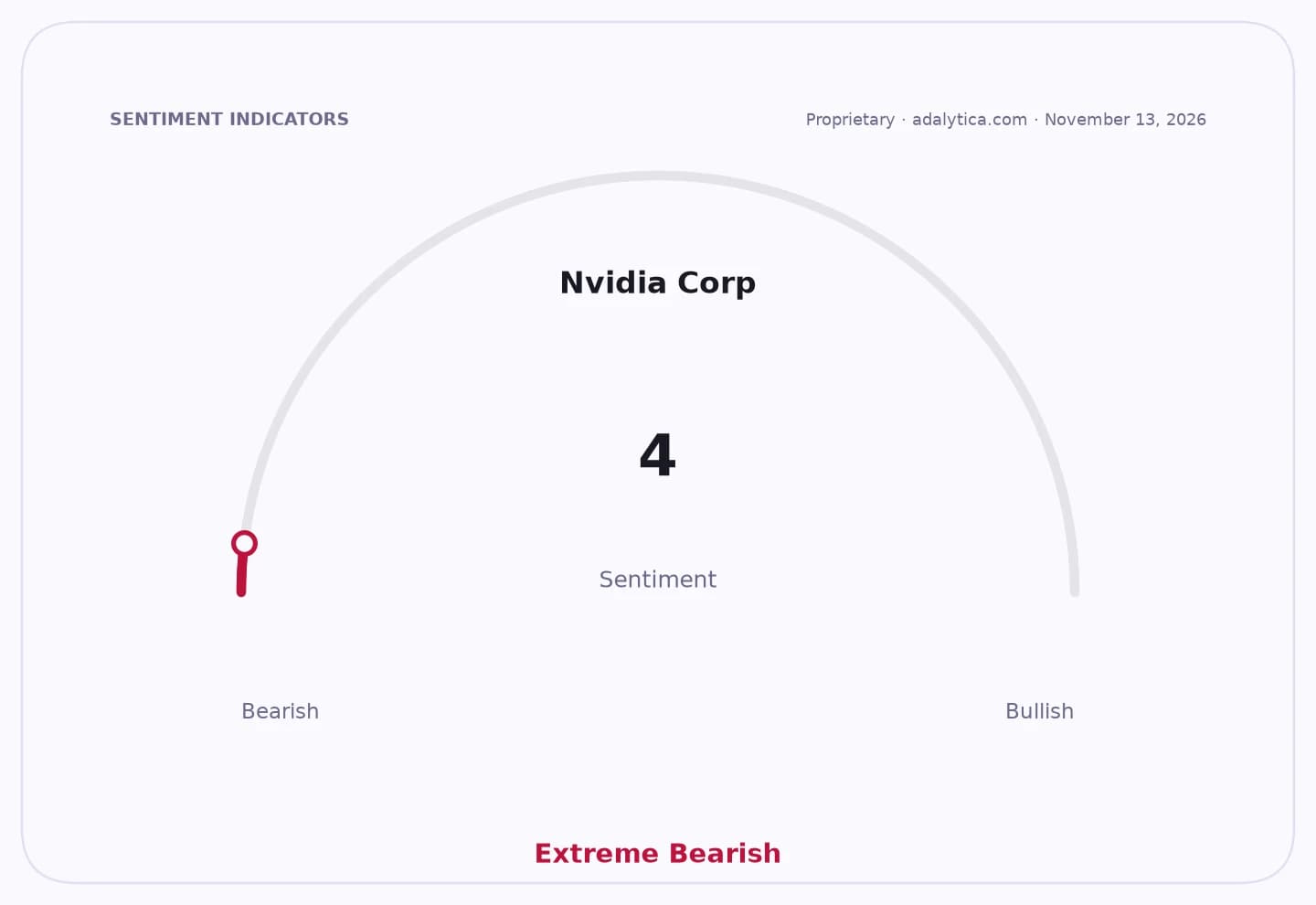
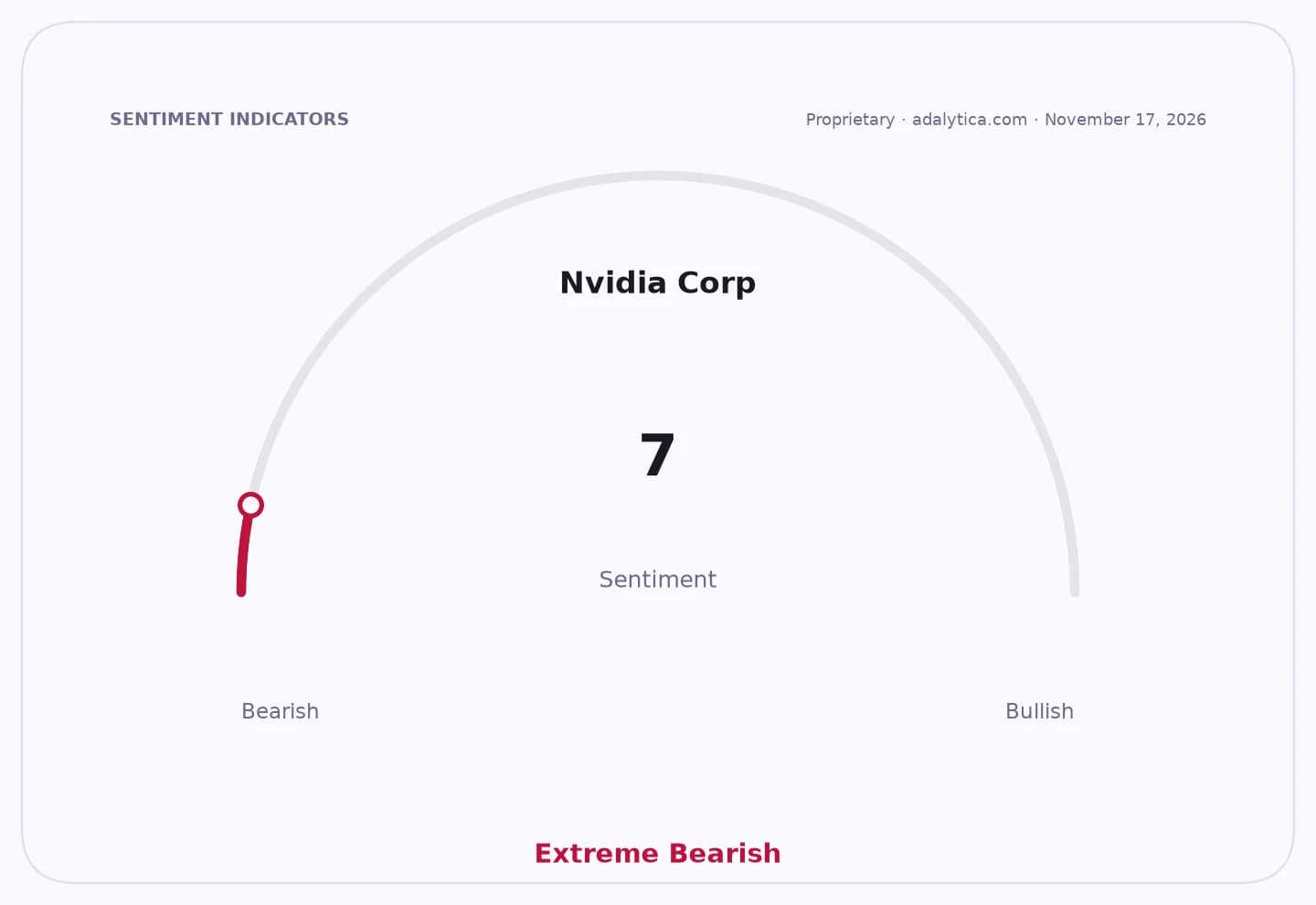
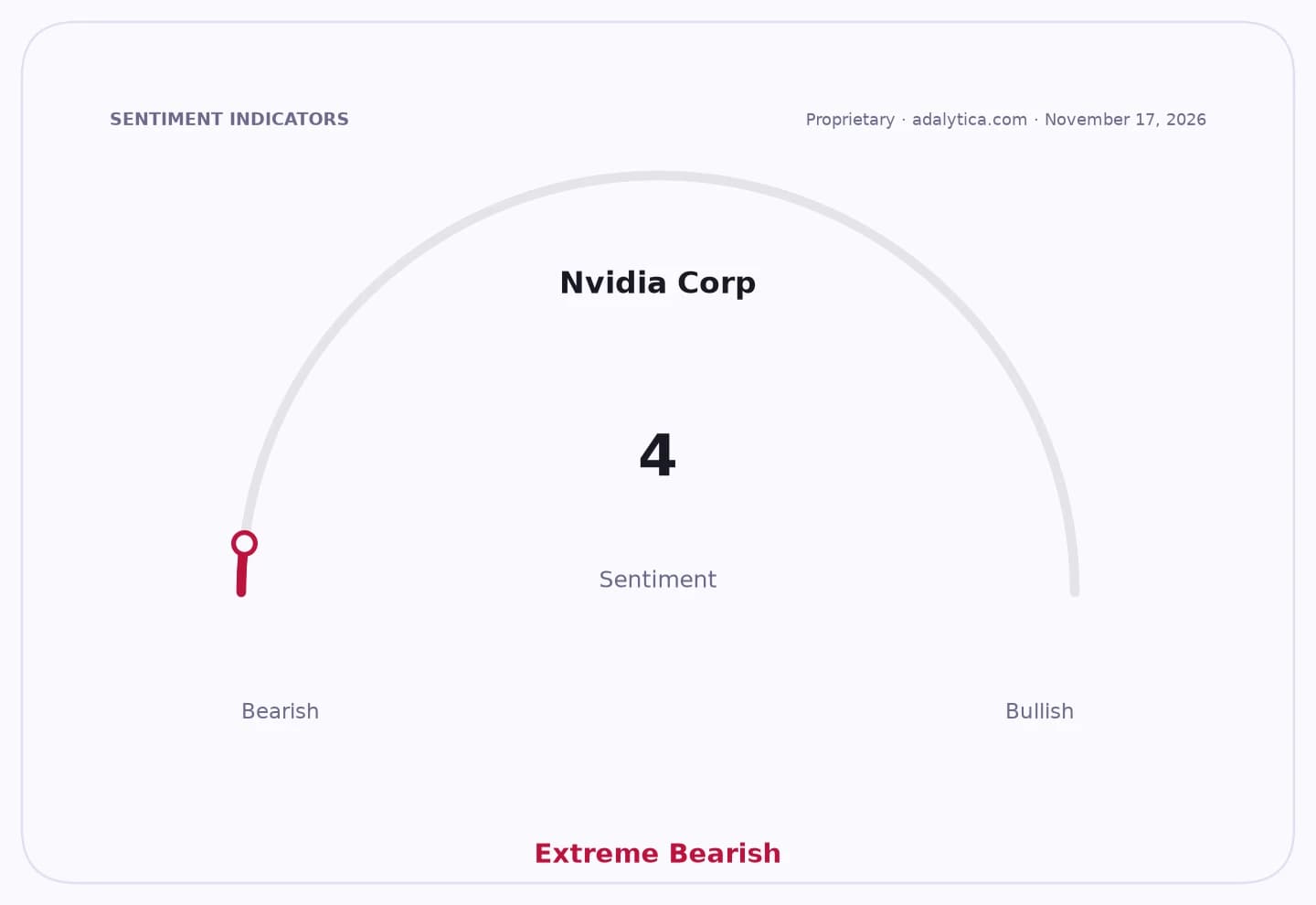
Sentiment Indicators
Nvidia Corp
For investors, the episode adds a new geopolitical overhang to a stock already under heavy pressure. Nvidia shares have fallen to $162.85 on Nov. 13 from $221.97 on Oct. 21, a drop of about 27%, while its relative strength index has slid to 19.1, a reading that points to deeply oversold conditions. The stock is now trading far below its 50-day moving average of $214.63, though still above its 200-day average of $203.92.
The selloff has spread across the semiconductor group. The SOXX ETF ended at $149.30 on Nov. 13, down from $154.99 a day earlier and well below its 50-day moving average of $171.88, while Taiwan Semiconductor Manufacturing Co. closed at $398.73, also below its 50-day average of $429.95. That suggests investors are not just pricing in company-specific risk at Nvidia, but a broader reassessment of chip exposure to U.S.-China trade and security tensions.
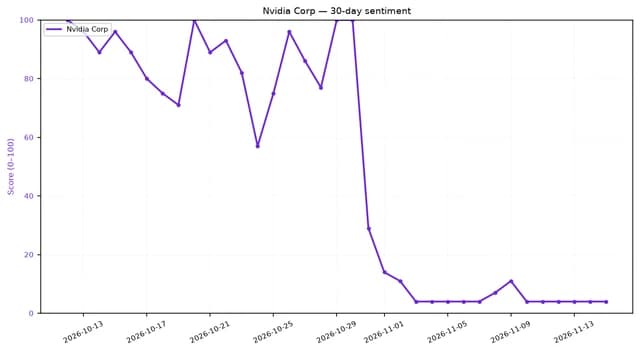
The backdrop is also being watched through the lens of market positioning. Adalytica’s NVIDIA Earnings Sentiment snapshot shows “Extreme Fear” at 4, while awareness remains at 100, underscoring intense attention even as confidence collapses. By contrast, the S&P 500’s trade signal sits at “Extreme Greed,” showing the chip dispute is landing against a still-risk-on broader market.
The next catalyst is likely to come from Washington, where lawmakers are already pushing for tighter controls and investigators are likely to keep pressing the question of how banned technology moved through the system. Any new U.S. restrictions, or retaliation from Beijing, would keep pressure on Nvidia, its suppliers and the wider AI hardware trade.
| Entity | Gains | Losses |
|---|---|---|
| U.S. lawmakers | ▲tougher controls | ▼chip industry flexibility |
| China | ▲leverage in talks | ▼access to advanced GPUs |
| Nvidia | ▲compliance case clarity | ▼China sales and sentiment |
| Semiconductor peers | ▲policy visibility | ▼export-control exposure |