China has denied allegations that it tried to entrap Nvidia chief executive Jensen Huang in a spy plot, turning a personal scandal into the latest flashpoint in the broader fight over advanced chips, export controls and access to the Chinese market.
Nvidia China Spy Claim Tests Chip Sales
The Chinese foreign ministry called the claim unsubstantiated and a “smear campaign” against Beijing, after The New York Times reported that Huang had disclosed an affair with a business executive US intelligence believed was collecting information for China. Nvidia said it would launch an investigation, while Huang did not publicly name the individual involved.
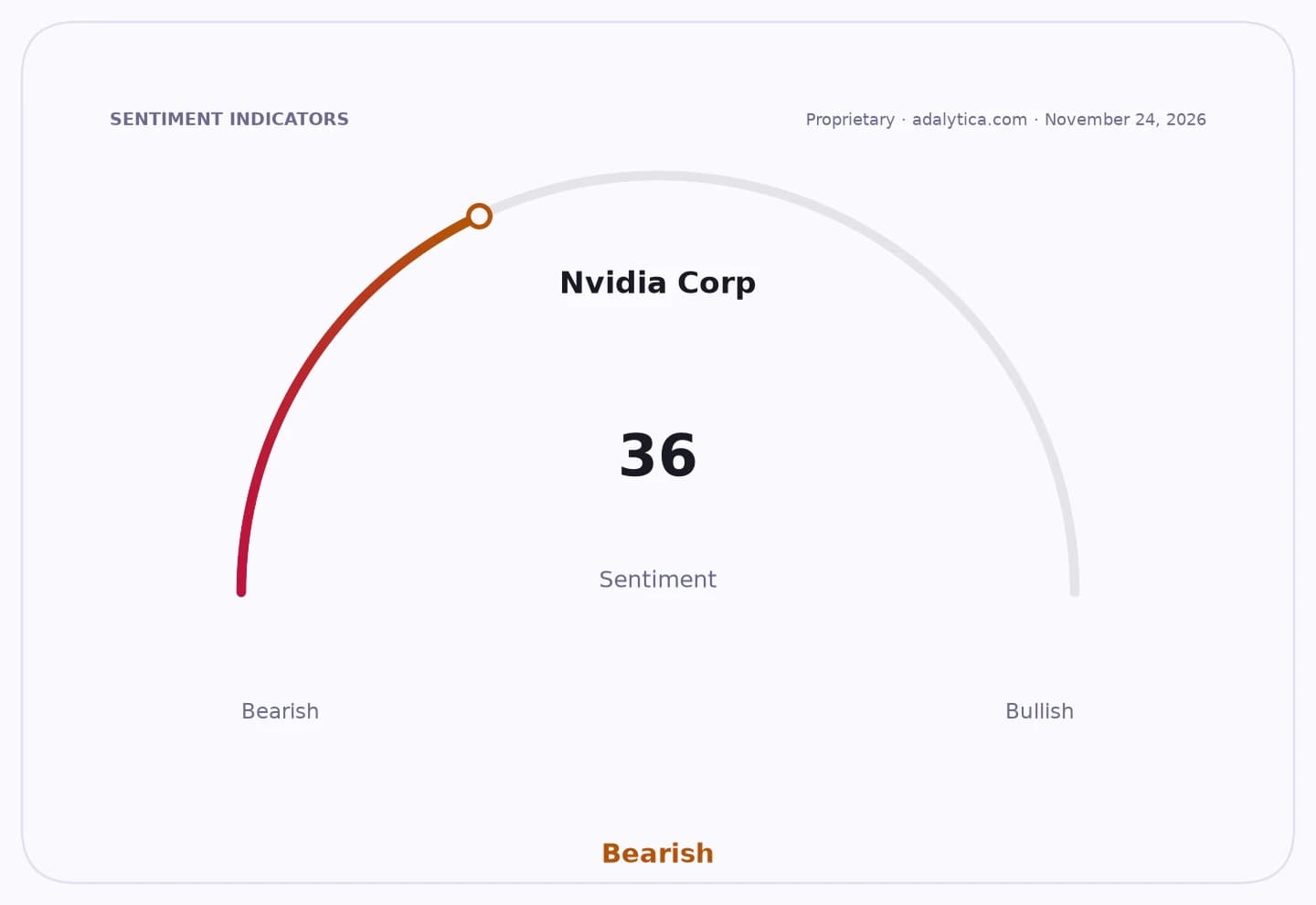
Sentiment Indicators

The episode matters because Nvidia sits at the center of the global artificial-intelligence supply chain and because China remains one of the few markets large enough to move the needle for the company even as Washington seeks to limit Beijing’s access to the most advanced semiconductors. Any suggestion that politics, security concerns or personal conduct could further complicate Nvidia’s China strategy adds another layer of risk to a business already navigating export restrictions and heightened regulatory scrutiny.
Huang has been one of the most prominent corporate advocates for easing US chip curbs on China, and he successfully lobbied President Donald Trump to allow sales of Nvidia’s H200 chips. Those processors are not Nvidia’s top-end products, but they are still advanced enough to matter in AI infrastructure buildouts and could help preserve some commercial foothold in China if Beijing permits purchases at scale.
Nvidia Corp — 30-day sentimentadalytica.com
Explore this data interactively — full history, time series and cross-market comparisons.
Nvidia Corp
That is far from guaranteed. Chinese authorities have repeatedly signaled they will weigh national-security concerns and domestic chip development goals against the need for foreign technology. The latest dispute also underscores how quickly US-China tech rivalry can spill into corporate governance and reputational risk for individual executives, not just product approvals and trade policy.
Investors have already been pricing in a more fragile operating backdrop for Nvidia. The stock has fallen sharply from earlier highs, and conventional technical indicators show it deeply oversold, with its 14-day RSI at 19.1 and the shares trading well below the 50-day moving average. Adalytica’s NVIDIA Earnings Sentiment snapshot also shows “Extreme Fear,” reflecting how quickly market confidence has eroded as questions around China exposure intensify.
The spillover has not been confined to Nvidia. Taiwan Semiconductor Manufacturing Co., one of the key suppliers underpinning the AI chip boom, has also seen its shares soften from recent peaks, a reminder that any escalation in US-China technology frictions can ripple through the broader semiconductor ecosystem.
For investors, the immediate issue is less the allegation itself than what it symbolizes: the China market for AI chips is becoming harder to access, harder to predict and more politically sensitive. If the controversy prompts tighter scrutiny from either Washington or Beijing, it could pressure Nvidia’s revenue mix, complicate supply-chain planning and widen valuation uncertainty across the semiconductor sector.
| Entity | Gains | Losses |
|---|---|---|
| China | ▲Denies allegations, protects narrative | ▼Faces renewed suspicion |
| Nvidia | ▲May contain reputational damage | ▼China strategy under pressure |
| US regulators | ▲More leverage on tech controls | ▼Added policy complexity |
| Semiconductor peers | ▲Less company-specific fallout | ▼Broader sector sentiment weakens |