Alibaba is facing a shareholder lawsuit in the United States that puts one of China’s most valuable tech groups squarely in the crosshairs of Washington’s escalating fight over advanced AI chips — and investors are reacting to more than just legal headlines.
Alibaba lawsuit over US export control disclosures
The case, filed in federal court in Manhattan, says Alibaba misled investors by failing to fully disclose the risks tied to alleged violations of US export controls and its links to Megaspeed, a Singapore company suspected of helping China access advanced Nvidia processors for artificial intelligence. Plaintiffs say Alibaba’s shares fell 14% over four trading sessions after reports surfaced about the relationship, wiping out market value at a time when the company is already under pressure from US scrutiny.
Sentiment Indicators
That matters because the case is not just about disclosure. It goes to the heart of Alibaba’s ability to monetize cloud growth in a world where access to high-end computing is increasingly politicized. Alibaba chief executive Eddie Wu said this month the company still targets $100 billion in annual overseas cloud revenue by 2030 and a 20% EBITDA margin, even as US restrictions on computing access could hit products and services starting next year. For investors, that is the key tension: Alibaba is trying to sell a long-duration AI and cloud story while legal and geopolitical risks are compressing the valuation multiple.
The lawsuit also broadens a separate regulatory overhang already hanging over the stock. Alibaba is challenging a Pentagon designation that placed it on a list of firms said to be linked to the Chinese military. That fight has already dragged the company deeper into the US policy debate over technology transfer, procurement, and surveillance of Chinese buyers of advanced chips. The new case raises the stakes because it suggests investors may now see the company not only as a beneficiary of China’s AI buildout, but also as a potential conduit for sensitive hardware flows.
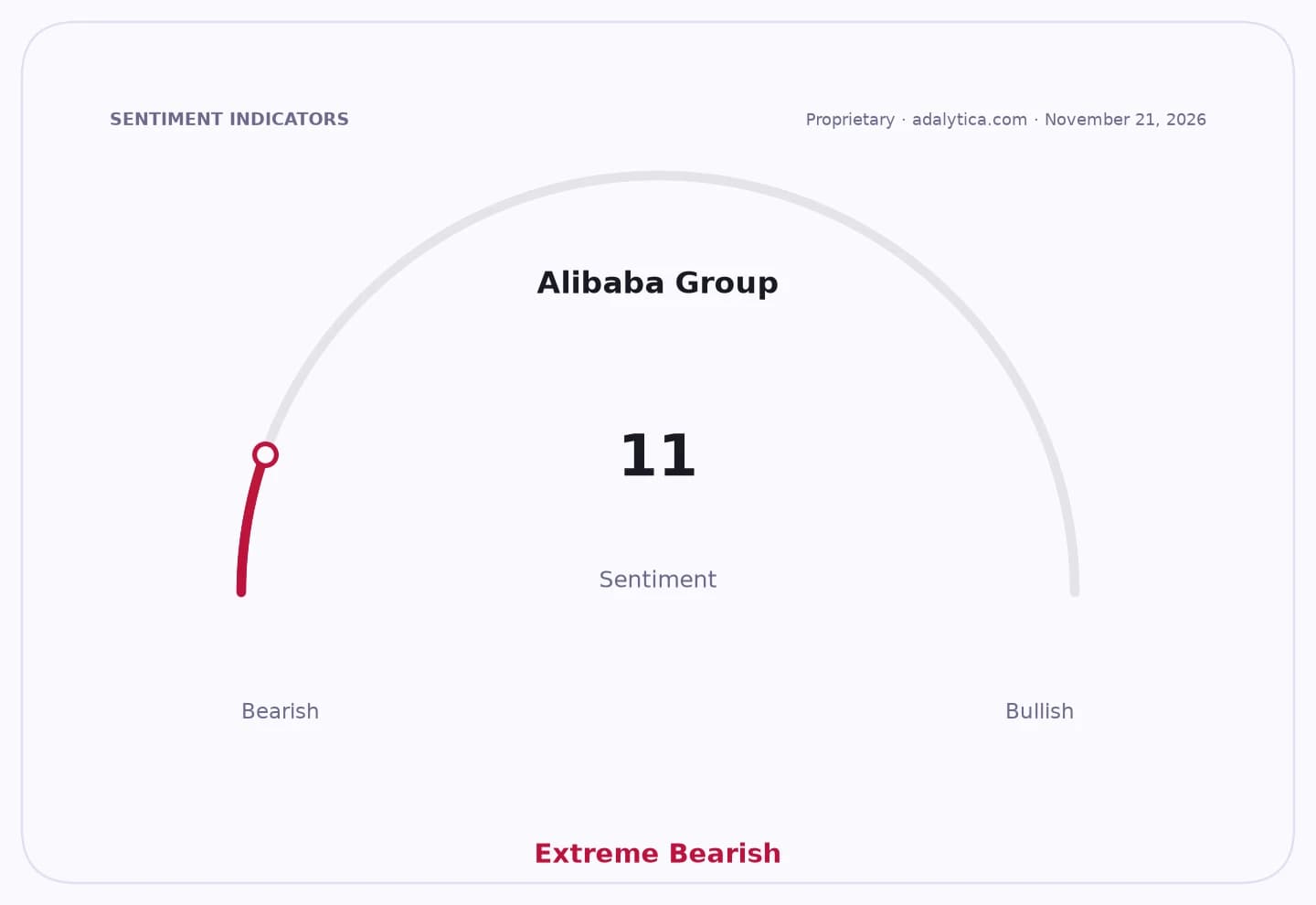
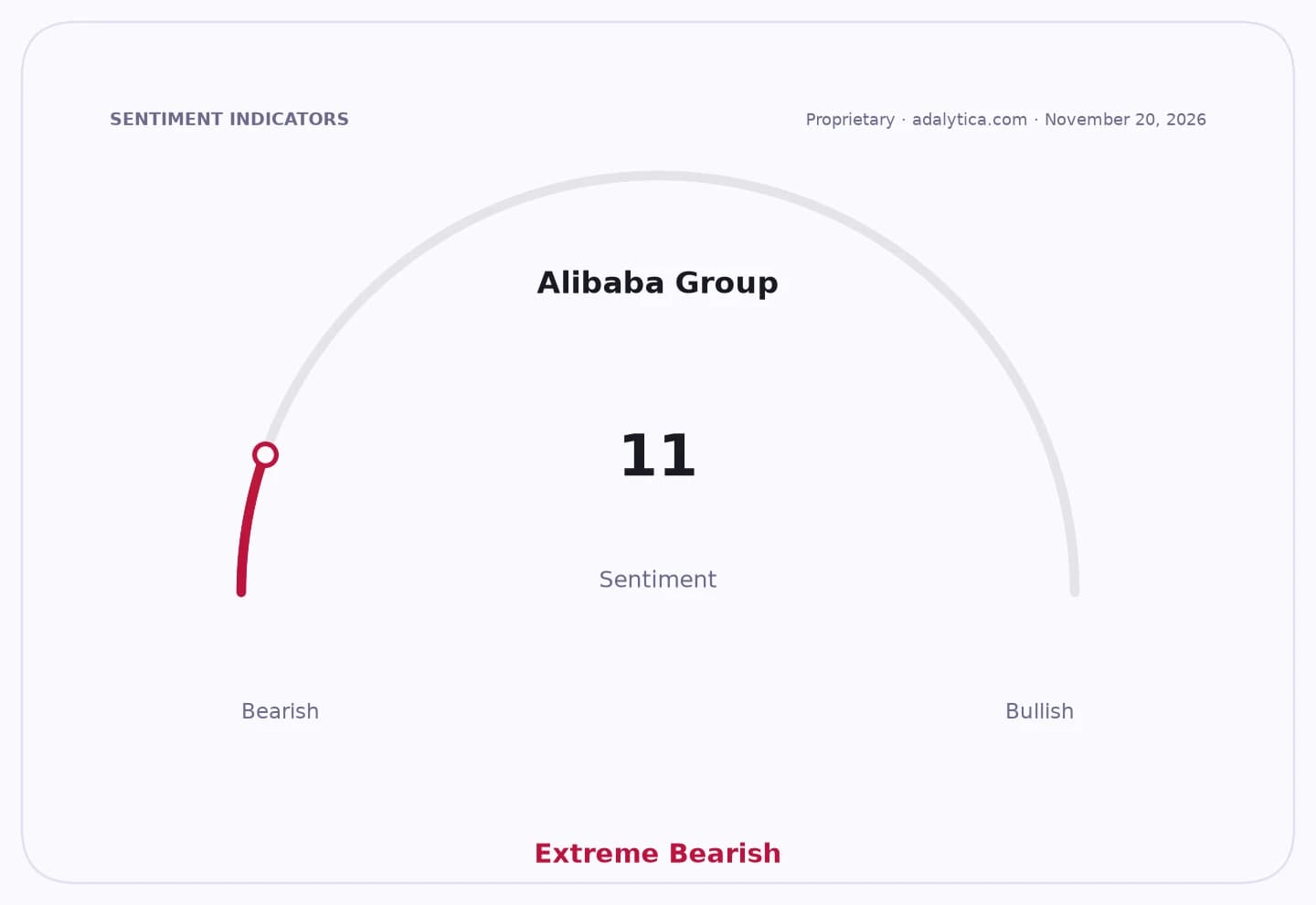
Alibaba Group — 30-day sentimentadalytica.com
Explore this data interactively — full history, time series and cross-market comparisons.
The market has already done some of the pricing. Alibaba shares have dropped to around $84.86, well below both the 50-day moving average near $103 and the 200-day average near $120, while RSI readings in the low 20s point to severe technical damage. The stock’s weakness comes as Alibaba sentiment tracked by Adalytica remains in “Extreme Fear,” with awareness elevated, a combination that usually signals a crowd focused on downside headlines rather than long-term fundamentals.
Nvidia, meanwhile, is not insulated from the story. The chipmaker has separately been hit by its own shareholder litigation and has become the symbol of the broader AI supply chain that Washington wants to police more tightly. Reuters reported on Nov. 12 that the Nvidia spy scandal could prompt US authorities to tighten restrictions on remote access by Chinese firms to advanced AI chips, a move that would hit not just Alibaba but any company trying to build cloud capacity around scarce accelerator supply.
For long-term investors, the message is clear: this is no longer a simple Chinese internet stock story. It is a geopolitical infrastructure trade. The winners are firms that own compliant AI compute, cloud distribution and regulated supply chains. The losers are companies that need US-origin technology but cannot avoid the scrutiny that comes with it. That makes Alibaba a stock to approach with caution until the legal cloud lifts and Washington’s next export-control move becomes clearer.
| Entity | Gains | Losses |
|---|---|---|
| Alibaba | ▲cloud optionality if risks fade | ▼lawsuit risk, valuation pressure |
| Nvidia | ▲tighter chip controls justify premium scarcity | ▼legal and policy scrutiny |
| US regulators | ▲leverage over tech transfers | ▼slower cross-border tech flows |
| AI cloud rivals | ▲cleaner compliance narrative | ▼Alibaba’s scale if it rebounds |