China’s premier has warned that the internet’s rapid expansion is creating “unprecedented” security risks, a message that reinforces Beijing’s push for tighter control over digital infrastructure just as US-China technology tensions and investor anxiety around Chinese internet assets remain elevated.
China Premier Warns of Internet Security Risks
Geopolitical Risk
Premier Li Qiang’s comments at the World Internet Conference in Wuzhen matter because they point to the direction of policy rather than a one-off speech: China is signaling that cyber defense, data security and information control will continue to outrank unfettered growth in its digital economy. That is economically significant for a sector that still depends on policy approvals, cross-border data flows and state tolerance for platform expansion.
Sentiment Indicators
Li said the world is already facing cyberattacks, data theft, deepfakes and disinformation, and argued that “smart infrastructure” is moving deeper into everyday life, making the balance between innovation and security more important. He also warned that technological inequality could widen social divisions, noting that more than 2 billion people remain offline and that gaps in artificial intelligence and high-speed networks could deepen global disparities.
For investors, the message is two-sided. On one hand, a stronger security framework could support spending on cybersecurity, data compliance and industrial software, areas that benefit when governments prioritize resilience over openness. On the other, tighter controls can slow product rollouts, raise compliance costs and keep pressure on consumer internet platforms and cloud businesses that rely on scale and rapid iteration.
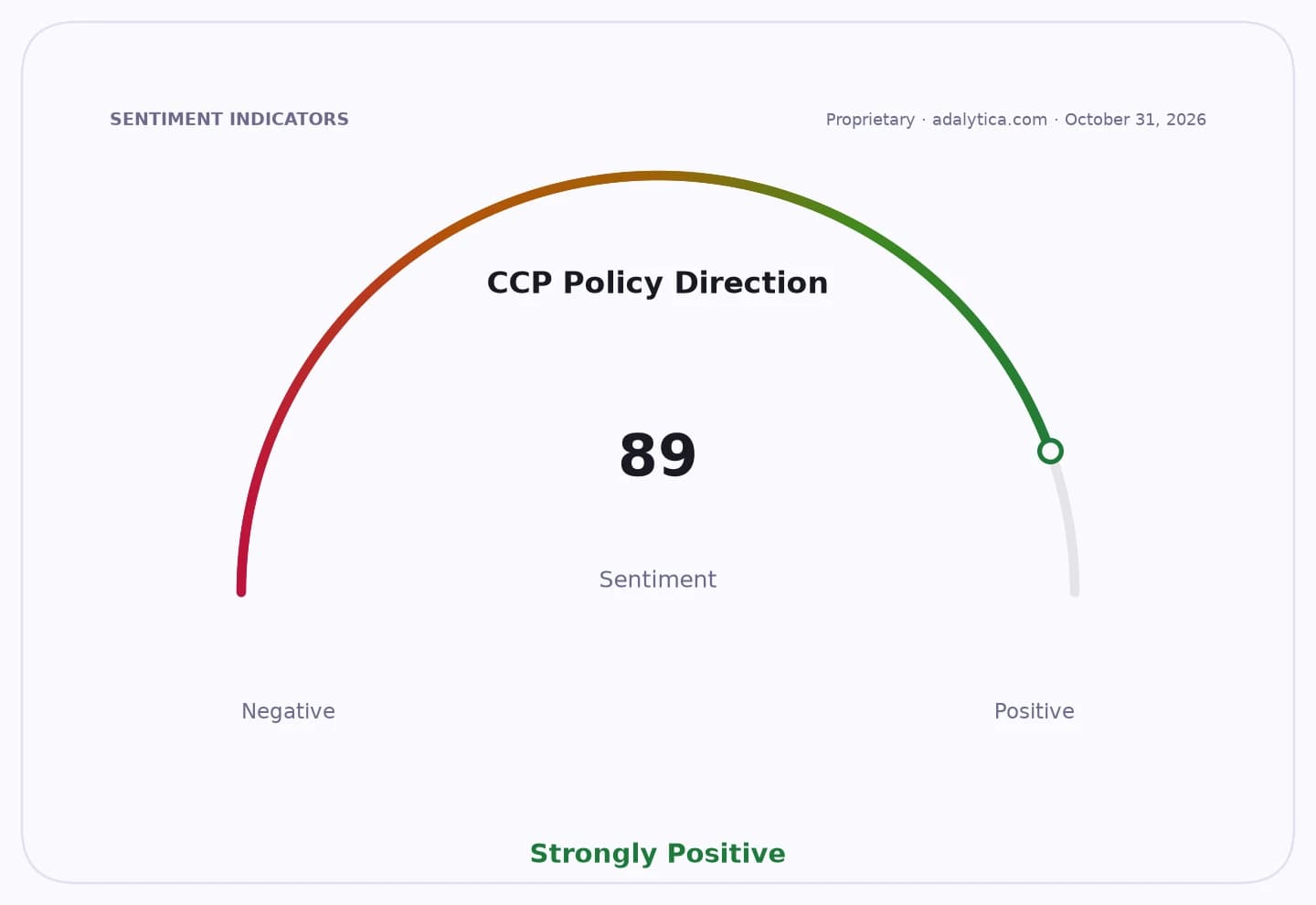
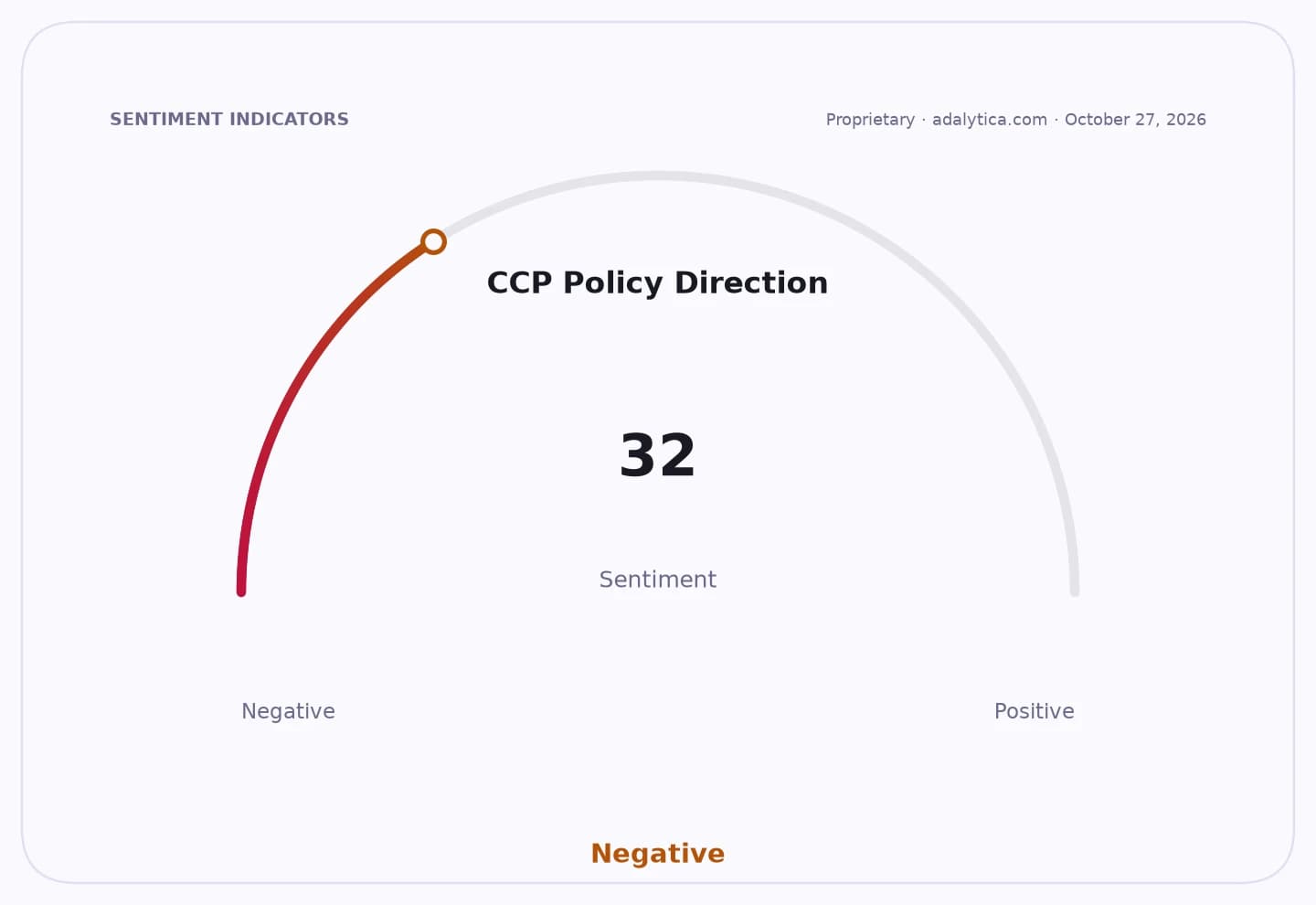
CCP Policy Direction vs KWEBadalytica.com
Explore this data interactively — full history, time series and cross-market comparisons.
The speech lands against a difficult market backdrop for Chinese tech. The KraneShares CSI China Internet ETF, KWEB, has fallen to about $23.28 from $37.66 in mid-January, with its 200-day moving average now near $27.86, a sign the broader sector remains under technical and fundamental pressure. Baidu and Alibaba have also been volatile, and both remain well below their 200-day averages, reflecting weak sentiment toward Chinese internet names despite occasional rebounds.
That weakness is being shaped by more than company fundamentals. Washington is moving to tighten pressure on Chinese telecom groups, while Beijing has been signaling that technology sovereignty and national security will remain central to policy. The result is a market where investors are forced to price not just earnings and valuation, but the risk that regulation, geopolitics and data controls will continue to reshape the economics of the sector.
Li’s warning suggests the next phase of China’s internet policy will likely be less about broad stimulus for platform companies and more about controlled innovation. For markets, that means any sustained re-rating in Chinese internet stocks will probably require not just cheaper valuations, but clearer evidence that Beijing is willing to support growth without adding another layer of regulatory restraint.
| Entity | Gains | Losses |
|---|