Alibaba is facing a shareholder lawsuit in New York over allegations it concealed links to a suspected Chinese spy tied to the Nvidia export-control scandal, adding legal risk to a stock that has already lost roughly 14% in four sessions.
Alibaba Faces New York Shareholder Lawsuit
Alibaba Group
The proposed class action says the company misled investors by downplaying exposure to possible export-control violations that could damage its cloud and AI business. For shareholders, the issue is not just reputational: any finding that Alibaba knowingly understated compliance or counterparty risks could hit future revenue, cloud expansion and valuation multiples at a time when the company is leaning on artificial intelligence to drive growth.
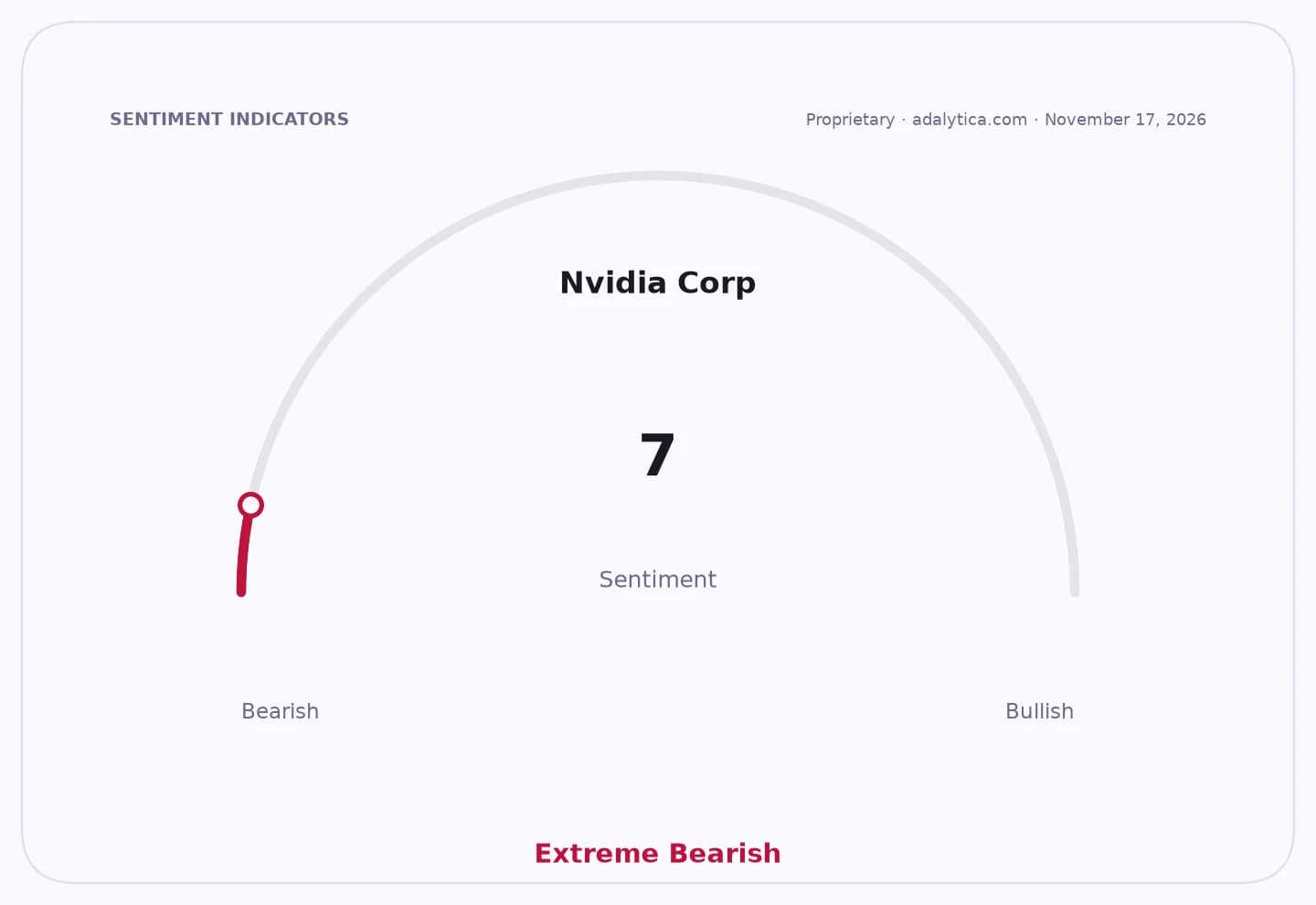
Sentiment Indicators

The lawsuit lands after media reports said Alibaba’s connection to Megaspeed made it the dominant customer of the business linked to the suspected spy. The stock slide has been steep enough to shave about $80 billion from market value over four days, underscoring how quickly geopolitical and regulatory headlines can overwhelm operating progress in Chinese tech names.
That pressure comes even as Alibaba tries to persuade investors that its AI push is intact. Chief Executive Eddie Wu has said the company remains on track to generate $100 billion in external cloud revenue and reach a 20% EBITDA margin by 2030, despite U.S. restrictions that could crimp products and services.
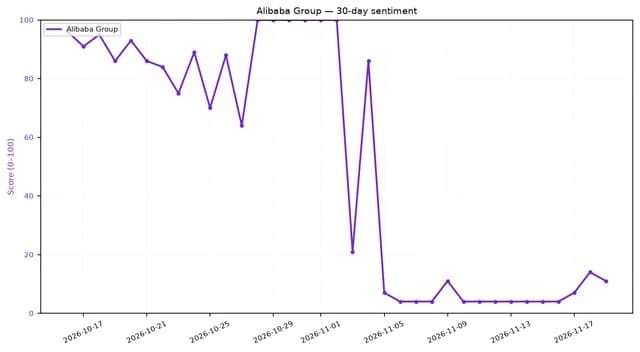
The market backdrop is already fragile. Alibaba shares closed at $83.31 on Nov. 19, far below its 50-day moving average of $104.89 and 200-day average of $120.68, while the RSI sat at 31.5, a level that points to oversold conditions but not necessarily a floor. Nvidia, whose chips sit at the center of the broader export-control fight, has also been volatile, with its shares at $145.98 on Nov. 19, down sharply from above $220 earlier in the year.
For investors, the immediate question is whether the lawsuit becomes a one-off headline risk or the start of a broader compliance overhang on Alibaba’s cloud and AI ambitions. The next catalysts are likely to be any court filings, company disclosures on Megaspeed, and updates on how U.S. restrictions affect Alibaba’s AI products and overseas cloud revenue.
| Entity | Gains | Losses |
|---|---|---|
| Alibaba shareholders who stayed short | ▲Lower share price entry | ▼Legal uncertainty if claims weaken |
| Alibaba long investors | ▲Potential oversold rebound | ▼Lawsuit, compliance risk, valuation pressure |
| Nvidia | ▲Less direct exposure to Alibaba dispute | ▼Fresh scrutiny on export-control chain |
| Megaspeed-linked counterparties | ▲Business continuity if probe fades | ▼Tighter due diligence and deal risk |