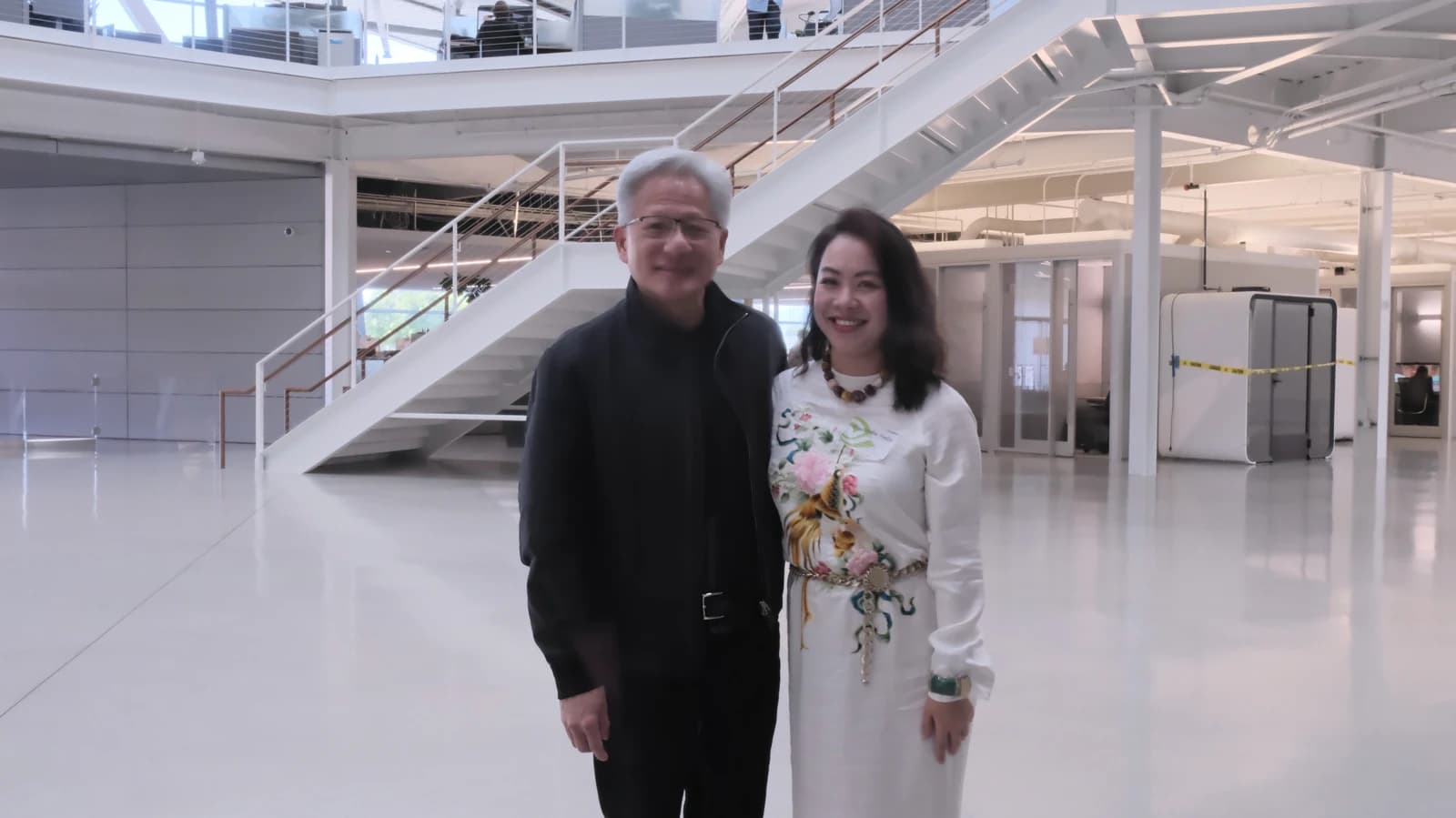
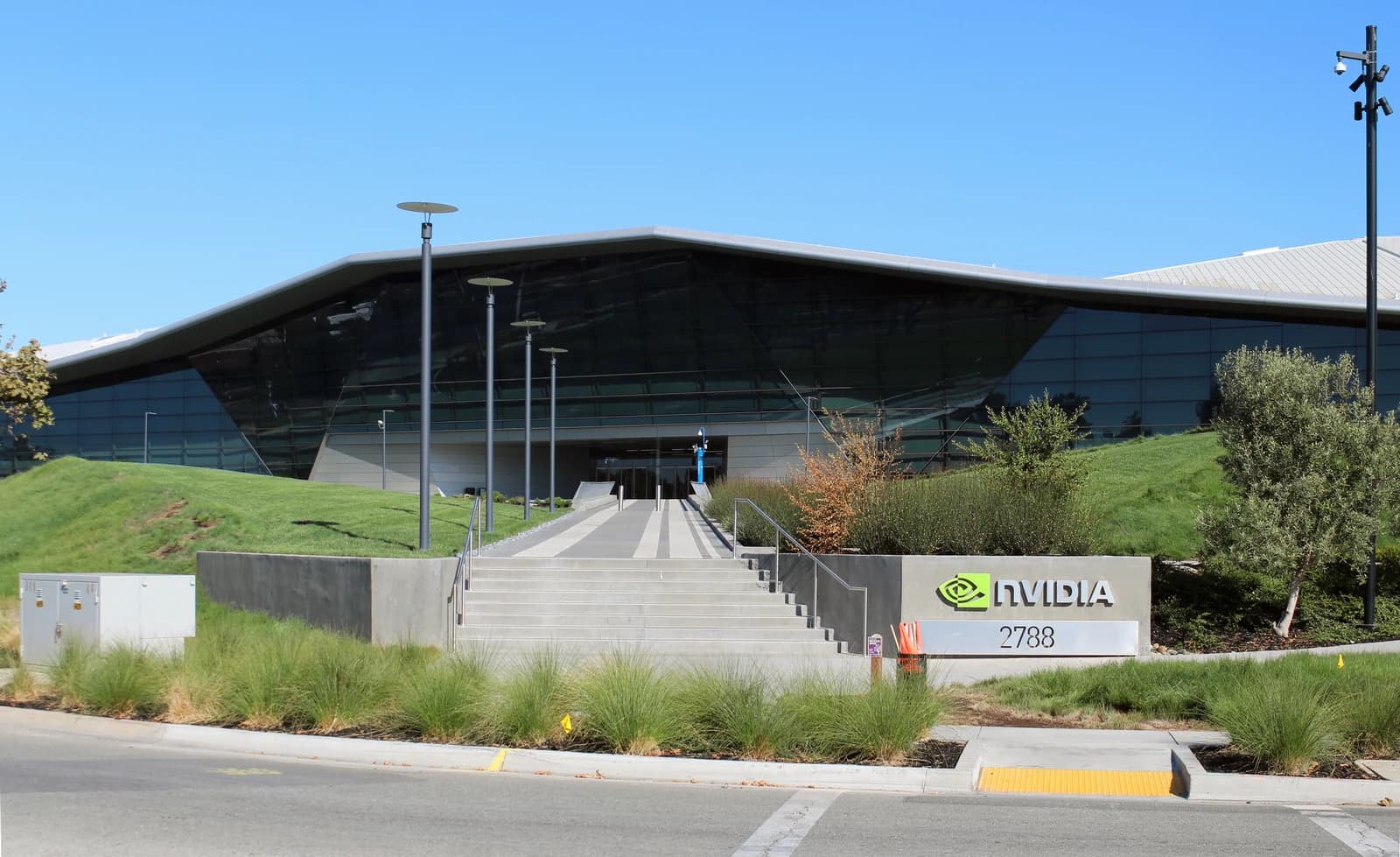
Nvidia is no longer just the chipmaker at the center of the AI trade — it is becoming a tightly controlled empire where the founder’s family increasingly helps run the most strategic parts of the business, and that concentration of trust may prove as important as the company’s technology leadership.
Nvidia Family Ties and AI Infrastructure Growth
That matters because Nvidia’s next phase is less about selling chips one by one and more about shaping the entire AI infrastructure market around its hardware, financing, and ecosystem. In that world, the executives closest to Jensen Huang are not just managers; they are dealmakers, gatekeepers and architects of the company’s distribution network. If Nvidia can keep cloud startups, so-called neoclouds and data-center builders locked into its stack, it strengthens the most valuable franchise in global semiconductors and deepens the moat around its already enormous revenue base.
The clearest example is Nico Caprez, Huang’s son-in-law, who in under three years has become one of Nvidia’s key executives after moving from consulting into a role now titled vice president of global AI infrastructure growth. His mandate is directly tied to the AI capex boom: keep customers buying Nvidia chips, help them find land and power, and stitch together financing that gets more hardware deployed. That puts him at the center of one of the market’s biggest questions — who funds the next wave of AI infrastructure, and on what terms.
The numbers show why this job matters. Caprez was credited in June with helping support loans for Australian neocloud Firmus to buy 170,000 Grace Blackwell and Vera Rubin chips, a deal worth more than $15 billion. In August, he helped shape a plan with Blackstone and other Wall Street firms to raise $500 billion to finance Nvidia hardware. That is not normal sales work. It is capital formation, and it shows Nvidia is extending its influence from silicon into balance-sheet engineering.
Investors should care because this broadens Nvidia’s opportunity set even as the stock has already become a market giant. The shares have surged to around $239, while the 50-day moving average has climbed to roughly $220 and the 200-day average sits near $201, reflecting a powerful uptrend. But the stock’s RSI readings above 80 suggest it is technically stretched, which makes the fundamental story even more important: if Nvidia is turning itself into the toll road for AI infrastructure spending, the upside is no longer just tied to unit sales. It is tied to how much of the industry’s financing, procurement and deployment flows through Nvidia’s orbit.
The family connection also reinforces what many in the market already suspect about Nvidia’s culture: this is a founder-led company where trust matters more than hierarchy. Madison Huang now leads marketing for the company’s robotics push, including physical AI, simulation tools and the world-model efforts that could become the next platform after generative AI. Spencer Huang, the CEO’s son, works in robotics product management. On paper they are not top executives. In practice, they sit near the center of the company’s most important future bets.
That makes Nvidia look less like a conventional public megacap and more like a controlled strategic platform, one where succession, loyalty and execution are being built inside the family circle. For long-term investors, that can be a feature, not a flaw, if it preserves speed and conviction in a business moving at AI-era pace. The risk is obvious too: when so much power sits with so few people, the company can make bold bets quickly, but missteps can also become more concentrated.
Still, the bigger narrative is clear. The market continues to value Nvidia primarily as a chip supplier, but the real story is that it is becoming the central allocator of AI infrastructure capital. That is the more defensible, more scalable and potentially more profitable position. If Huang’s inner circle can keep turning demand into financing, financing into deployments and deployments into dependency, Nvidia’s next leg will come not just from faster chips, but from owning the plumbing that gets those chips installed.
For investors, the takeaway is straightforward: Nvidia remains the best way to own the AI infrastructure boom, but the deeper opportunity may be in the ecosystem that grows around it — lenders, builders, power providers and neocloud partners that help Nvidia convert its dominance into an even stickier business model.
| Entity | Gains | Losses |
|---|---|---|
| Nvidia / Huang family | ▲Tighter control of strategy | ▼Corporate governance scrutiny |
| Neoclouds and AI builders | ▲Access to chips and financing | ▼Margin pressure, dependence on Nvidia |
| Wall Street financiers / Blackstone | ▲New AI funding pipeline | ▼Capital tied to cyclical hardware demand |
| Competitors and independent cloud providers | ▲— | ▼Share and bargaining power |