Jensen Huang is not raising $50 billion to launch a new chip startup, and the viral claim appears to rest on a single off-hand market prediction rather than any announced plan, filing or investor commitment.
Nvidia: Huang startup rumor lacks evidence

The misinformation matters because Huang is still one of the most important figures in AI hardware, and any real departure from Nvidia would have major implications for chip supply, customer relationships and the balance of power in the semiconductor industry. But so far, there is no evidence of a live fundraising process, no company registration tied to Huang and no statement from him or prospective backers supporting the claim.
Sentiment Indicators
The $50 billion figure traces to comments made on a business programme by Rohan Goswami of Prof G Markets, who said Huang would not be returning to Nvidia. Social media posts then inflated that view into a purported funding campaign, with some versions even adding unsupported claims of backing from Elon Musk. Those posts gave the impression of an active deal, when in fact the original remark was framed as speculation.
Huang has acknowledged personal misconduct and said in a November 17 post on X that he had “made serious mistakes in my personal life” and created problems for Nvidia’s board. He also said he would be honored to return if the board decided it was best for shareholders, employees and the company. Nvidia’s leadership has said publicly that the board does not intend to reinstate him and that a search for a permanent chief executive is under way.
Nvidia Corp
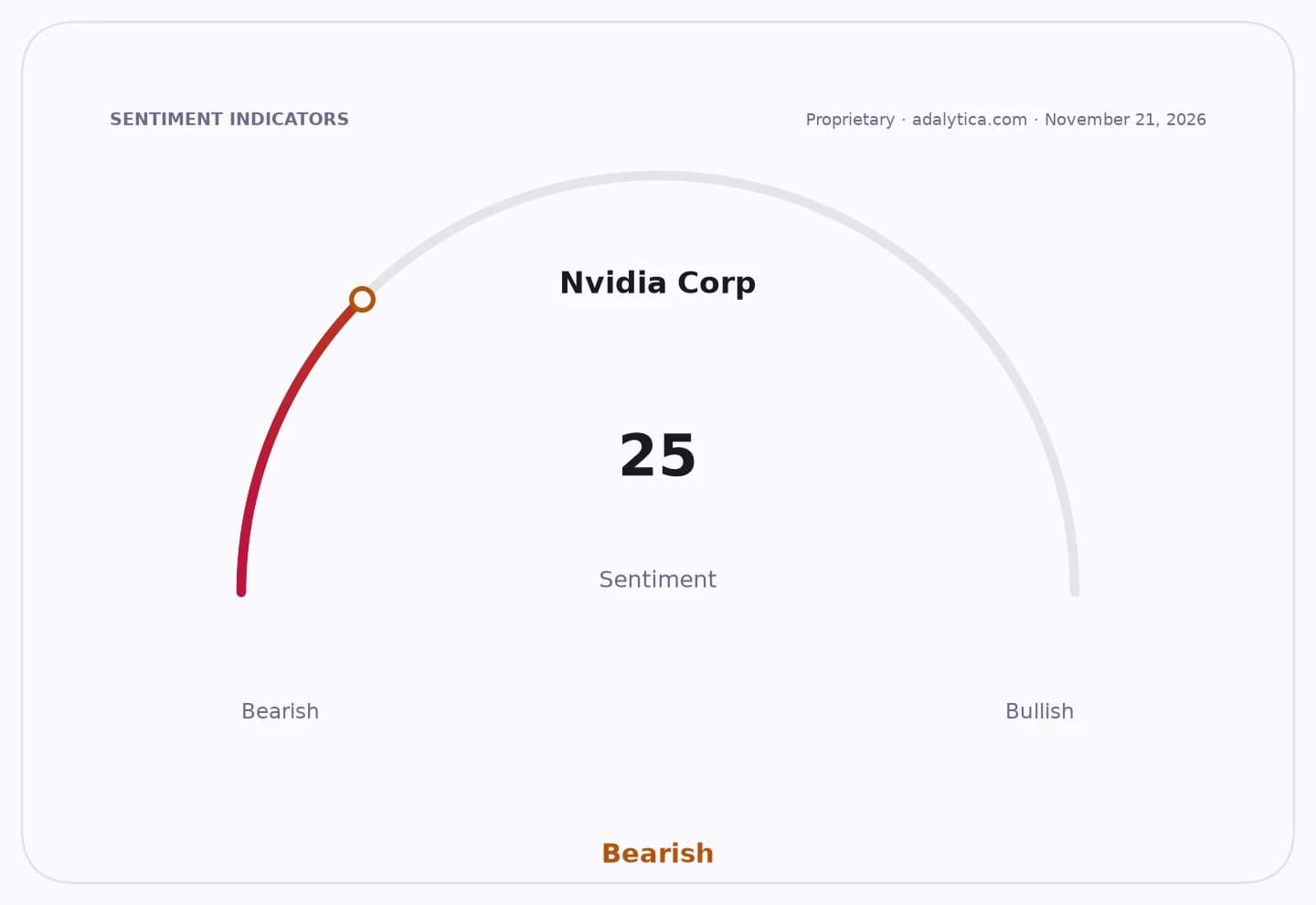
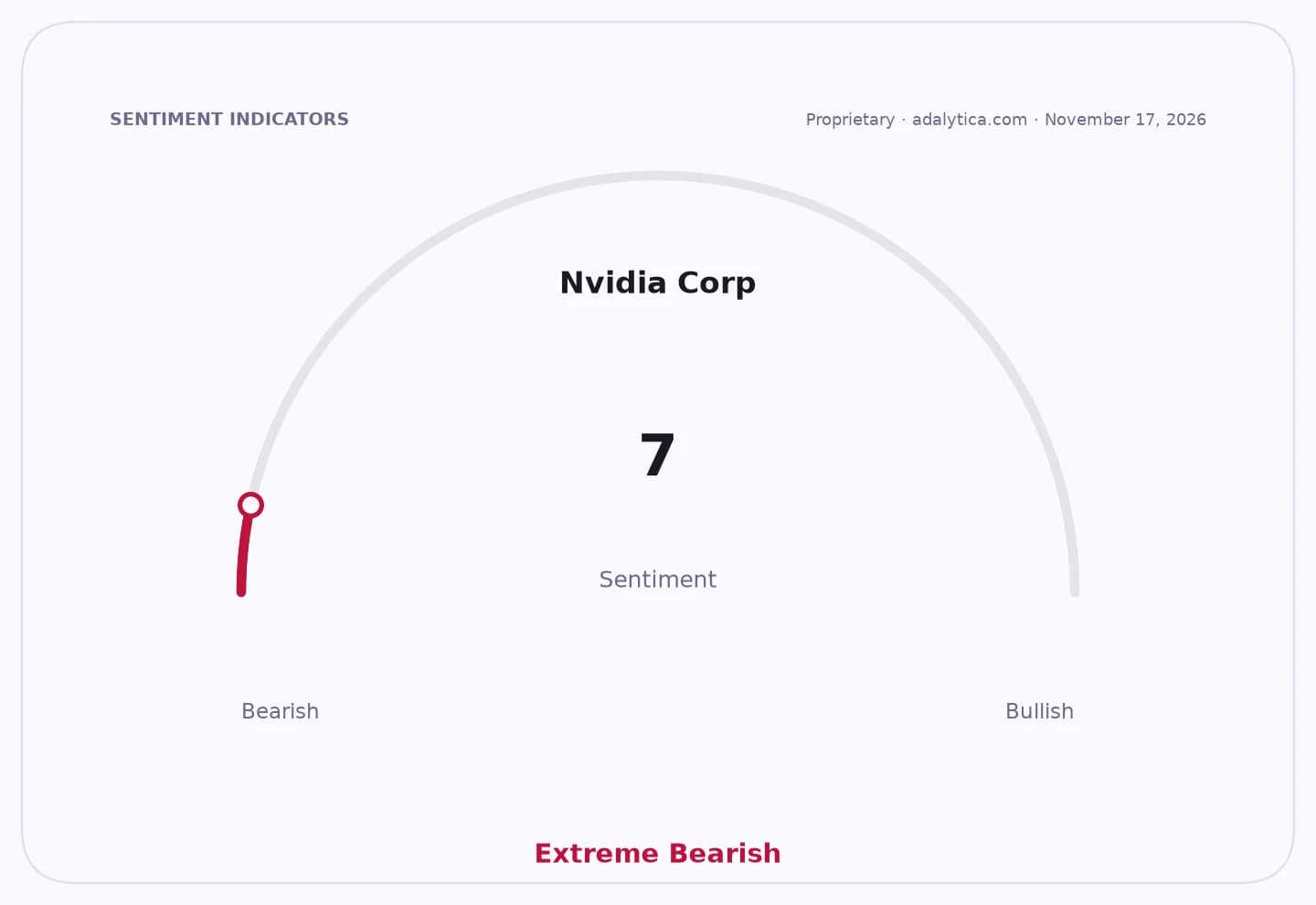
For investors, the distinction is critical. Nvidia remains the center of the AI trade, and its shares have already been under heavy pressure, with the stock closing at $125.53 on Nov. 20 after a steep slide from above $200 earlier in the fall. The conventional technical indicators also point to deep weakness, with the shares trading well below both the 50-day and 200-day moving averages and the RSI in oversold territory. Adalytica’s Nvidia earnings sentiment gauge shows fear, even as awareness of the story remains elevated.
The broader chip backdrop adds to the market sensitivity. The United States has tightened export restrictions on AI chips to China, forcing companies to reassess shipments and amplifying the strategic importance of domestic chip capacity. That has kept Nvidia, AMD and Intel at the center of investor attention, especially as competition intensifies around AI accelerators and supply chains.
For now, the real story is not a $50 billion Huang startup. It is the speed at which speculation can ricochet through a market already primed for AI-chip volatility, and how quickly any rumor about Nvidia’s founder can move from social media noise to a perceived industry event.
| Entity | Gains | Losses |
|---|---|---|
| Nvidia bears | ▲Rumor-driven pressure | ▼Confidence in leadership |
| Nvidia bulls | ▲No confirmed rival startup | ▼Near-term clarity |
| Chip rivals | ▲Potential distraction for Nvidia | ▼Less uncertainty over competition |
| Investors | ▲Better fact-checking | ▼False takeover/startup speculation |