Nvidia is expanding its India push with RTX Spark, even as U.S. curbs on advanced AI chip access and a sharp slide in its stock underscore how geopolitics and demand growth are colliding across the AI trade.
Nvidia India Push as Stock Falls on Export Curbs

The move matters because India is one of the few large markets where Nvidia can still broaden its developer and enterprise footprint without the same direct exposure to China-related restrictions. As Washington tightens controls on Nvidia chip sales and remote access to AI servers tied to Chinese entities, the company is leaning harder into alternative growth markets to keep its ecosystem growing.
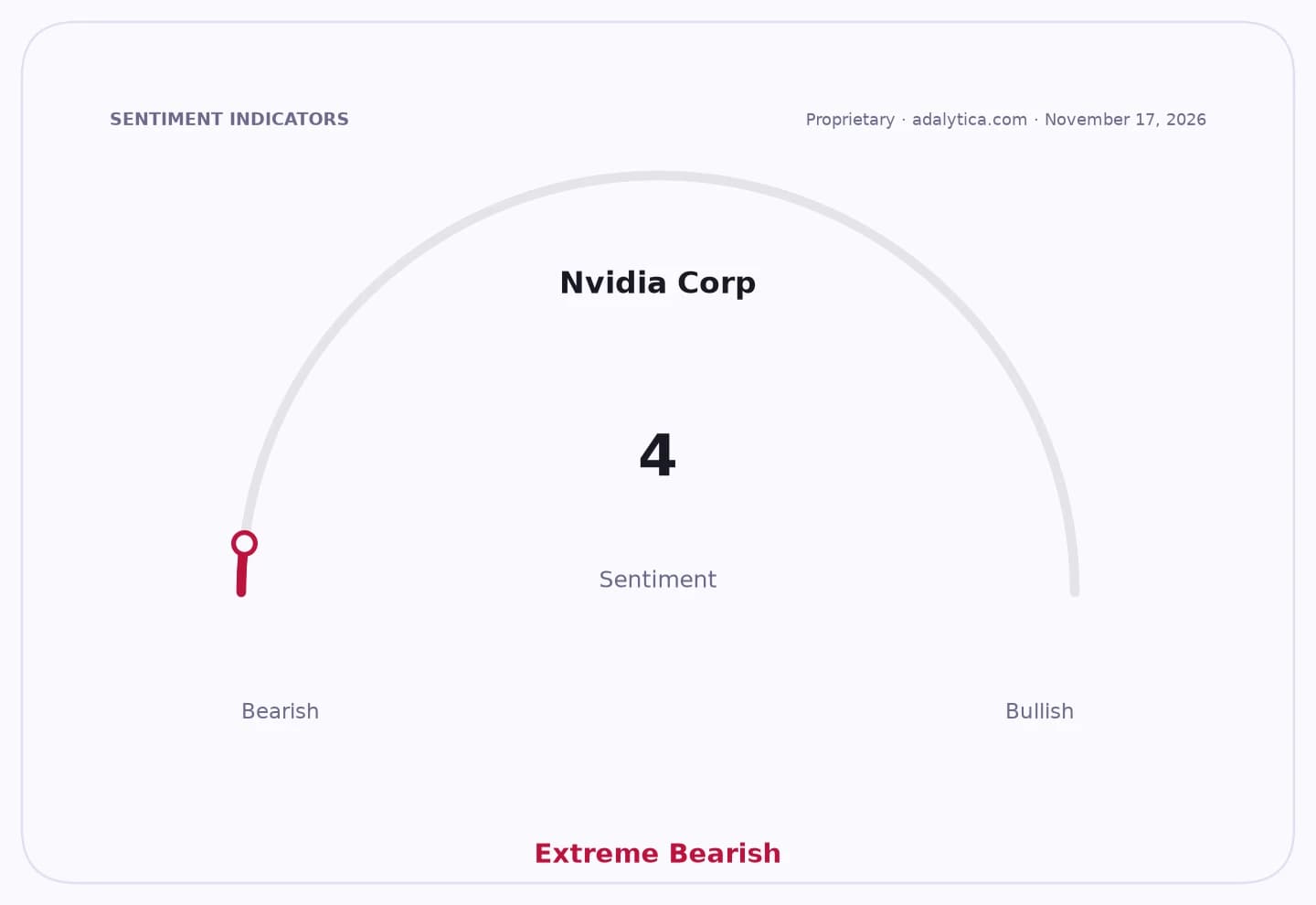
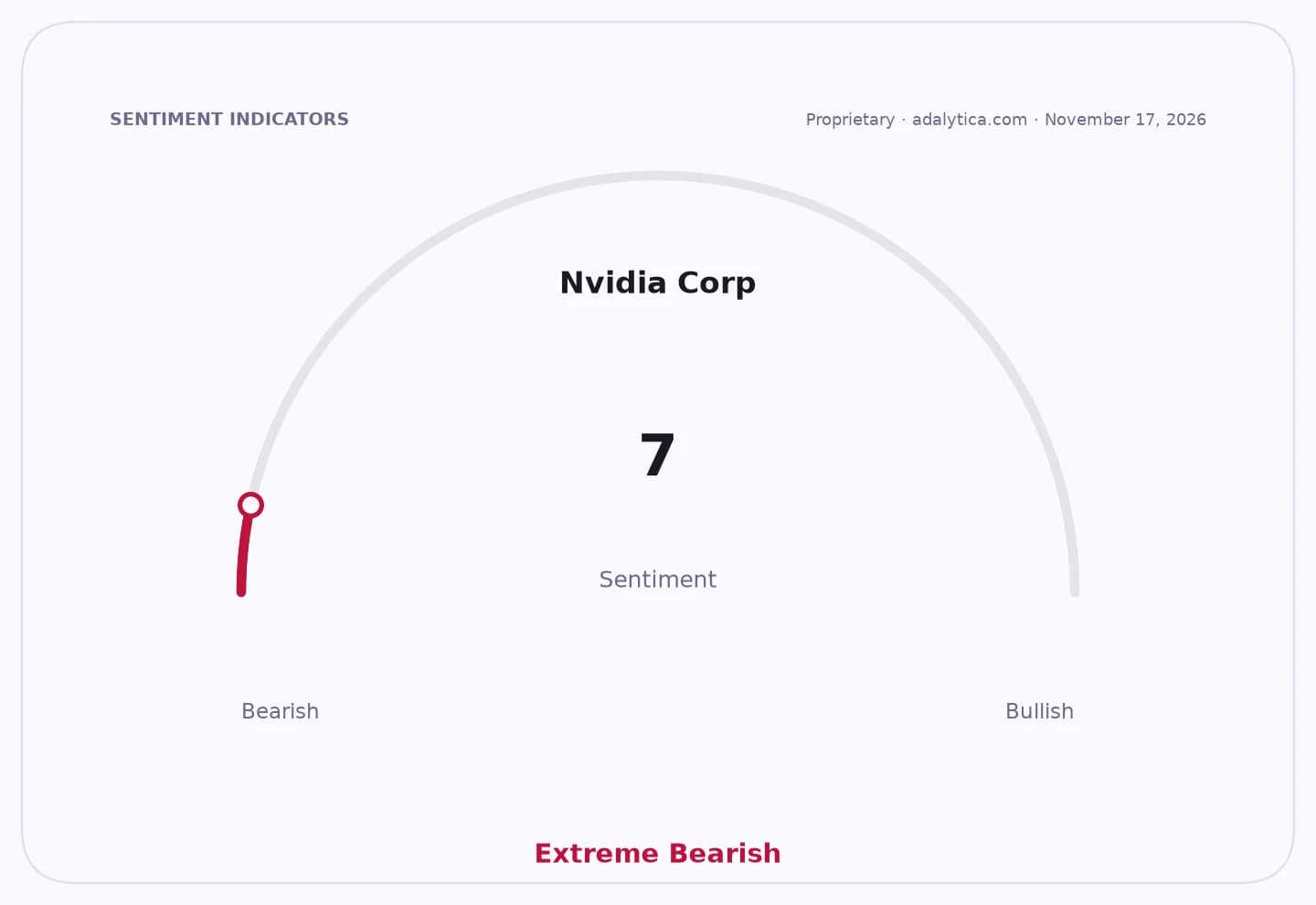
Sentiment Indicators
For investors, the timing lands badly. Nvidia shares closed at $125.53 on Nov. 20, down from $221.97 on Oct. 21 and far below its 50-day moving average of $207.00, while the RSI at 13.7 points to heavily oversold conditions. Volume of 626.4 million shares on the latest session suggests capitulation-style trading, with the stock also well under its 200-day average of $203.09.
The broader semiconductor complex is feeling the strain too. The VanEck Semiconductor ETF, SMH, fell to $400.06 on Nov. 20 from $447.48 a day earlier and $570.91 in mid-June, reflecting a broad de-risking across chip names rather than an isolated Nvidia selloff. Nvidia’s move into India offers a longer-term offset, but it does not remove the immediate pressure from policy risk, stretched AI valuations and cooling momentum in the sector.
Nvidia Corp — 30-day sentimentadalytica.com
Explore this data interactively — full history, time series and cross-market comparisons.
India remains important for Nvidia because it represents both a demand opportunity and a strategic hedge. Corporate buyers, startups and developers there are building AI infrastructure at a time when access to frontier chips is becoming more politically sensitive elsewhere, giving Nvidia a chance to deepen adoption of its software and hardware stack in a market less encumbered by U.S.-China tensions.
The next catalyst is likely to come from fresh U.S. export-control headlines, further AI infrastructure announcements in India and any sign that Nvidia can translate regional expansion into revenue growth fast enough to counter the damage from tighter China restrictions and a volatile market backdrop.
| Entity | Gains | Losses |
|---|---|---|
| Nvidia | ▲India growth avenue | ▼China revenue exposure |
| Indian developers | ▲Better chip access | ▼Higher hardware costs |
| U.S. regulators | ▲Tighter tech controls | ▼Industry pushback |
| Semiconductor bulls | ▲Long-term AI demand | ▼Near-term volatility |