NVIDIA has opened a new front in the global AI race by releasing a synthetic pretraining corpus for 22 Indian languages, a move that could make local-language models materially easier and cheaper to build in one of the world’s largest internet markets.
NVIDIA releases Indic AI corpus for 22 Indian languages
The company said the Nemotron-pretraining-Indic-v1 corpus contains about 2.8 trillion tokens and comes with an open, GPU-accelerated data-generation pipeline, giving developers a reproducible recipe for creating Indic training data rather than just a static dataset. That matters economically because the bottleneck in Indian-language AI has been data scarcity, not compute alone, and a scalable pipeline lowers the cost of fine-tuning and continued pretraining for startups, enterprises and cloud providers trying to serve hundreds of millions of users in local languages.
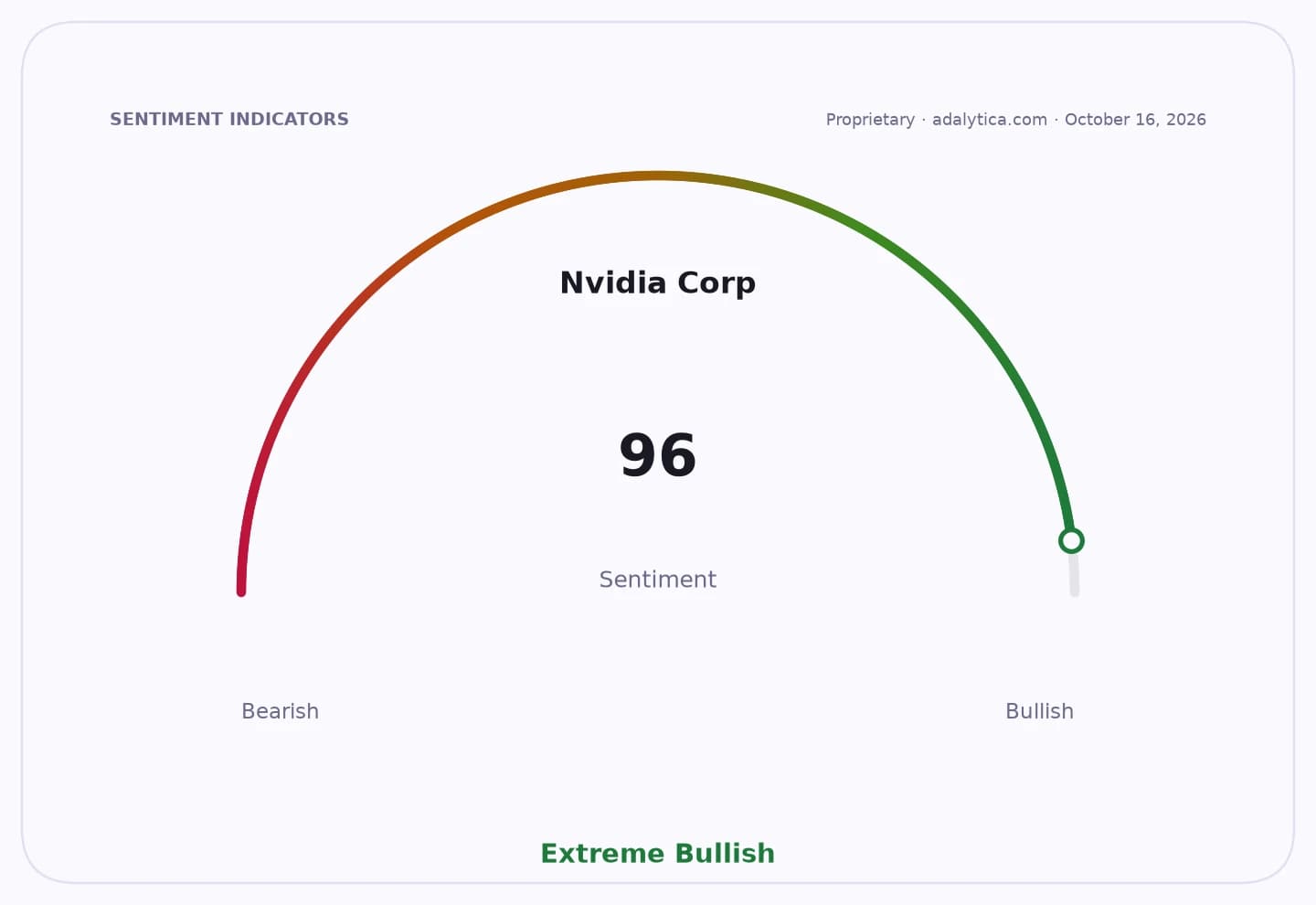
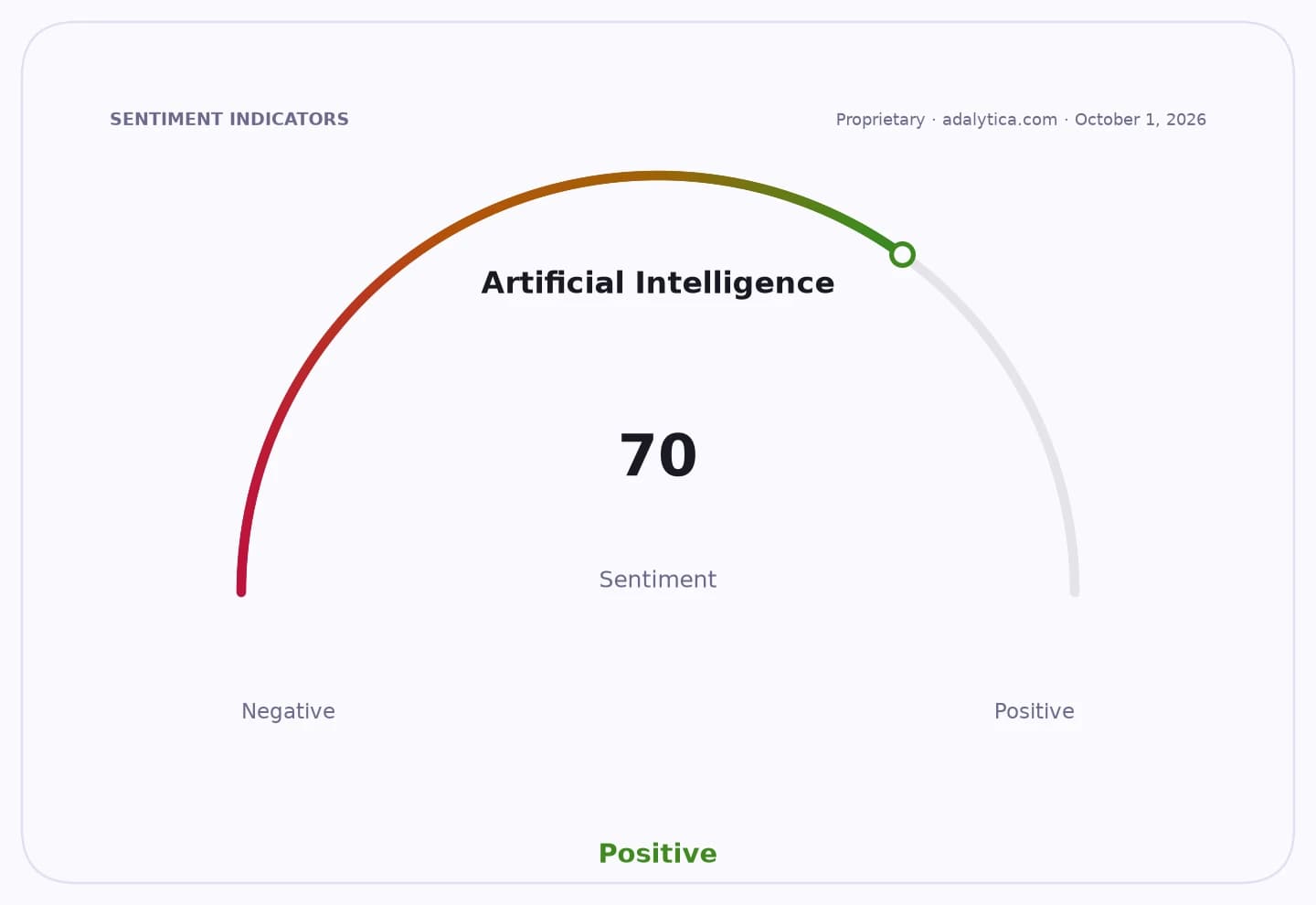
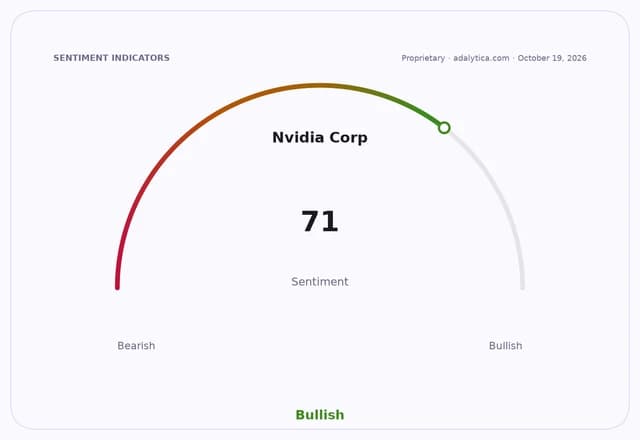
Sentiment IndicatorsⓘProprietary · adalytica.com · October 19, 2026
This is a snapshot — live sentiment, awareness and momentum for 130+ markets update continuously in the dashboard.Open AlphaPulse
The release targets the 22 languages listed in India’s Constitution, which NVIDIA said are the first languages for 97% of Indians, or nearly 1.2 billion people at the 2011 census. In practical terms, that gives the company and its partners a way to expand the addressable market for AI assistants, search, education tools and enterprise applications beyond English-speaking users, where model quality has already advanced faster and monetization has been easier.
NVIDIA said the corpus includes 2.601 trillion native-script tokens and 224.6 billion romanized tokens, spanning 34 language-script configurations. Twelve languages, including Hindi, Bengali, Tamil, Telugu and Urdu, have both native-script and romanized data, while ten languages have native-script coverage only. The dataset is being distributed through Hugging Face Datasets, and the associated Nemotron Bharat translation plugin for NeMo Data Designer is open source, reinforcing NVIDIA’s strategy of using open tooling to pull more developers into its CUDA and NeMo ecosystem.
The economic significance is twofold. First, the corpus reduces one of the largest hidden costs in frontier AI: high-quality multilingual data curation. Second, it increases the likelihood that Indian-language models improve enough to support commercial deployment in customer service, government services, financial inclusion, and education, where local-language interfaces can broaden adoption. For Nvidia, that expands demand not just for training runs but also for the GPUs, software stacks and inference infrastructure that sit behind them.
The company said the corpus was built from 15 Nemotron-CC-v2 subsets and that its workflow keeps source identifiers traceable from input document to output. It used Google’s Gemma-4-31B-it to translate and assess full documents for the twelve dual-script languages, while a separate Indic Translate model from Bodhan AI was used for the remaining ten. Outputs had to score at least 75 out of 100 on automated quality checks before being retained. NVIDIA said the repair loop recovered 438.4 billion tokens, showing how much usable data can be salvaged when translation is automated and tightly screened.
That approach has implications beyond India. If the pipeline proves durable, it offers a template for other low-resource language markets where data scarcity has slowed AI adoption. The company is effectively productizing the mechanics of synthetic data creation, not only the final corpus, which could matter to cloud rivals and open-model developers competing to win regional enterprise workloads.
NVIDIA also said continued pretraining using Indic data improved scores on five benchmark tests, with gains of 4.98 to 9.82 percentage points, though it noted the results combine synthetic and natural data. The company framed the work as a step toward future Nemotron models, suggesting the corpus is both a research release and a commercial platform move.
For investors, the near-term read-through is less about immediate revenue and more about ecosystem lock-in. NVIDIA is deepening its relevance in open AI workflows at a time when hyperscalers and model builders are trying to diversify their dependence on proprietary datasets and language APIs. The larger strategic question is whether open, high-quality language data can accelerate regional model adoption enough to support incremental GPU demand in emerging markets.
The stock has been trading around its 50-day moving average and below recent highs, while broader AI sentiment remains constructive but uneven. This announcement does not change the near-term earnings backdrop, but it reinforces the bull case that NVIDIA’s moat extends beyond chips into the tooling and data layer that shapes how AI is built. The bear case is that open corpora like this commoditize part of the stack and encourage more competition at the model layer. Either way, the company is trying to ensure that the next wave of AI growth in India runs through its platform.
| Entity | Gains | Losses |
|---|---|---|
| NVIDIA | ▲Deeper ecosystem lock-in | ▼Some data-stack commoditization |
| Indian AI developers | ▲Lower data-creation costs | ▼Less need to build from scratch |
| Hyperscalers/model builders | ▲Better regional model quality | ▼Higher pressure to differentiate |
| Proprietary data vendors | ▲— | ▼More competition from open pipelines |