Nvidia and Intel are getting a fresh vote of confidence from BNP Paribas as the market’s biggest AI spending wave keeps widening, and that matters because the next leg of semiconductor returns may come less from hype and more from durable demand for compute, networking and the infrastructure around it.
Nvidia and Intel get BNP price target hikes

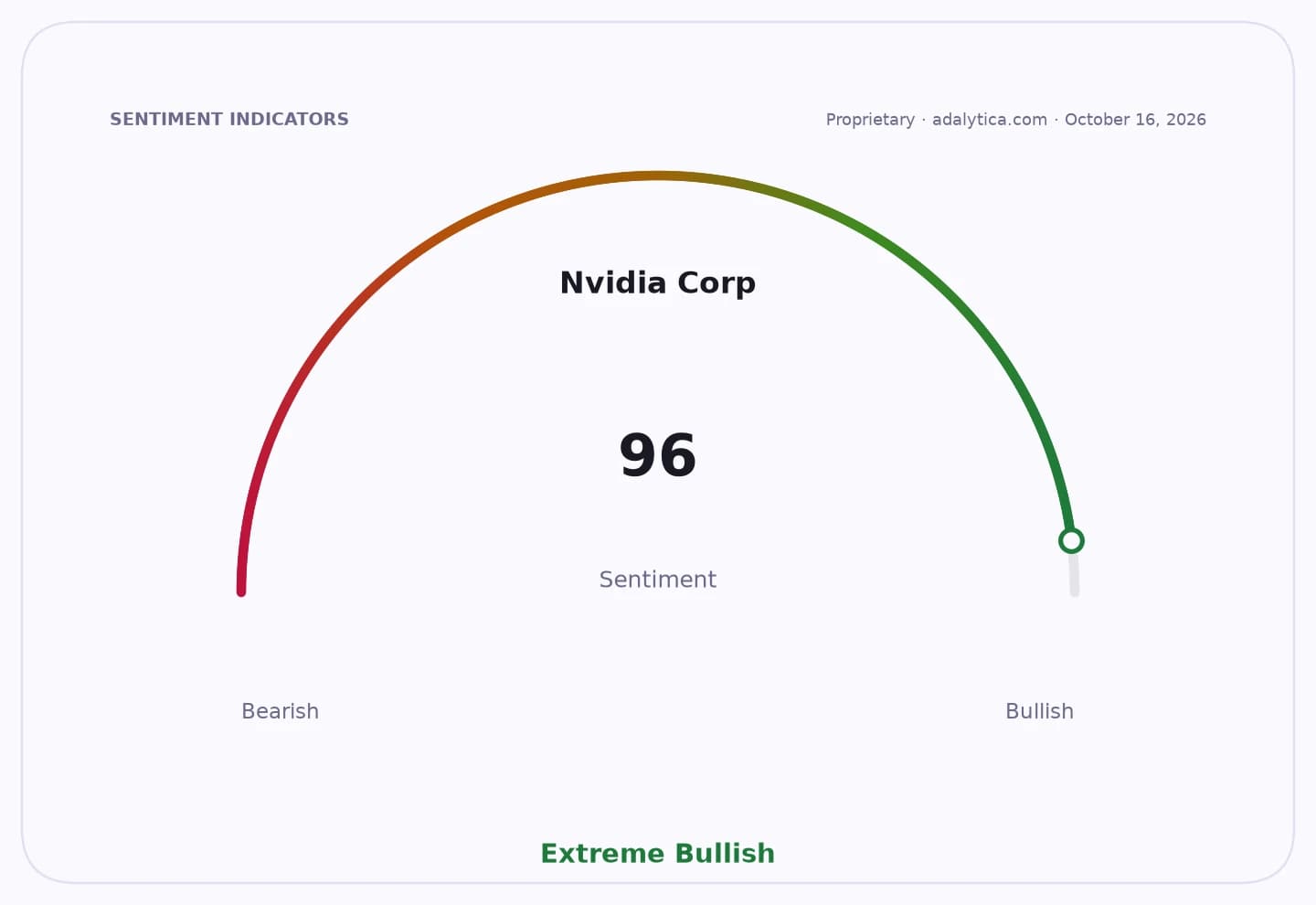
BNP Paribas lifted its price target on Nvidia to $345 from $285 and reiterated the chipmaker as its preferred semiconductor pick, arguing that Nvidia’s grip on AI hardware, CUDA software and networking leaves it best placed to capture the buildout of artificial intelligence computing. It also raised its target on Intel to $38 from $25, a sign the brokerage sees spillover opportunity beyond the obvious leader as customers keep pouring capital into data centers and related systems.
Sentiment IndicatorsⓘProprietary · adalytica.com · October 6, 2026
This is a snapshot — live sentiment, awareness and momentum for 130+ markets update continuously in the dashboard.Open AlphaPulse
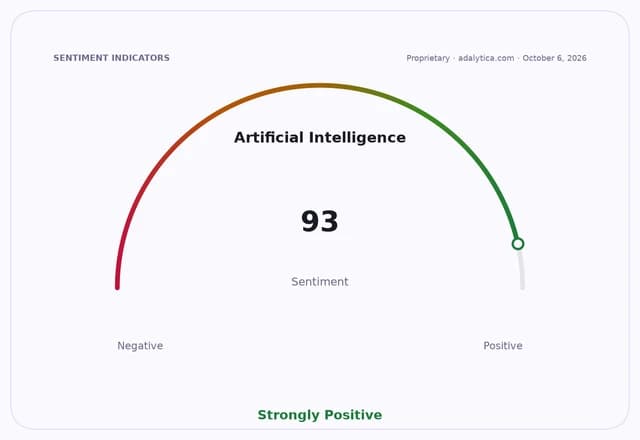
That is an important read-through for the broader chip complex. When a large broker raises both the category winner and a laggard at the same time, it is signaling that AI demand is no longer a single-stock trade. It is becoming an ecosystem trade. Nvidia has already benefited from the capital spending arms race, but Intel’s higher target suggests investors should watch for second-order beneficiaries tied to manufacturing, server architecture and enterprise upgrades as AI infrastructure expands.
The price action backs the case that the market is still willing to pay for AI exposure, but it is also becoming more selective. Nvidia shares were last around $233.95, up sharply from the $177 area seen earlier in the year and above the 50-day moving average of $218.12, while the 200-day average sat near $200.38. Intel was last at $119.33, also well above its 50-day and 200-day moving averages, reflecting a powerful rebound in sentiment toward the sector. The VanEck Semiconductor ETF, which tracks the group, traded near $630.60, underscoring that the entire chip supply chain is being pulled higher by the same AI investment cycle.
For investors, the message is straightforward: the AI trade is not exhausted, but the best returns may now come from identifying which names have the deepest moat and which are still underappreciated by a market that has already rewarded the most obvious winners. Nvidia remains the high-conviction core holding because of its full-stack advantage, while Intel becomes more interesting as a turnaround and capacity-recapture play if AI server demand keeps broadening beyond the first wave of GPU spending.
Adalytica’s earnings sentiment snapshot on Nvidia shows neutral sentiment but elevated awareness, which fits a market that is already focused on the name but still vulnerable to revisions in expectations. In other words, the crowd is watching, but it may not fully appreciate how long the AI capex cycle can run or how many companies can still benefit from it.
The key catalyst from here is whether hyperscalers and enterprise buyers keep raising budgets into next year. If they do, Nvidia’s target could prove conservative, and Intel’s rerating may be only the first step in a broader semiconductor recovery. The opportunity, in our view, is to stay positioned in the names with direct AI exposure while also looking for the less obvious winners that will ride the next phase of infrastructure spending.
| Entity | Gains | Losses |
|---|---|---|
| Nvidia | ▲Higher AI demand visibility | ▼AI skeptics |
| Intel | ▲Rerating potential | ▼Bears on turnaround |
| Semiconductor sector | ▲Broader capex tailwind | ▼Short sellers |
| Hyperscalers and builders | ▲More compute capacity | ▼Buyers facing higher costs |