Artificial intelligence is moving from a backend tool to a consumer-facing shopping companion, and that shift could matter far more for investors than another cycle of chatbot hype. If AI agents begin choosing products, comparing prices and steering purchases on their own, they could start changing who captures value in e-commerce, digital advertising and the cloud.
Nvidia, Microsoft Gain From AI Shopping Agents
That is the key message behind growing attention on AI agents such as Meta’s “Muse,” which technology consultant Martin Geißler says could “quite” disrupt business models. For long-term investors, the important question is not whether AI agents exist, but which companies control the data, distribution and infrastructure when software starts acting on a shopper’s behalf.
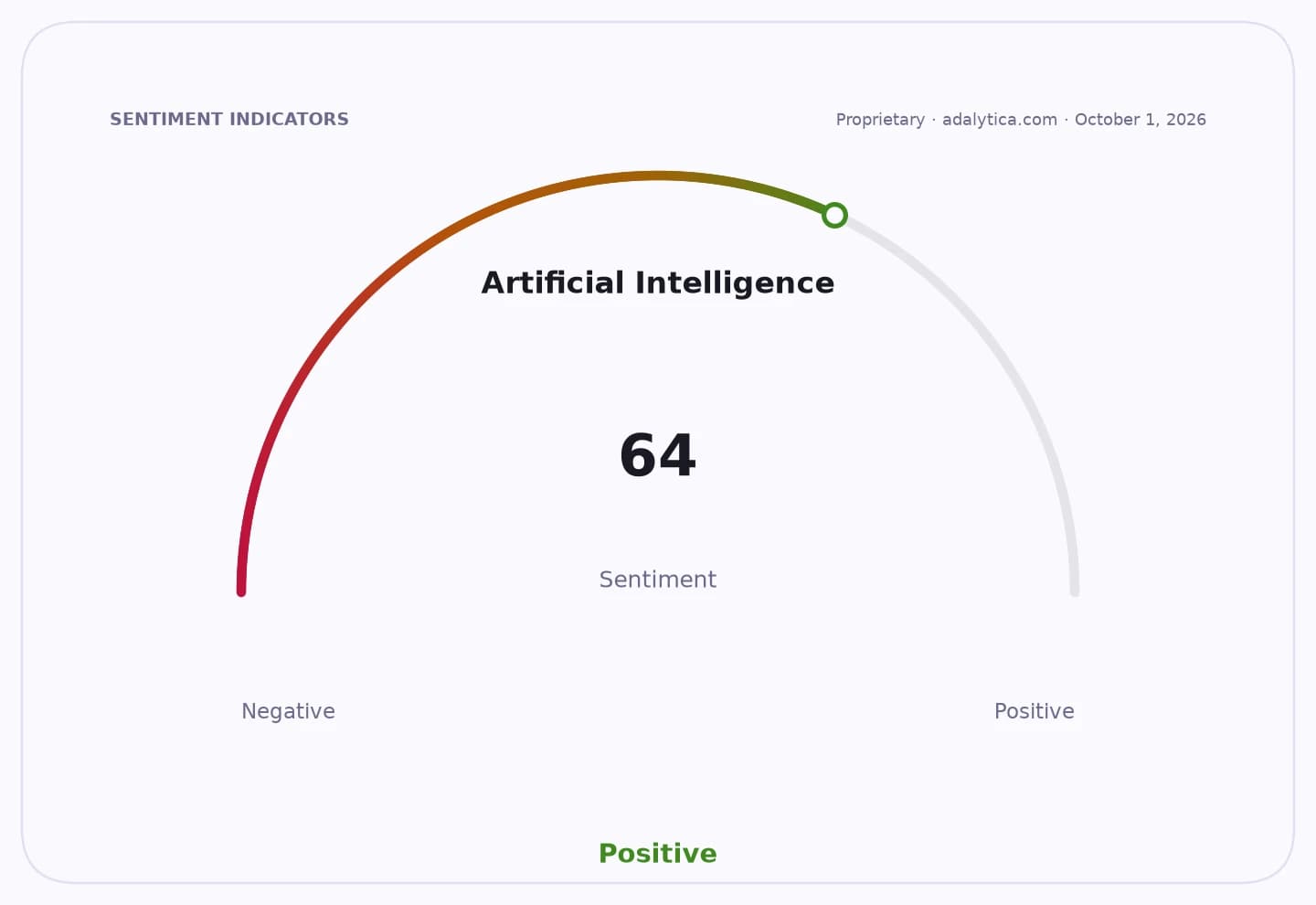
Sentiment IndicatorsⓘProprietary · adalytica.com · October 1, 2026
This is a snapshot — live sentiment, awareness and momentum for 130+ markets update continuously in the dashboard.Open AlphaPulse
The economic stakes are big because shopping is one of the most profitable battlegrounds on the internet. If agents reduce the need for consumers to browse websites, click ads or spend time comparing products manually, that could pressure parts of the retail funnel while rewarding the platforms that train, host and route those agents. In other words, AI may not just make shopping easier; it may reprice the entire digital commerce chain.
That helps explain why investors keep circling Nvidia and Microsoft, even as both stocks have been volatile. Nvidia remains the clearest picks-and-shovels play on the AI buildout. The stock recently traded around $228.38, well above its 200-day moving average of about $199.81 and its 50-day moving average of roughly $217.23. RSI readings near 63.7 suggest momentum is healthy, though not euphoric. For investors, that says demand for AI infrastructure is still intact even after a powerful run.
Microsoft, meanwhile, is central because it sits where AI meets software distribution. The stock closed near $512.90, slightly above its 50-day moving average of about $482.19 and its 200-day average of roughly $431.04. That premium reflects Microsoft’s position inside cloud computing, enterprise software and AI partnerships. If shopping agents become embedded in everyday consumer behavior, Microsoft’s reach across platforms and applications could prove more durable than many investors now appreciate.
The AI-themed ETF AIQ shows the same broad interest in the theme. It ended near $65.16, above both its 50-day average of about $62.98 and its 200-day average of roughly $57.17, a sign that investors are still willing to own diversified AI exposure rather than try to pick a single winner. That may be the smarter approach if the next phase of AI adoption is less about one killer app and more about a widening ecosystem of winners.
Still, there is a real risk here for incumbents. Shopping agents could weaken the economics of traditional search ads, affiliate links and even some e-commerce interfaces if consumers increasingly let software decide what to buy. That would be a headwind for businesses built on attention, clicks and browser real estate, while creating opportunity for companies that own the models, the cloud infrastructure and the payment rails.
For investors, the broader lesson is familiar: disruptive technologies rarely reward every participant equally. AI agents may create a lot of noise in the near term, but over a 3- to 10-year horizon they could reshape who gets paid in digital commerce. That makes the theme worth watching closely — and worth owning through quality, diversified positions rather than chasing the latest headline.
| Entity | Gains | Losses |
|---|---|---|
| Nvidia | ▲More AI infrastructure demand | ▼Slower AI capex growth |
| Microsoft | ▲Deeper AI platform reach | ▼Ad-driven web middlemen |
| E-commerce platforms | ▲Better automation tools | ▼Weaker click-based funnels |
| AIQ holders | ▲Broad AI exposure | ▼Single-stock concentration risk |