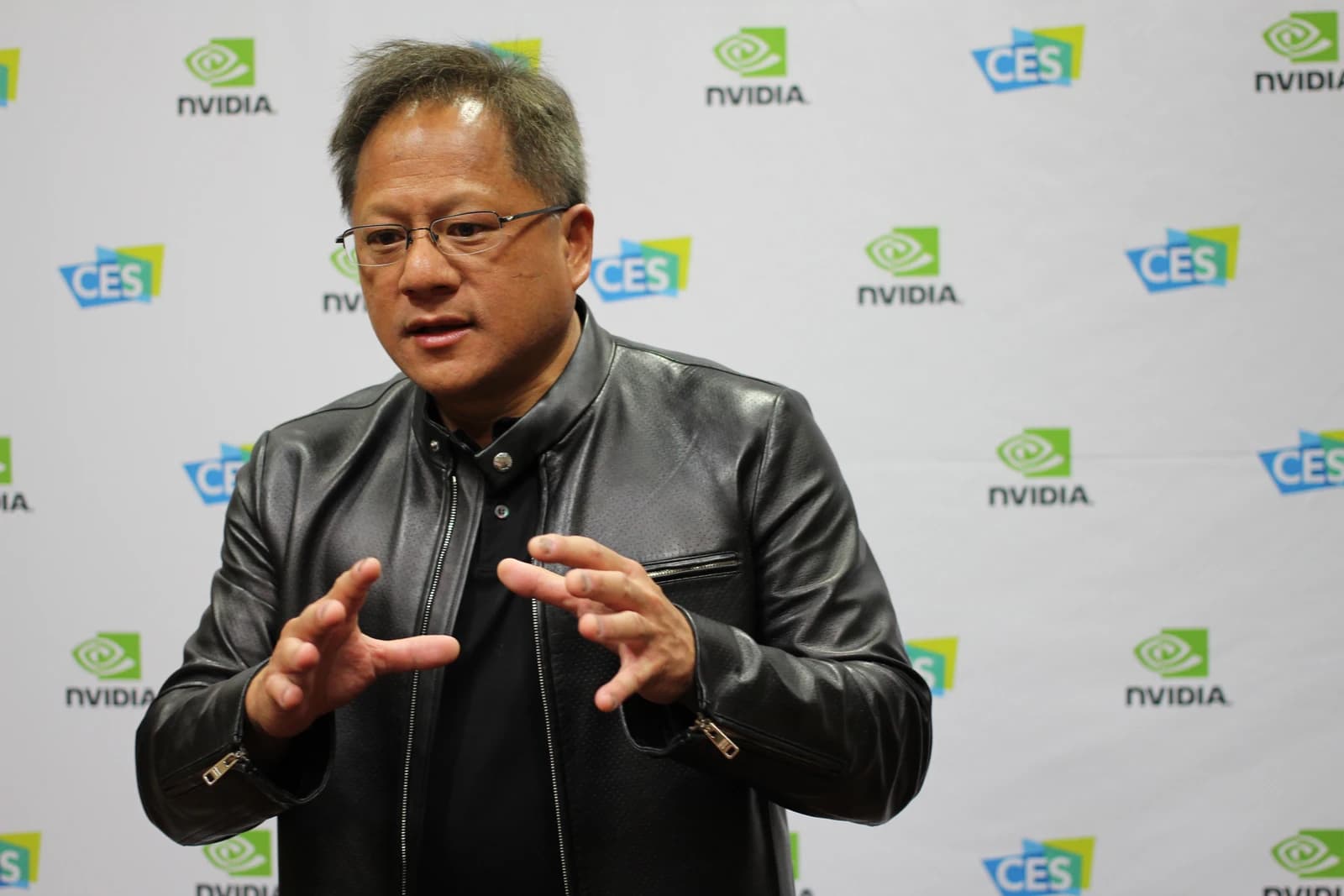
Nvidia’s RTX Spark is emerging as a compact showcase for how far the company’s Blackwell architecture can stretch beyond servers, with hands-on testing suggesting the chip can handle local AI agents, creative workloads and gaming in a single low-power package.
Nvidia RTX Spark Tests Local AI And Gaming
That matters because the fastest-growing AI spending story is no longer just about training models in data centers. Nvidia is now trying to monetize AI at the edge — inside laptops and workstations — where buyers want enough performance for agentic workflows without handing sensitive data to the cloud.
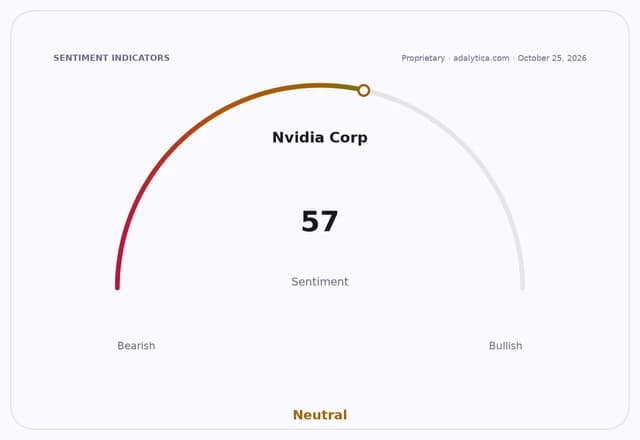
Sentiment IndicatorsⓘProprietary · adalytica.com · October 25, 2026
This is a snapshot — live sentiment, awareness and momentum for 130+ markets update continuously in the dashboard.Open AlphaPulse

The RTX Spark is Nvidia’s first system-on-chip, pairing an 18-core CPU and 5,120-core Blackwell RTX GPU in one version, or a 20-core CPU and 6,144-core GPU in a larger model. The design echoes Apple’s M-series integration, but with a distinctly Nvidia angle: local AI acceleration and gaming-grade graphics in the same machine.
Benchmark results from the chip’s early real-world use help explain the appeal. In Geekbench 7.1, the N1X variant scored 2,623 in single-core tests and 21,899 in multi-core, trailing Apple’s M5 on single-threaded performance but beating it on multi-core throughput. In MLPerf Client tests simulating analyst and software-engineering agent workflows, runs averaged 63.7 seconds and 50.8 seconds while processing as many as 14,005 and 10,238 tokens, respectively.
The chip also appears capable of running local generative media tools at workable speeds. Image-generation workflows using ComfyUI completed in 16.2 to 46.5 seconds depending on the model, while a distilled video model took 88 seconds. For creators, PugetBench results put the chip in workstation territory, with a Photoshop score of 11,801 and Premiere Pro score of 76,234.
Gaming, long a weak point for ARM-based laptops, looks better than expected too. The chip logged 30.16 frames per second in Cyberpunk 2077 at 1080p with ray tracing set to Ultra, and averaged 48.58 fps in Doom: The Dark Ages. In Gears of War: E-Day, the system reportedly held above 115 fps on Ultra settings.
The broader investor significance is that Nvidia is opening another route to revenue growth as competition intensifies in AI infrastructure. If customers buy RTX Spark laptops for local AI, creative work and casual gaming, Nvidia gains a new channel for Blackwell adoption beyond hyperscale spending, while software partners such as Adobe and game developers help reinforce the ecosystem.
That also gives the stock another narrative tailwind at a time when traders are still focused on whether AI demand can justify lofty valuations. Nvidia shares recently showed a more volatile technical setup, with the stock sitting below its 50-day moving average and its relative strength index in oversold territory in the latest readings, even as its 200-day average remained below current price levels. The broader AI trade has also stayed heated, with sentiment data around the theme showing extreme greed.
For investors, the key question is whether RTX Spark becomes a meaningful new product cycle or remains a niche premium workstation play. The first hands-on results suggest Nvidia has a credible answer to Apple’s integrated-chip model — only with AI-first software, stronger graphics and a clearer path into creative and developer workflows.
The next catalyst will be adoption: whether OEMs, developers and enterprise buyers treat RTX Spark as a must-have local AI machine or just a high-end curiosity.
| Entity | Gains | Losses |
|---|---|---|
| Nvidia | ▲New AI PC revenue stream | ▼Reliance on data-center demand alone |
| Laptop OEMs | ▲Premium workstation differentiation | ▼Commodity PC pricing pressure |
| Adobe and app developers | ▲Faster AI features on-device | ▼Slower performance on older hardware |
| Apple | ▲Pressure to defend M-series lead | ▼Share in high-end AI/creative laptops |