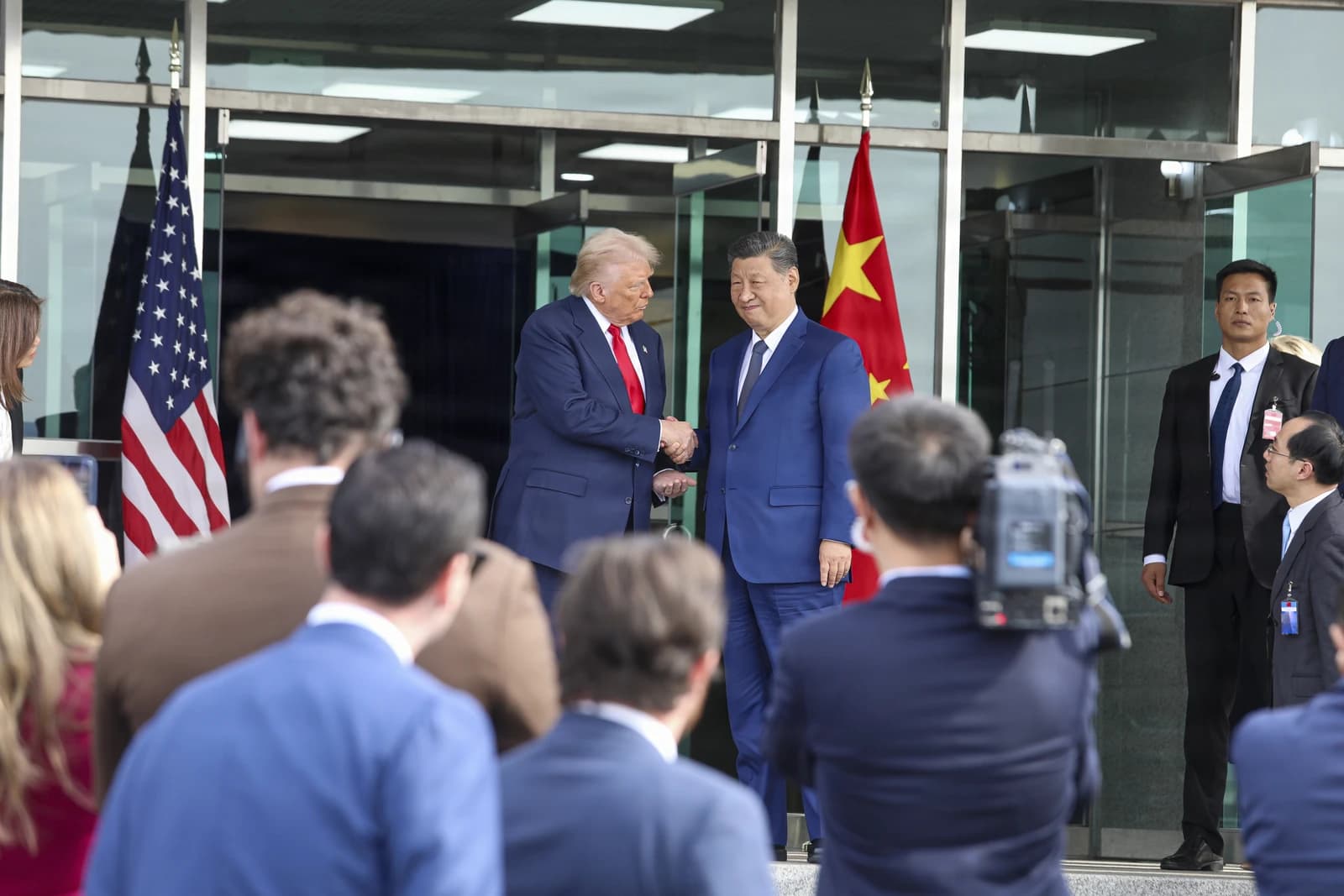
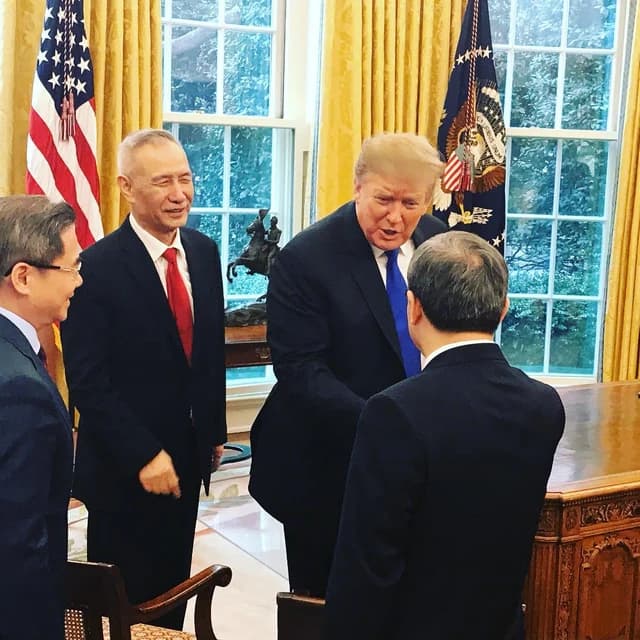
Trump’s latest CNBC remarks on China and Nvidia chief Jensen Huang added a fresh layer of uncertainty to the U.S.-China tech fight, with investors trying to gauge whether rhetoric from Washington will translate into tighter restrictions on advanced chips and AI supply chains.
Nvidia, TSMC, Alibaba Fall on China Chip Risk
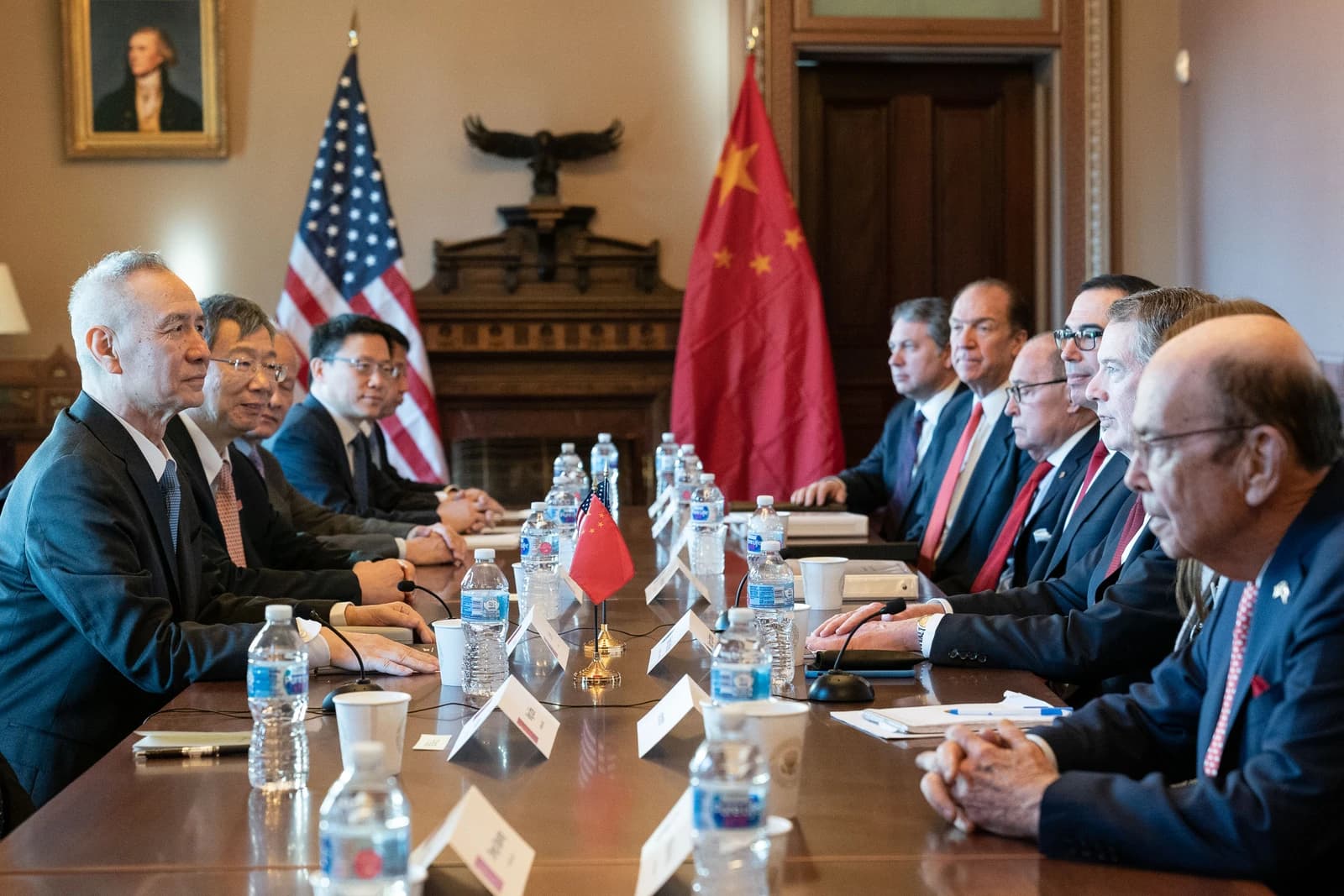
The comments matter because semiconductors sit at the center of both countries’ strategic competition. Any sign of tougher rules on chip exports, AI accelerators or related manufacturing equipment can ripple through revenue forecasts for Nvidia, Taiwan Semiconductor Manufacturing Co. and a broader group of Asian suppliers, while also affecting Chinese buyers and internet platforms that depend on imported compute.
Sentiment Indicators
Nvidia has already been volatile. The stock closed at $149.30 on Nov. 25, after plunging as low as $125.53 on Nov. 20, and remains well below its 50-day moving average of $203.65. Its relative strength index at 37.7 points to oversold conditions, while the MACD remains sharply negative, underscoring how quickly sentiment can turn when trade headlines hit the chip complex.
TSMC, the world’s most important advanced-chip foundry, has also been under pressure. Shares finished at $342.34 on Nov. 25, down from $363.60 two days earlier and far below the 50-day average of $418.26, even though the long-term 200-day average sits at $402.23. The stock’s RSI reading of 47.6 suggests stabilization is possible, but investors are still pricing in policy risk around cross-border AI demand and supply-chain access.
US-China Relations vs NVDAadalytica.com
Explore this data interactively — full history, time series and cross-market comparisons.
TSMC
Alibaba remains more exposed to the China growth side of the equation. The stock closed at $86.26 on Nov. 25, below its 50-day average of $102.96 and its 200-day average of $119.15, as traders continue to discount the impact of weaker Chinese sentiment and any further strain in U.S.-China economic ties. Adalytica’s U.S.-China Relations Sentiment gauge has fallen to 57, from 79 a day earlier, while awareness remains elevated at 79, signaling investors are closely watching the issue even as conviction fades.
For markets, the immediate question is whether this is political noise or a precursor to policy action. Any hardening of the U.S. stance would likely support domestic chip equipment and defense names, while pressuring Nvidia, TSMC and Chinese technology shares; if the rhetoric cools, the same stocks could see a relief bounce as investors reprice the odds of more severe export controls.
| Entity | Gains | Losses |
|---|---|---|
| U.S. chip hawks | ▲tougher policy leverage | ▼policy uncertainty |
| Nvidia and TSMC longs | ▲relief if rhetoric fades | ▼export-control risk |
| Chinese tech buyers | ▲cheaper access if tensions ease | ▼tighter AI-chip supply |
| Chinese equities | ▲trade détente hopes | ▼renewed U.S. restrictions |