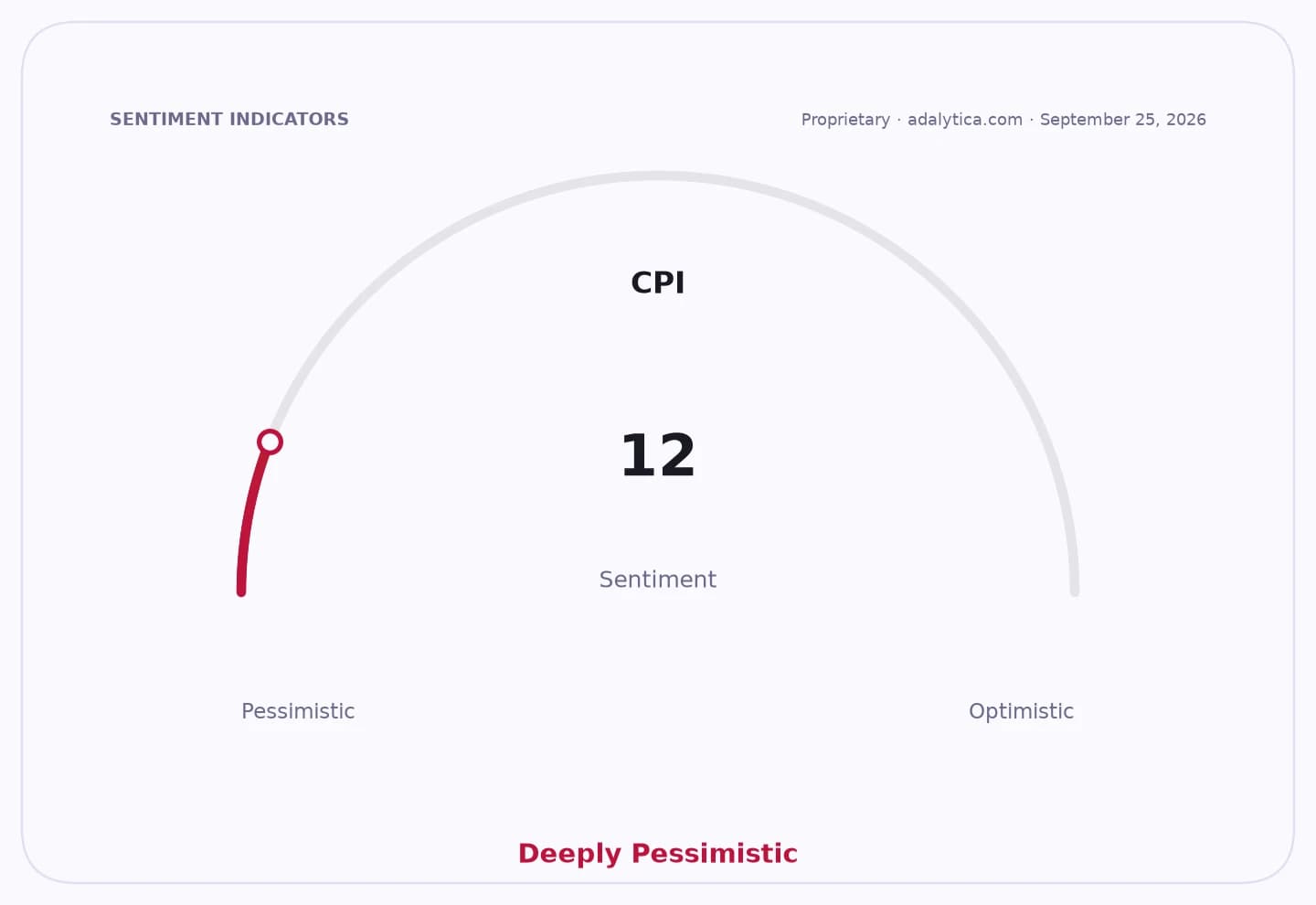
Household income growth slowed markedly at the start of this year, a sign that the post-pandemic wage boom is fading even as unemployment remains near historic lows and markets continue to price a soft landing.
OECD: Household income growth slows in early 2026

The OECD data point to a more muted expansion in purchasing power at a time when households are still contending with elevated borrowing costs and sticky prices in services. That matters because income growth is the key buffer keeping consumption afloat; when it loses momentum, spending typically becomes more dependent on credit and savings, both of which are less durable supports.
Sentiment IndicatorsⓘProprietary · adalytica.com · August 6, 2026
This is a snapshot — live sentiment, awareness and momentum for 130+ markets update continuously in the dashboard.Open AlphaPulse
The slowdown comes against a backdrop of a U.S. labor market that is cooling, not cracking. The unemployment rate has edged down to 4.2% in June from 4.3% in April and May, suggesting employers are still adding jobs, but not at a pace that would sustain the rapid income gains seen earlier in the recovery. Adalytica’s Nonfarm Payrolls sentiment gauge, meanwhile, has been choppy, with the latest reading at 46, underscoring uncertainty around the payroll outlook.
For investors, the mix is important because it shifts the balance between inflation risk and growth risk. Slower household income growth eases pressure on consumer demand, which can help bring inflation down and support bond prices. But it also raises questions about earnings resilience for retailers, travel companies and other consumer-facing businesses that have leaned on strong nominal spending. Treasury investors have already been leaning into that slower-growth narrative, with the 10-year ETF TLT trading around 83.0 after a volatile stretch, while the S&P 500 ETF SPY has pushed back to 769.79, reflecting a market still willing to look through near-term macro weakness.
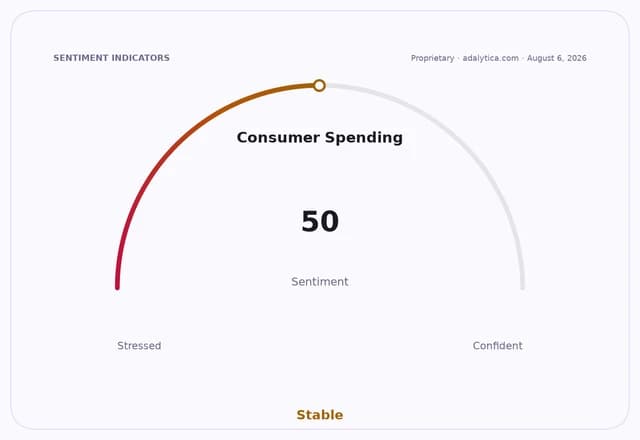
The split is clearest in discretionary spending. Adalytica’s Consumer Spending and Credit Card Usage gauges both remain elevated on awareness, but their sentiment readings show a consumer base that is still active, if increasingly uneven. That suggests households are not pulling back abruptly, but the margin for error is shrinking. If income growth continues to decelerate, spending could slow more sharply in coming months, particularly among lower- and middle-income households that are more exposed to financing costs.
The bull case is that slowing income growth helps the Federal Reserve’s disinflation effort without forcing a hard landing. The bear case is that pay gains weaken further while job growth softens, leaving consumers to absorb higher real financing costs with less wage support. For markets, the next few payroll and income reports will be crucial in determining whether this is just normalization after an exceptional run or the start of a more meaningful consumer slowdown.
| Entity | Gains | Losses |
|---|---|---|
| Bond investors | ▲Easier disinflation path | ▼ |
| Consumers with savings | ▲Less erosion from inflation | ▼ |
| Fed policymakers | ▲More room to cut rates later | ▼ |
| Retailers and leisure firms | ▲ | ▼Softer household demand |
| Credit-dependent households | ▲ | ▼Higher stress on spending power |