Oil prices suffer their sharpest weekly drop since the pandemic as easing fears over supply disruption from Iran and a stronger-than-expected U.S. jobs report combine to hit crude, threatening energy-sector earnings and commodity-linked assets.
Oil Falls Sharply as Iran Risk Eases

Brent crude fell 16.42% on the week, its biggest weekly loss since the Covid-19 crash in 2020, while U.S. West Texas Intermediate dropped 12.76% as traders reassessed the odds of prolonged sanctions pressure and military escalation against Iran. The move marked a sharp unwind in the geopolitical premium that had been built into prices during recent tensions in the Middle East.
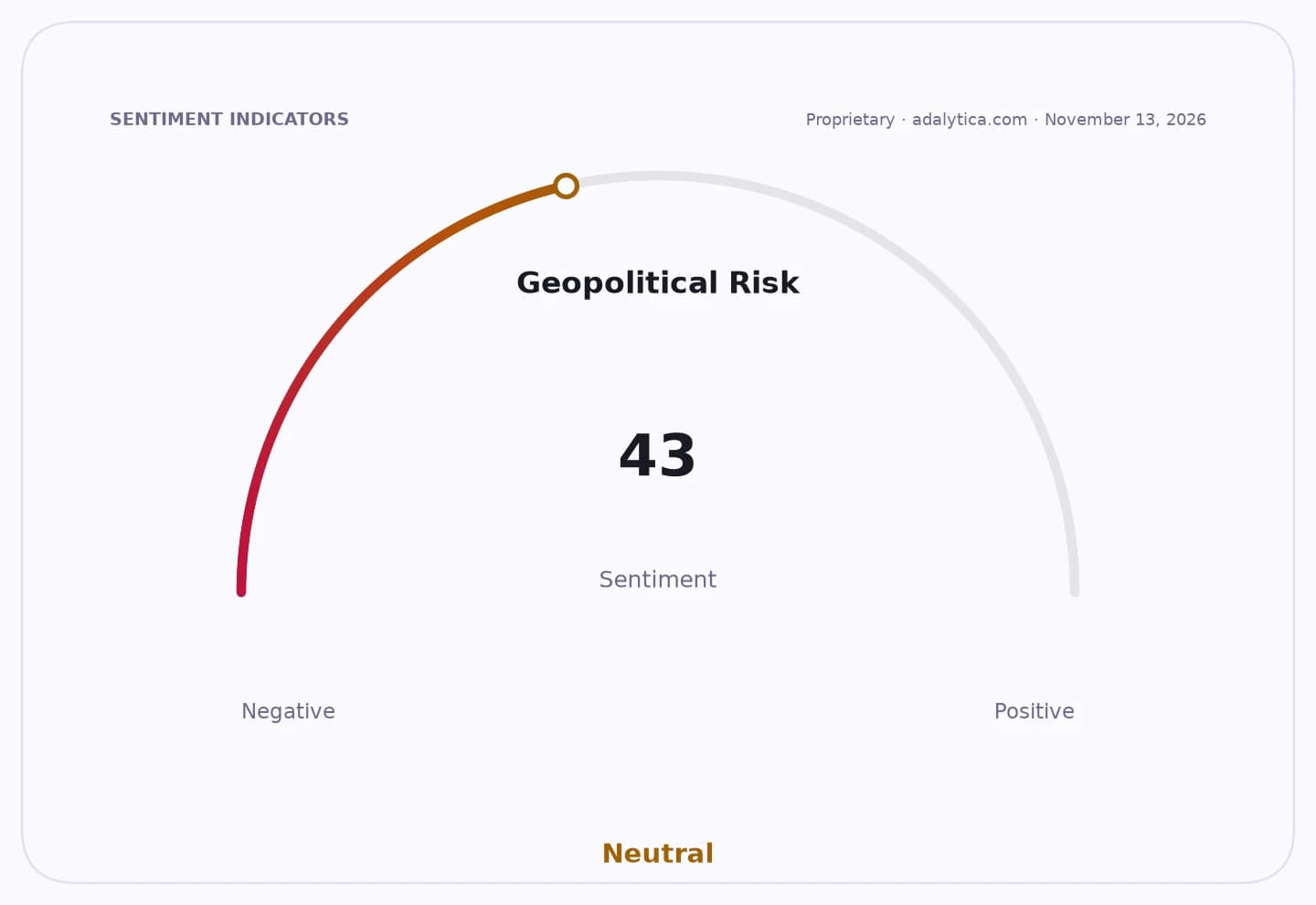
Sentiment Indicators
Geopolitical Risk
The slide matters economically because it points to the market pricing in a looser oil balance just as demand concerns are resurfacing. Spot premiums for Middle East crude have eased back to pre-conflict levels, signaling that supply fears are fading and that an expected oil surplus may be emerging.
A stronger U.S. labor-market report added to the bearish tone. The economy created 165,000 jobs last month, reinforcing expectations that the Federal Reserve may keep policy tight or even raise rates again, a backdrop that can weigh on growth and fuel demand.
For investors, the selloff is a direct hit to energy producers, crude-linked ETFs and commodity currencies, while offering relief to refiners, airlines and fuel-heavy industries. U.S. crude futures ended near $90.34 a barrel and Brent January contracts settled around $97.75, but those closes do little to offset the week’s damage after oil had already fallen about 8% on Wednesday alone.
Technical indicators also point to a weakened market. The U.S. oil ETF USO showed an “Extreme Fear” awareness reading in the Adalytica snapshot, while Brent and WTI prices have fallen well below recent highs, leaving energy bulls vulnerable if geopolitical headlines continue to cool.
The next catalyst is whether diplomacy around Iran keeps reducing supply-risk pricing or whether any renewed sanctions or military developments restore the lost premium. Until then, the path of least resistance for crude appears lower, with producers facing pressure on margins and investors watching for a further reset in oil-linked valuations.
| Entity | Gains | Losses |
|---|---|---|
| Airlines and fuel users | ▲Lower input costs | ▼Less protection if demand softens |
| Oil producers | ▲None in the near term | ▼Lower realized crude prices |
| Brent/WTI bulls | ▲Volatility trading opportunities | ▼Sharp weekly losses |
| Energy ETFs like USO/BNO | ▲Short-term trading volume | ▼Mark-to-market declines |