Oil and gold are being driven less by demand fundamentals than by fear of a wider Middle East supply shock, with geopolitical tension around Iran and the Strait of Hormuz keeping a floor under both markets even as U.S. Treasury yields pull in the opposite direction.
Oil, gold rise on Middle East supply fears

That backdrop matters because it raises the risk premium embedded in commodities at a time when neither market is being allowed to trade purely on macro data. Brent and WTI have been volatile, but the latest moves show traders still paying up for barrels that might be disrupted if shipping lanes or regional infrastructure come under pressure. Gold is getting a separate but related bid: when geopolitical risk rises, capital rotates toward assets that can hold value outside the banking system and away from cyclical exposure.
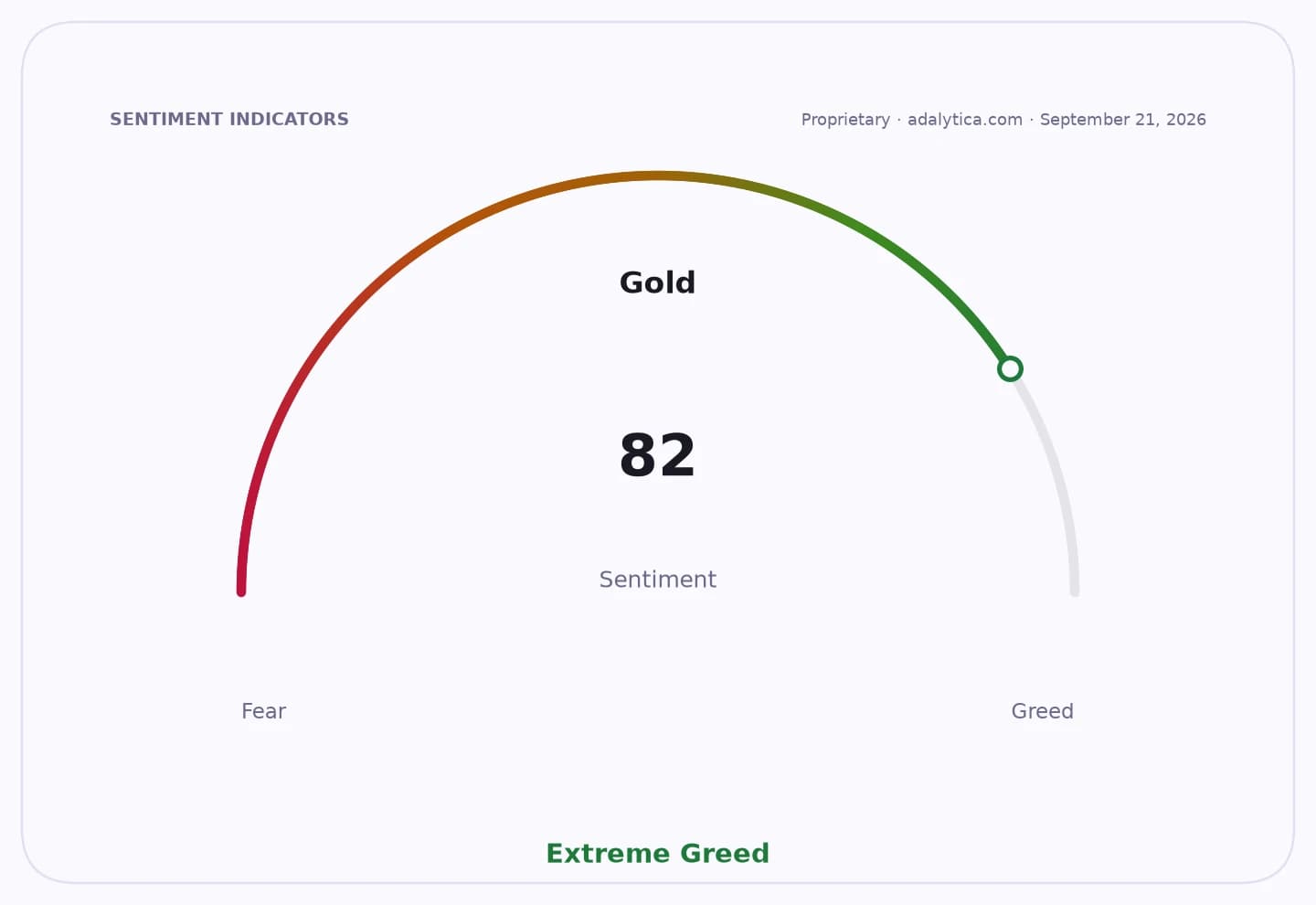
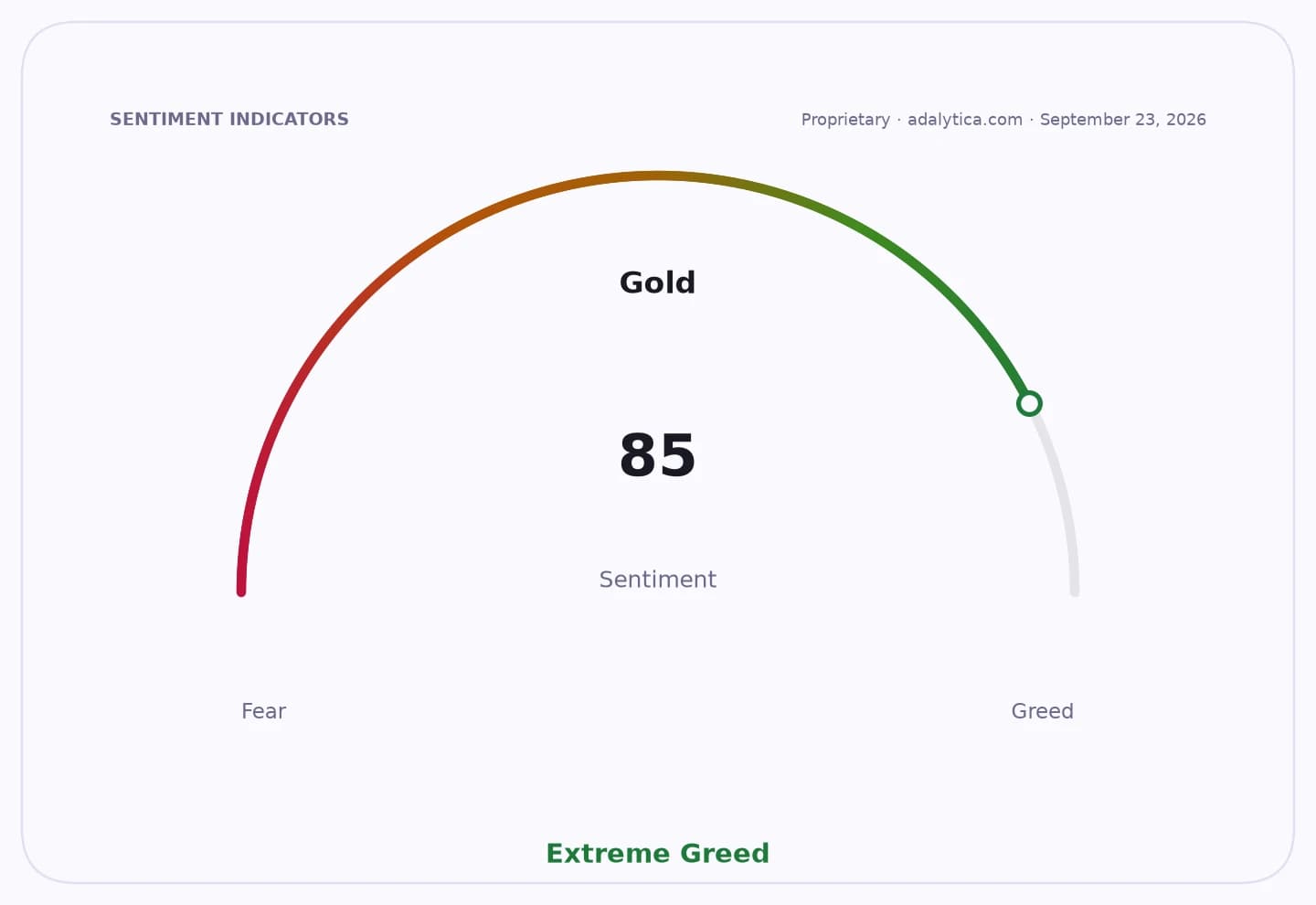
Sentiment IndicatorsⓘProprietary · adalytica.com · August 26, 2026
This is a snapshot — live sentiment, awareness and momentum for 130+ markets update continuously in the dashboard.Open AlphaPulse

The numbers show how quickly that premium can build. U.S. crude was last near $86.74 a barrel in the context data, off its May surge above $109 but well above the lows around $84, while the U.S. Oil Fund has rebounded to 126.15 from 112.21 in early July, despite a modest pullback over the last two sessions. The 50-day moving average for USO at 120.25 remains above the 200-day average at 104.90, a conventional technical sign that the medium-term trend is still constructive. Gold has been stronger still: GLD closed at 428.07, with its 50-day moving average at 384.67 and 200-day at 414.09, while RSI readings in the high 70s to low 80s point to a stretched but persistent uptrend.
The macro crosscurrents are important. Ten-year Treasury yields around 4.72% ordinarily pressure non-yielding gold, but that effect is being offset by the flight-to-safety bid and by a softer dollar backdrop. Adalytica’s U.S. dollar trade signals show extreme fear, while its Gold Fear & Greed Index is at 91, an “Extreme Greed” reading. In other words, the market is not just reacting to price action; it is actively pricing in a higher probability of disruption, currency weakness and policy uncertainty.
DCOILWTICO — macro contextadalytica.com
Explore this data interactively — full history, time series and cross-market comparisons.Open AlphaPulse

For investors, the key issue is whether this is a temporary geopolitical hedge or the start of a more durable commodity rerating. Bullish traders will argue that any escalation in the Gulf could tighten seaborne crude supply quickly and push gold higher as a portfolio hedge. Bears will counter that if tensions ease, gold’s elevated technical readings leave it vulnerable to profit-taking, while oil could give back part of its risk premium just as supply elsewhere remains adequate.
What to watch next is whether the tension premium broadens into a sustained bid for energy equities and bullion, or fades once the market sees no material interruption to flows through key shipping routes. If the risk premium persists, oil and gold will remain less a story about inflation and more a story about geopolitics setting the price of safety.
| Entity | Gains | Losses |
|---|---|---|
| Oil bulls | ▲Higher risk premium | ▼Demand slows if tension fades |
| Gold holders | ▲Safe-haven inflows | ▼Profit-taking at stretched RSI |
| Middle East producers | ▲Higher crude pricing | ▼Supply disruption risk |
| Importers / consumers | ▲— | ▼Higher input costs |