Oil prices edge higher as traders price in fresh Middle East supply risks, while gold slips after conflicting signals on the Iran war and the Fed leave investors less eager to chase havens.
Oil Rises as Middle East Supply Risks Increase

Brent crude rose 85 cents, or 0.78%, to $109.64 a barrel, while U.S. West Texas Intermediate climbed 76 cents, or 0.78%, to $98.58. The move extends a risk premium built into energy markets as traders watch Red Sea shipping routes and threats to Saudi oil infrastructure, two flashpoints that could quickly tighten global supply.
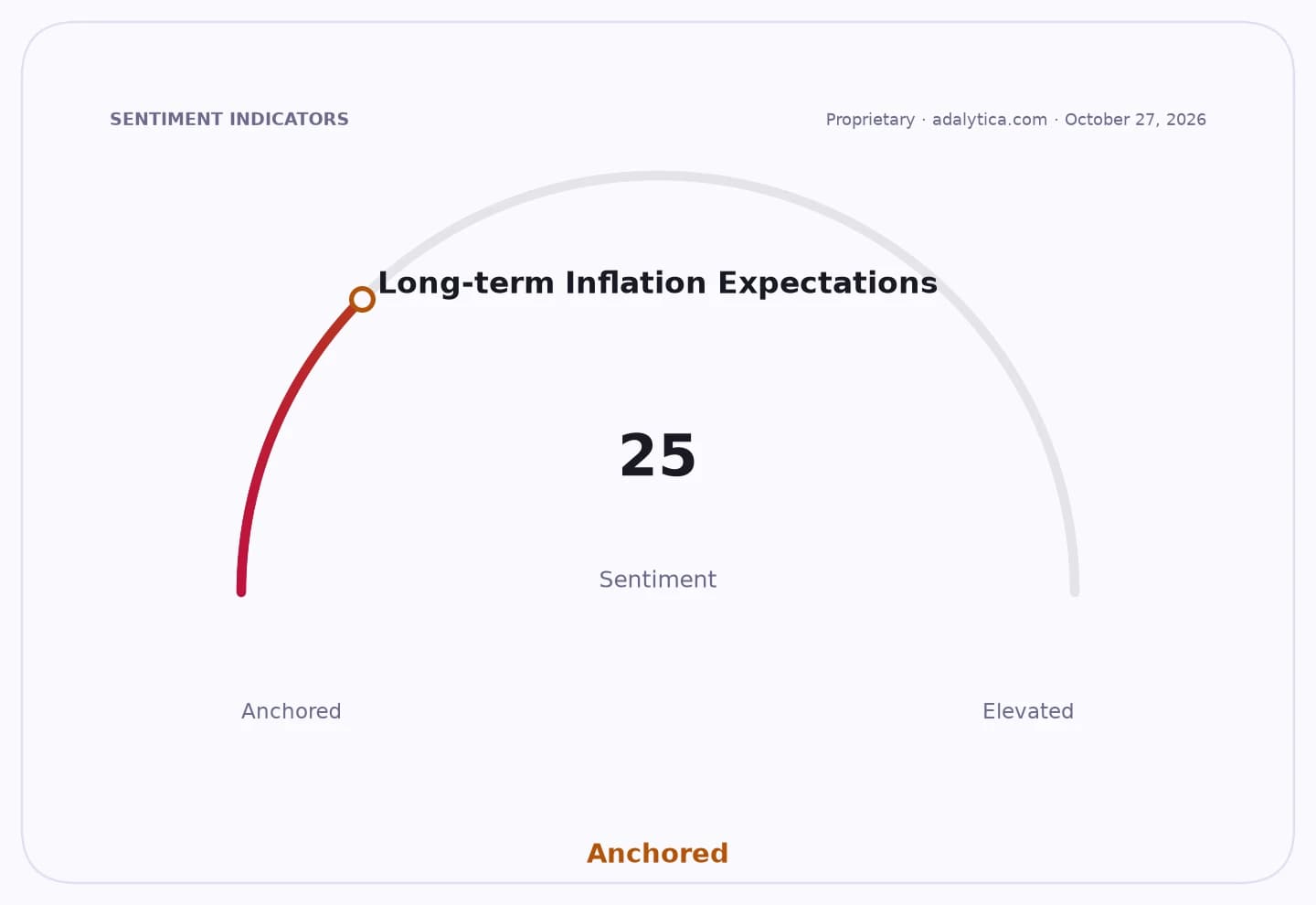
Sentiment IndicatorsⓘProprietary · adalytica.com · October 26, 2026
This is a snapshot — live sentiment, awareness and momentum for 130+ markets update continuously in the dashboard.Open AlphaPulse
The rally matters because crude remains one of the fastest channels through which geopolitics hits the broader economy. Higher oil raises transportation and input costs, complicates the inflation outlook and can force central banks to stay cautious for longer, especially with U.S. Treasury yields already easing and the dollar under pressure.
Gold, by contrast, held its decline around $4,115 an ounce after falling more than 1% since the start of the week. The metal is getting mixed signals: renewed geopolitics typically support bullion, but shifting expectations for inflation and interest rates are keeping some investors from adding aggressively to havens.
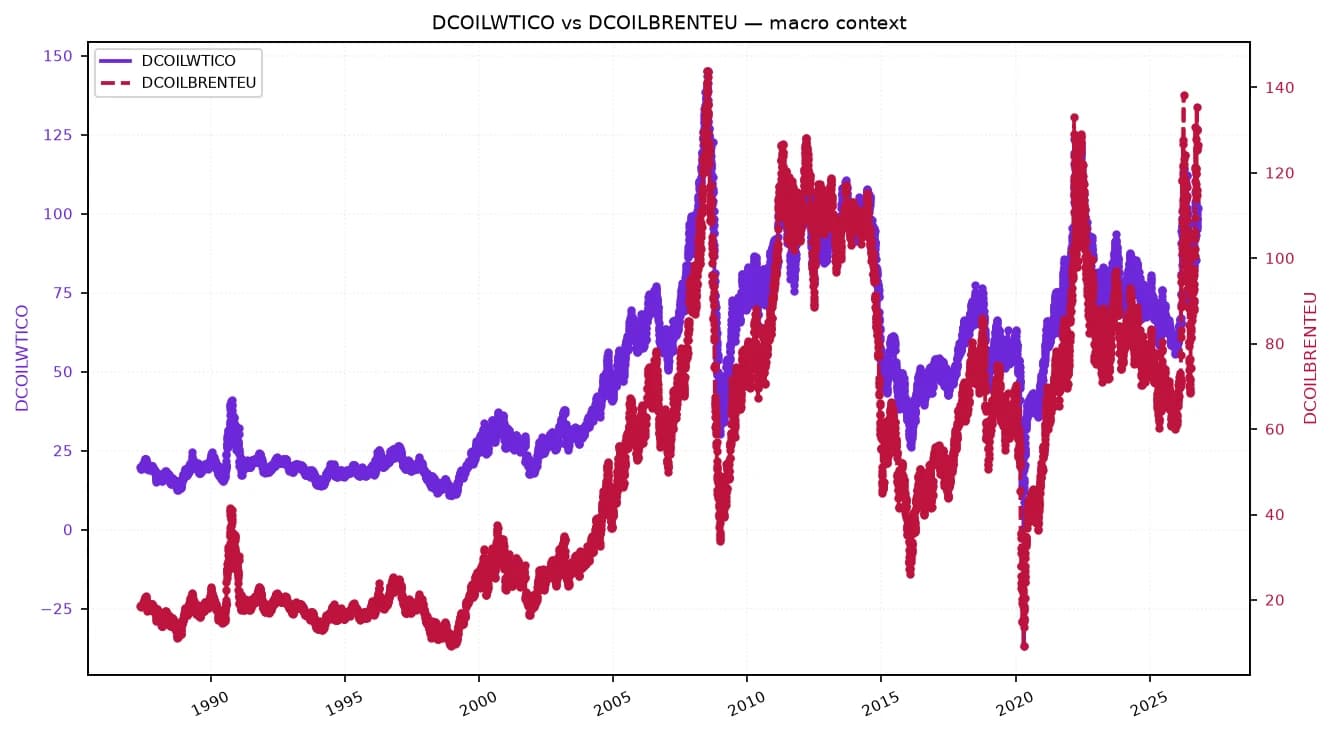
DCOILWTICO vs DGS10 — macro contextadalytica.com
Explore this data interactively — full history, time series and cross-market comparisons.Open AlphaPulse
The weaker dollar also reflects the tug of war across markets. The U.S. dollar index was steady at 101.78 after slipping to a three-week low in the prior session, a sign that lower yields and firmer oil are weighing on the currency’s appeal even as risk assets remain on edge.
For investors, the key question is whether the Middle East headlines translate into sustained supply disruption or just a temporary premium in crude. Energy stocks, oil-linked ETFs and commodity currencies stand to benefit if tensions intensify, while airlines, refiners and inflation-sensitive rate trades face more pressure if crude keeps climbing.
The next catalyst is any sign of escalation around Saudi infrastructure or Red Sea shipping, alongside incoming U.S. inflation data and Federal Reserve commentary that could determine whether oil’s latest move feeds directly into rates and gold positioning.
| Entity | Gains | Losses |
|---|---|---|
| Oil producers | ▲Higher realized prices | ▼Demand risk if prices spike too far |
| Energy investors | ▲Bigger commodity exposure | ▼Volatility if risk premium fades |
| Airlines and refiners | ▲— | ▼Higher fuel costs |
| Gold bulls | ▲Safe-haven bid if conflict escalates | ▼Less support from rate-cut hopes |