Brent crude jumped back above $110 a barrel on Wednesday as escalating military conflict in the Middle East stoked fresh fears of a disruption to global oil supplies, a move that keeps pressure on energy costs, inflation and risk assets.
Brent crude rises above $110 on Middle East conflict
The international benchmark rose $1.59, or 1.5%, to $110.38 a barrel, while U.S. West Texas Intermediate gained $1.36, or 1.4%, to $99.18. Traders are pricing in the risk that a wider regional conflict could choke off shipments from one of the world’s most important oil-producing and transit regions.
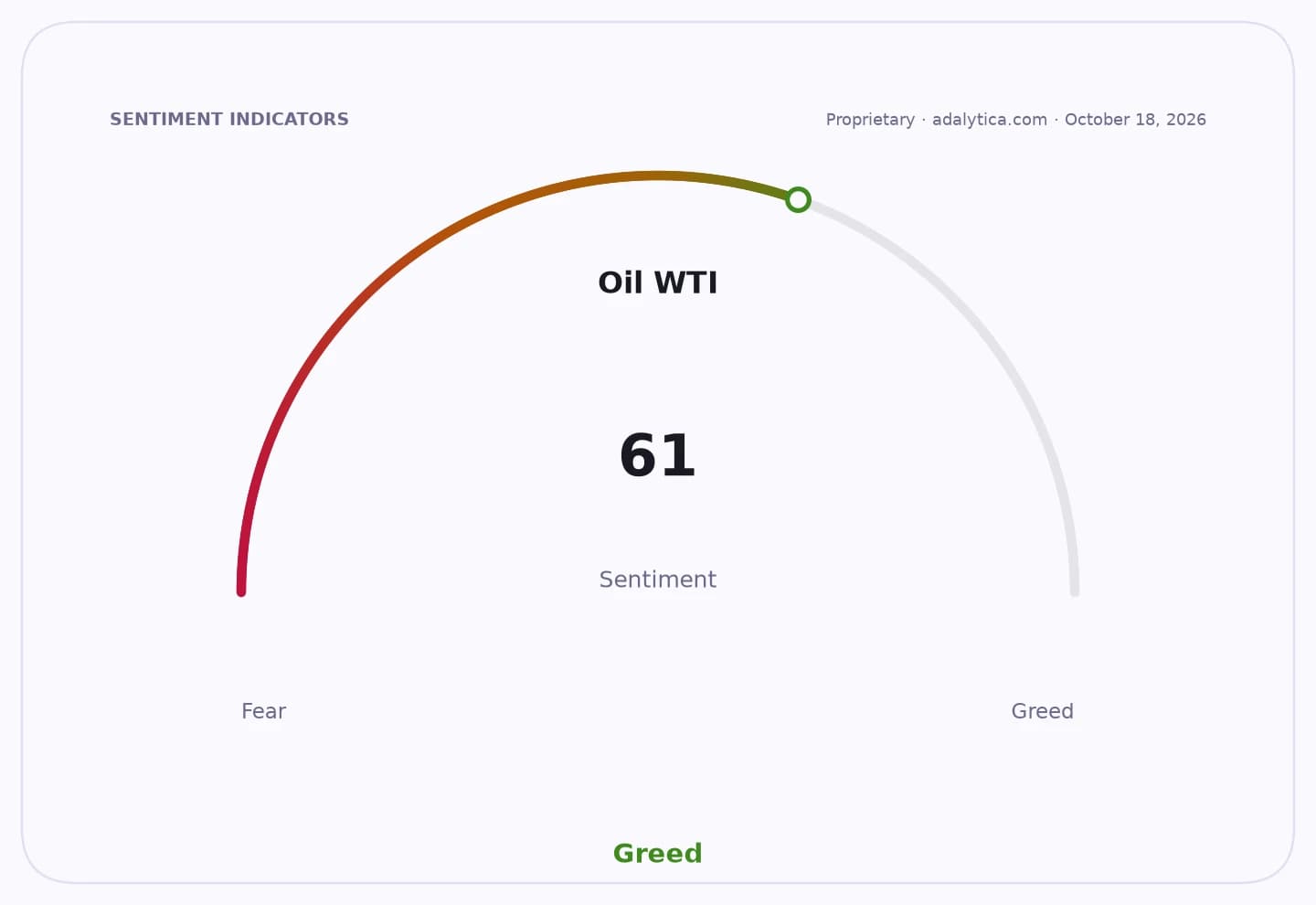
Sentiment IndicatorsⓘProprietary · adalytica.com · October 27, 2026
This is a snapshot — live sentiment, awareness and momentum for 130+ markets update continuously in the dashboard.Open AlphaPulse
That matters because oil remains the most immediate transmission channel from geopolitics to the broader economy. Higher crude prices feed directly into gasoline, diesel and freight costs, and they can complicate the outlook for inflation just as policymakers are trying to gauge whether price pressures are cooling fast enough.
For investors, the move is a reminder that energy markets can reprice sharply on headlines alone. Oil producers and energy equities tend to benefit from supply-risk premiums, while airlines, transport companies and other fuel-intensive industries face higher input costs and margin pressure.
The latest jump also extends a month of violent swings in crude, with Brent already having traded near the $110 level as traders weighed the balance between weakening demand concerns and the possibility of a supply shock. The market’s reaction suggests geopolitical risk is now dominating fundamentals.
The question for markets is whether the tension translates into an actual loss of barrels or remains a risk premium layered onto prices. If the conflict worsens, crude could push higher still; if fears ease, the market may quickly give back part of the gain.
| Entity | Gains | Losses |
|---|---|---|
| Oil producers | ▲Higher realized prices | ▼Demand destruction risk |
| Energy stocks | ▲Stronger revenue outlook | ▼Volatility in valuations |
| Airlines and transport firms | ▲— | ▼Higher fuel costs |
| Consumers/importers | ▲— | ▼Rising inflation pressure |