A renewed surge in oil prices is raising the odds that the Federal Reserve leans too hard against an inflation shock it cannot quickly fix, with traders already marking up energy inflation while growth-sensitive assets wobble.
Oil Price Surge Puts Fed Inflation Response at Risk

The risk is not simply that crude is expensive. It is that higher energy costs can lift headline inflation, darken consumer sentiment and tighten financial conditions even if the underlying economy is cooling. That leaves the Fed in a familiar bind: react to a commodity-driven jump in prices and risk choking off demand, or look through it and risk appearing behind the curve if inflation broadens.
Sentiment Indicators

US oil benchmark West Texas Intermediate has climbed to about $98 a barrel in the latest forecast, after trading near $100 in early November and above $109 only days earlier. The move has come alongside a sharp repricing in oil-related assets, with the US Oil Fund giving up some ground after touching highs above $160 earlier in the year, while the energy sector has also pulled back from recent peaks.
That matters because the policy backdrop is already tight. The fed funds rate is forecast at 3.89%, up from 3.63% in August and 3.88% in October, leaving little room for error if inflation reaccelerates. Consumer prices are running at 336.3 on the CPI index, with the latest monthly print still showing upward pressure. Energy is one of the fastest ways that pressure reaches households, and history suggests it can move inflation expectations more quickly than core price data.
Hawkish vs Dovish Sentiment vs USOadalytica.com
Explore this data interactively — full history, time series and cross-market comparisons.
Hawkish vs Dovish
For investors, the danger is that the Fed responds to the visible surge in gasoline and crude-linked inflation by keeping rates restrictive for longer than warranted by broader demand conditions. That would be bearish for rate-sensitive equities and long-duration bonds, even as it may support the dollar and energy producers. It also raises the probability of more volatility across cyclicals if markets conclude the central bank is fighting the oil tape rather than the underlying inflation trend.
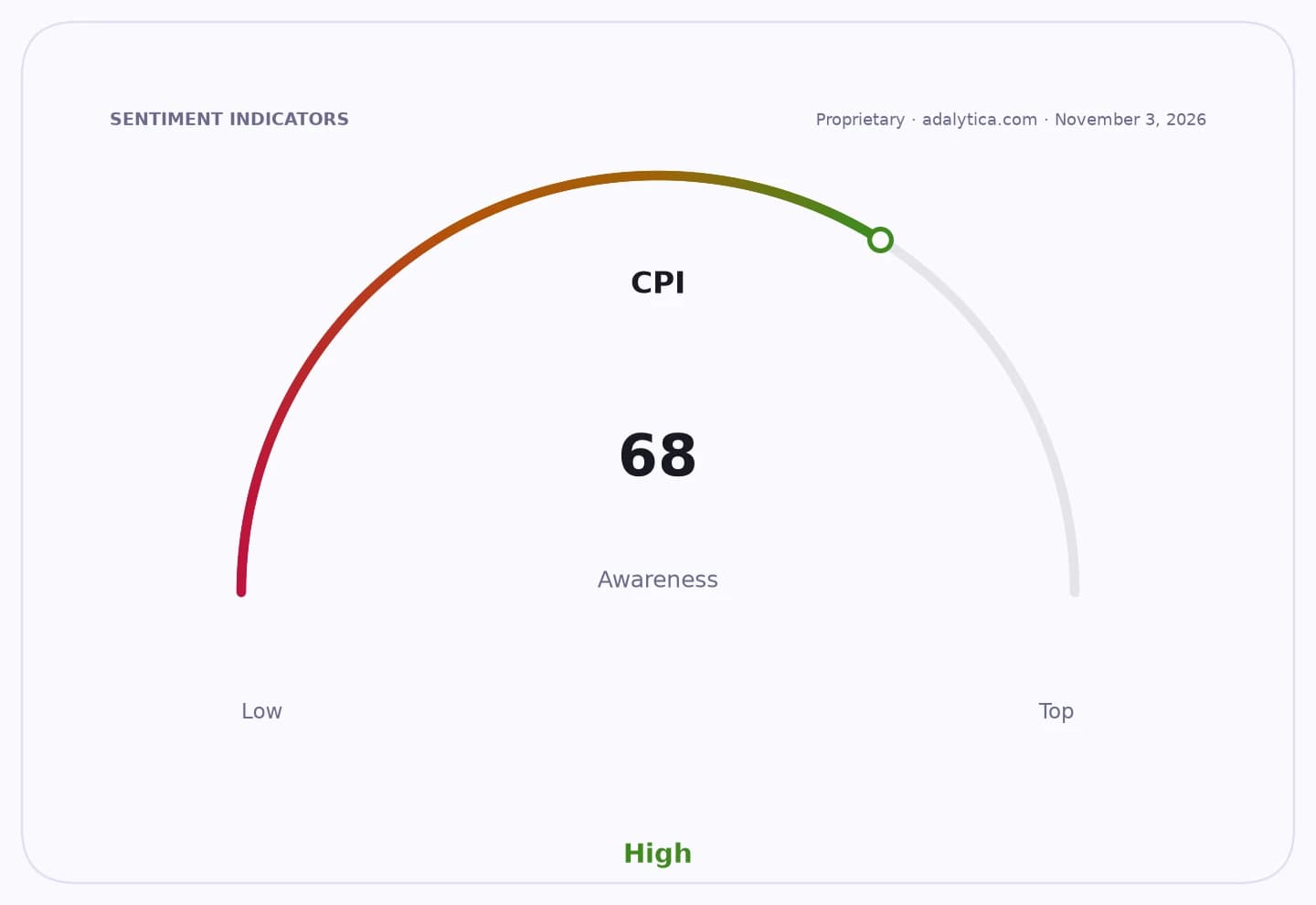
The technical and sentiment backdrop underscores how quickly the market has shifted. Adalytica’s Hawkish vs Dovish Fed Policy Sentiment gauge is at 64, classified as neutral, but awareness of the policy debate is elevated. CPI sentiment is still in greed territory at 84, while Treasury bond signals show extreme greed at 99, suggesting investors are crowded into a macro view that still assumes policy support or at least no fresh tightening shock.
Energy equities have benefited from the oil move, but the gains look increasingly vulnerable if the Fed keeps emphasizing inflation over growth. Exxon Mobil has eased back to about $169 after trading as high as $187.25 in late October, while the Energy Select Sector SPDR has slipped to $63.52 from above $70. That is consistent with a market that likes higher crude, but not enough to embrace a renewed policy squeeze.
| Entity | Gains | Losses |
|---|---|---|
| Energy producers | ▲Higher margins | ▼Demand risk if Fed tightens |
| Consumers | ▲None | ▼Higher fuel and living costs |
| Treasury bonds | ▲Safer-haven bid if growth slows | ▼Yield pressure from inflation fears |
| Fed policymakers | ▲None | ▼Credibility risk and policy error risk |