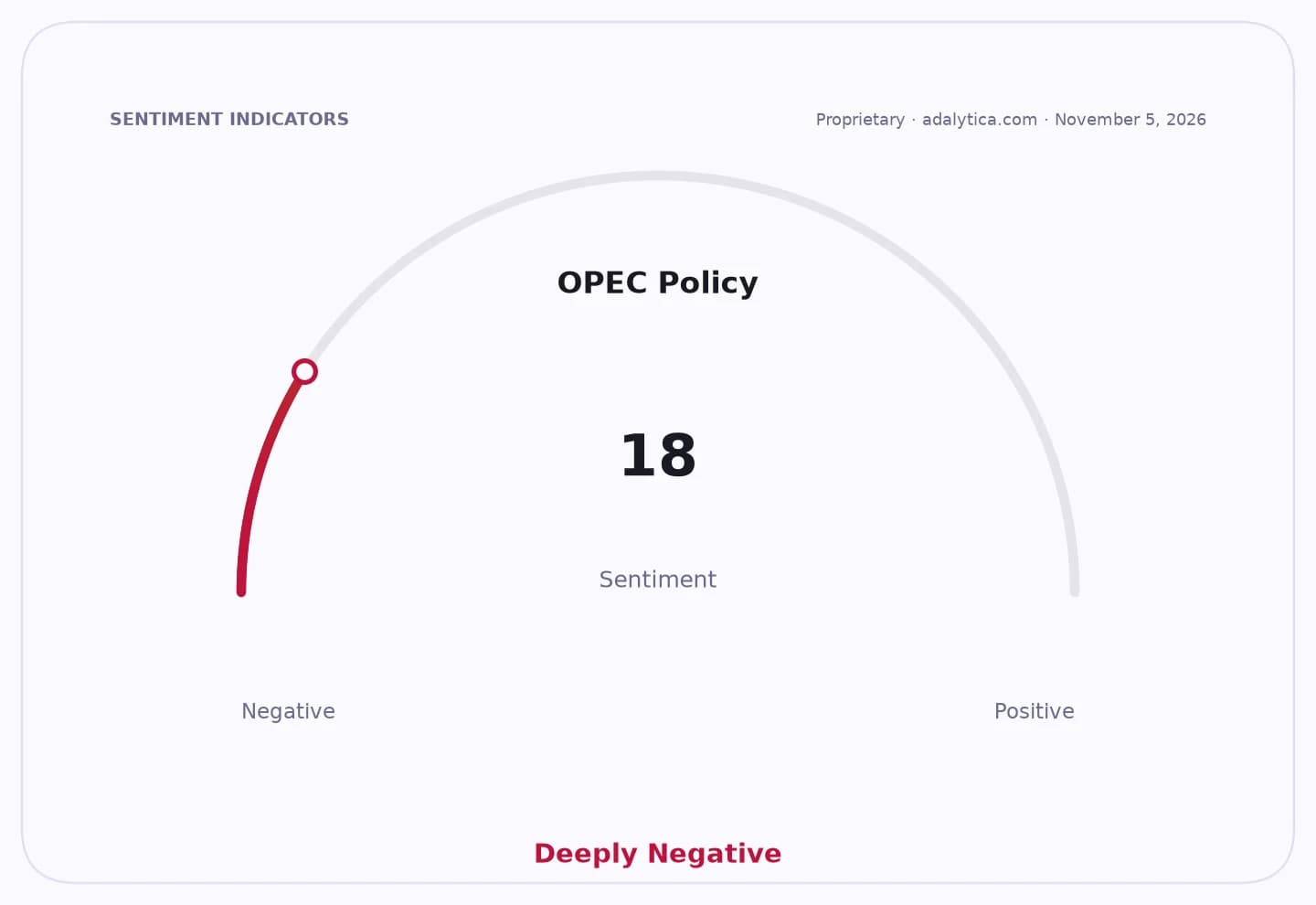
Crude oil looks set to stay under pressure next week as traders weigh an OPEC+ policy meeting against a market that is already leaning toward oversupply.
Oil Prices Face Pressure Ahead of OPEC+ Meeting

That matters because the next move in oil is not being driven by geopolitics alone anymore. Even with tensions around the Strait of Hormuz still hanging over the market, the bigger force is shifting back to fundamentals: rising supply, softer risk premium and the chance that producers keep barrels flowing into a market that may not need them.
Sentiment Indicators
Brent crude is expected to trade between $89 and $96 a barrel, according to analysts cited by PTI, while West Texas Intermediate settled at $83.41 a barrel for the week and Brent finished at $92.57. On India’s Multi Commodity Exchange, crude futures fell 7.09% over the week to Rs 7,695 a barrel, marking a third straight weekly decline as concerns about abundant global supply outweighed fears of disruption in the Middle East.
The key event is the Nov. 29 OPEC+ meeting, where ministers are due to discuss production policy for 2027. For investors, that is the obvious near-term catalyst, but it is also a reminder of the deeper story: OPEC+ is trying to balance market share, price support and the risk that too much supply now will cap the rally later. The International Energy Agency says the market is headed for a surplus of about 2 million barrels a day in the current quarter, and Goldman Sachs has separately warned of oversupply next year.
Oil WTI — 30-day sentimentadalytica.com
Explore this data interactively — full history, time series and cross-market comparisons.
That supply picture is already showing up in market behavior. Recovering output from the Persian Gulf and record flows through the Strait of Hormuz have eased fears of an immediate shortage, even as Iranian officials keep the option of closing the waterway rhetorically on the table. Meanwhile, diplomatic talks involving Qatar have helped reduce the odds of a sudden escalation, lowering the geopolitical premium that had supported prices earlier in the year.
For long-term investors, lower oil prices can be a double-edged sword. Indian consumers and importers stand to benefit from cheaper energy through lower inflation and a potentially steadier rupee. But the pressure would also flow through to producers and energy-linked equities if the glut deepens and prices drift toward the lower end of forecasts. The energy sector ETF XLE has already slipped to $60.41, while the USO oil fund has dropped to $135.11, and those moves mirror the market’s unease about how much upside crude really has from here.
The lesson for investors is simple: oil is still volatile, but the burden of proof has shifted to the bulls. Unless OPEC+ delivers a surprise tightening move or Middle East tensions flare sharply, the near-term path of least resistance looks sideways to lower. That makes crude worth watching closely, but not necessarily chasing. For patient investors, the better play is to stay diversified, keep an eye on energy cash flows and let the market prove that this supply glut is less severe than it looks.
| Entity | Gains | Losses |
|---|---|---|
| India’s refiners and consumers | ▲Lower import costs | ▼Less pricing power for producers |
| OPEC+ producers | ▲Higher market share if output stays high | ▼Lower prices if glut grows |
| Energy stocks and funds | ▲Relief from any supply shock | ▼Sentiment if crude keeps falling |
| Oil importers vs. exporters | ▲Cheaper energy input | ▼Lower export revenue |