Oil prices are rising as fresh military tensions in the Middle East, falling US inventories and expectations around the OPEC+ coalition’s next move reinforce a market already pricing in a bigger supply shock.
Oil Rises on Middle East Tensions and Tight Supply

The move matters because oil remains the economy’s most sensitive geopolitical barometer: any sustained disruption to shipping routes or export infrastructure can quickly feed into freight costs, inflation expectations and central bank calculations. West Texas Intermediate is back near $83 a barrel and Brent is around $83, levels that are well above the spring lows and enough to revive concern that a tighter energy market could spill into transport, chemicals and broader consumer prices.
Sentiment IndicatorsⓘProprietary · adalytica.com · July 29, 2026
This is a snapshot — live sentiment, awareness and momentum for 130+ markets update continuously in the dashboard.Open AlphaPulse

The latest leg higher comes as supply risk is widening, not narrowing. News of attacks in and around the Strait of Hormuz and the Red Sea has sharpened fears over chokepoints that carry a large share of seaborne crude. A tanker was destroyed by a mine explosion in the Strait of Hormuz, while Houthi militants declared a naval blockade on Saudi Arabia, adding to the sense that the region’s oil arteries are increasingly vulnerable. That geopolitical backdrop is exactly the kind of event that can push prices higher even before physical barrels are lost.
Inventory trends are also lending support. The market has been watching declining US stockpiles as a sign that demand is absorbing supply faster than expected, leaving less buffer if disruption risk persists. The latest price action suggests traders are less willing to fade the rally until they see either a material de-escalation in the Middle East or a clear increase in output from producers.
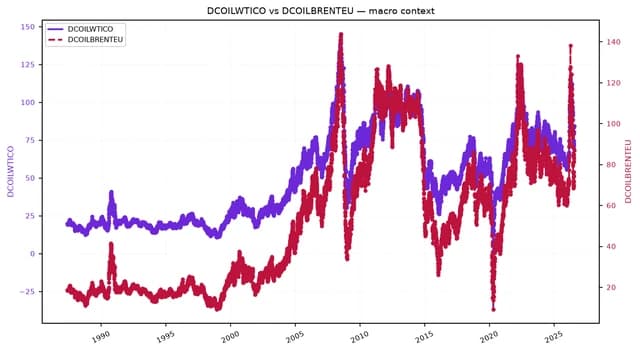
OPEC+ now sits at the center of the next re-pricing. Anticipation of coalition decisions matters because the group still has the most direct influence over marginal supply, and any signal that it will defend prices rather than offset disruption risk could extend the move. If OPEC+ opts for restraint, the market will read that as a tacit endorsement of higher prices. If it signals supply relief, the rally could stall, but only if geopolitical tensions stop worsening.
The technical picture reinforces the shift in market tone. USO, the oil ETF, has rebounded sharply from a late-June trough, with its price now back above the 50-day moving average after a deep oversold reading in June. The conventional RSI has surged into overbought territory, which suggests the move has been fast and crowded, but it also confirms how quickly sentiment has turned. Brent and WTI futures have likewise recovered from the weakness seen earlier this month, reflecting a market that is pricing risk rather than just current fundamentals.
For investors, the key question is not whether oil can rise further — it already has — but whether the rally is being driven by a temporary fear premium or the start of a more durable supply squeeze. Integrated producers and upstream names should benefit if crude holds these levels, while refiners, airlines and other fuel-intensive sectors face margin pressure. Energy equities, measured by XLE, have strengthened alongside crude, but the durability of that trade will depend on whether prices stay elevated long enough to lift earnings estimates rather than just volatility.
The bear case is that the market is overshooting on headlines and that diplomatic de-escalation, along with any additional OPEC+ supply, could unwind part of the risk premium. The bull case is that the Middle East remains fragile, inventories are not cushioning the market and producers are reluctant to flood supply into an uncertain backdrop. In that case, crude could stay firm well into the next round of policy decisions, keeping energy at the center of both inflation and portfolio risk.
| Entity | Gains | Losses |
|---|---|---|
| Oil producers | ▲Higher realized prices | ▼None if disruption eases |
| Refiners and airlines | ▲None | ▼Higher input costs |
| OPEC+ | ▲Pricing leverage | ▼Pressure to add supply |
| US consumers | ▲None | ▼Higher fuel inflation |