Crude oil slipped for a second straight session as fresh signs of US-Iran diplomacy knocked some of the geopolitical risk premium out of the market, pushing West Texas Intermediate below $80 a barrel and leaving Brent near $88.
Oil Falls on US-Iran Diplomacy and Supply Surplus
Oil WTI
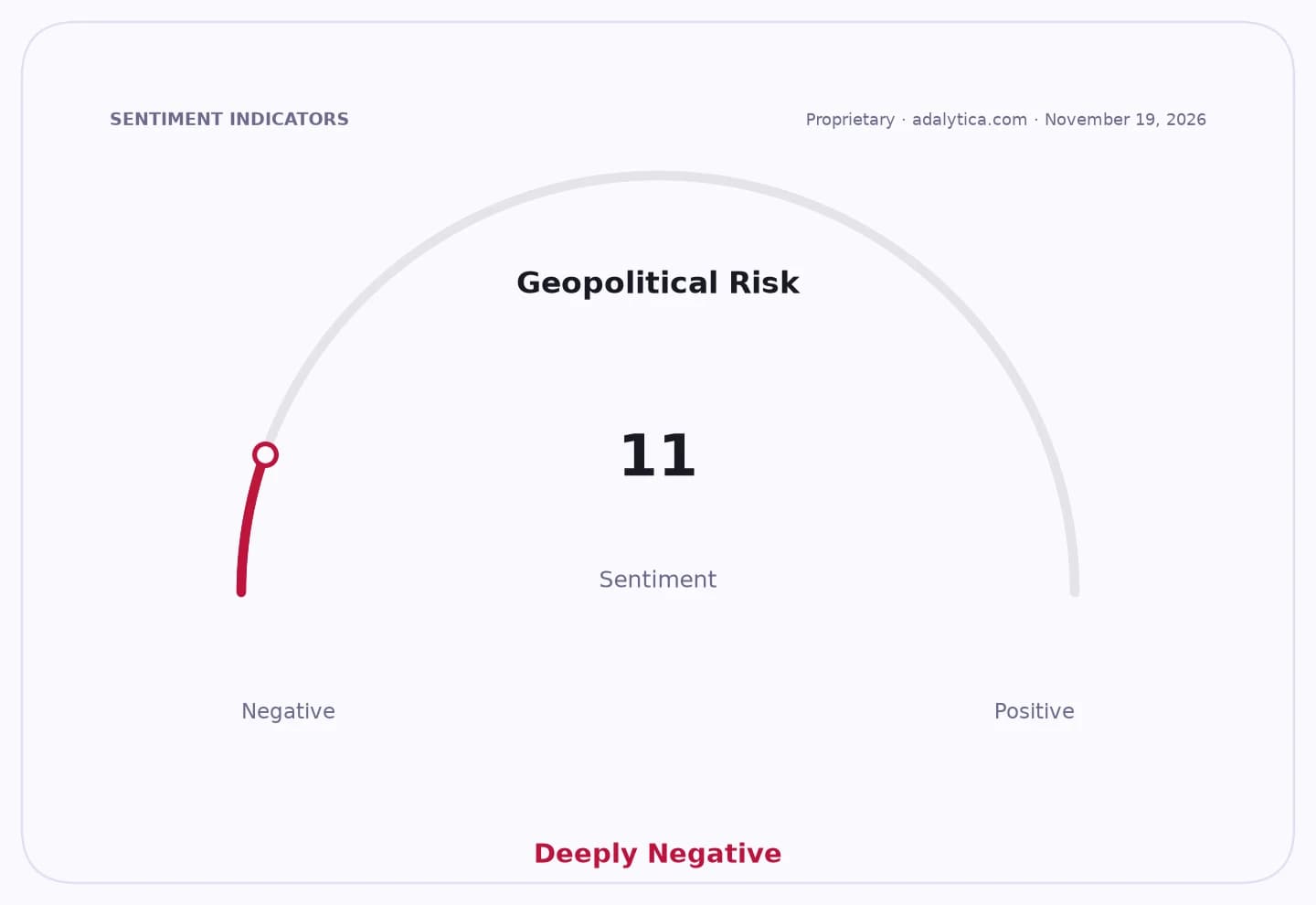
That matters because oil prices are not just reacting to headlines — they are repricing the odds of supply disruption in one of the world’s most important energy corridors. If talks between Washington and Tehran keep advancing, traders may need to strip out some of the war-related premium that has kept crude elevated even as supply has proved more resilient than feared.
Sentiment Indicators
Geopolitical Risk
The immediate catalyst was reporting that US Vice President JD Vance met Qatar’s prime minister to discuss negotiations with Tehran. Qatar has been acting as a mediator, and even a modest improvement in diplomatic tone can change how investors price risk across the energy complex. The market does not need a full deal to move lower; it only needs a more convincing path away from escalation.
That comes on top of a broader supply story that is also turning bearish for prices. Exports from the Gulf have risen sharply despite attacks on tankers in and around the Strait of Hormuz, reducing fears of a major physical disruption. The International Energy Agency sees the global oil market moving into surplus this quarter, while Goldman Sachs has warned that oversupply could deepen next year. In other words, the market is getting less worried about lost barrels and more focused on too many barrels.
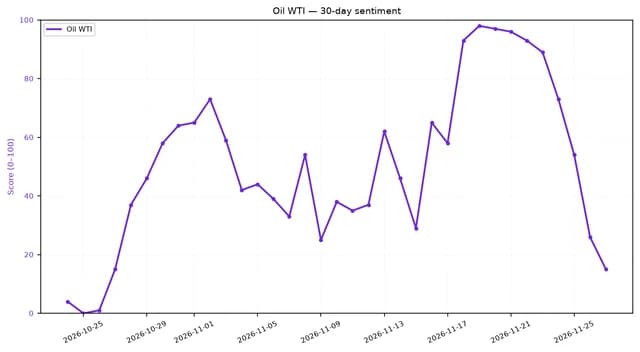
For investors, that combination matters in two ways. First, it can pressure energy producers and oil-linked funds if crude keeps sliding. Second, it can help lower input costs for consumers and businesses, which is usually a tailwind for broader risk assets over time. The recent pullback also shows how quickly oil can give back gains when traders believe the geopolitical backdrop is improving.
Still, this is far from a clean resolution. Iran is seeking sanctions relief, unfreezing of assets and an end to the naval blockade of its ports, while Washington wants concessions on the nuclear program. Those demands leave plenty of room for talks to stall, and President Donald Trump has already said US strikes could resume next year if diplomacy fails.
For long-term investors, the bigger lesson is that oil remains a stock-and-flow market driven as much by politics as by barrels. When supply is strong and diplomacy improves, prices can fall fast. That is worth watching closely, especially for anyone with exposure to energy producers, oil ETFs or import-heavy sectors.
| Entity | Gains | Losses |
|---|---|---|
| Airlines and fuel users | ▲Lower input costs | ▼None from cheaper crude |
| Oil producers | ▲Strongly higher prices | ▼Softer revenue and margins |
| Oil ETF investors | ▲None | ▼Mark-to-market losses |
| Consumers and importing economies | ▲Relief at the pump | ▼None from cheaper crude |