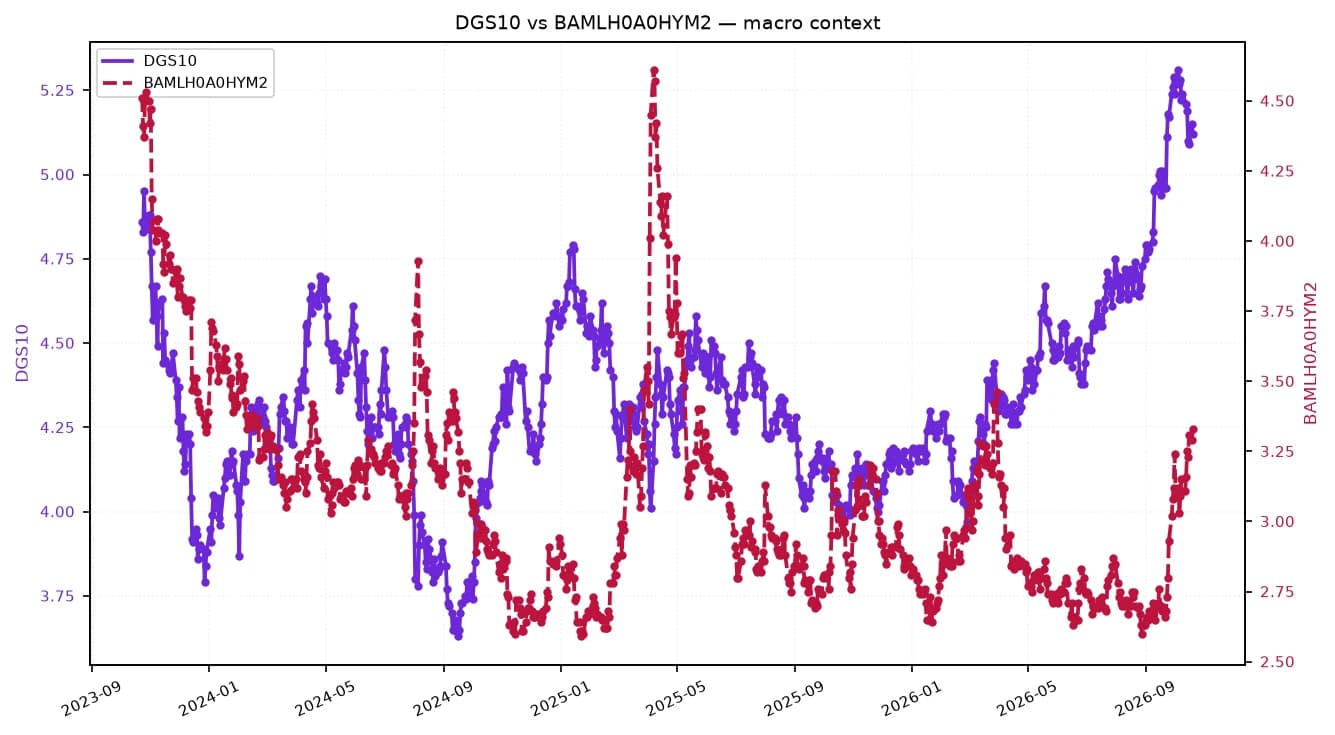
Credit markets are flashing a warning that matters far beyond Wall Street’s trading desks: the junk-bond spread is still elevated near 3.37 percentage points, the 10-year Treasury yield is pinned around 5.15%, and that combination is making investors rethink how much debt the AI boom can comfortably absorb. For Oracle, the market is now asking a very specific question — can one of the biggest spenders in enterprise cloud and AI prove the bull case is still intact?
Oracle, credit spreads and AI spending pressure
That question matters because the AI rally has been built on a simple promise: massive capital spending today will translate into recurring software, cloud and infrastructure revenue tomorrow. When borrowing costs stay high, that promise gets harder to finance. Companies with strong balance sheets can keep investing. Companies leaning on debt to fund data centers, chips and power capacity face a much tighter margin for error. In other words, credit stress does not just squeeze bondholders — it can slow the pace of AI expansion itself.
Sentiment IndicatorsⓘProprietary · adalytica.com · October 23, 2026
This is a snapshot — live sentiment, awareness and momentum for 130+ markets update continuously in the dashboard.Open AlphaPulse
Oracle sits right in the middle of that tension. The company has become one of the market’s key barometers for whether AI spending can keep compounding even as financing conditions stay restrictive. Its shares have been volatile, but the broader setup is still constructive over a longer horizon. The stock has recovered from a deep selloff and recently traded around $126.90, below its 50-day moving average of about $142.48 and well under its 200-day average near $157.46, showing investors are still demanding proof rather than paying up for promises. Conventional technical indicators such as RSI and MACD also point to a stock that remains under pressure after a sharp rerating.
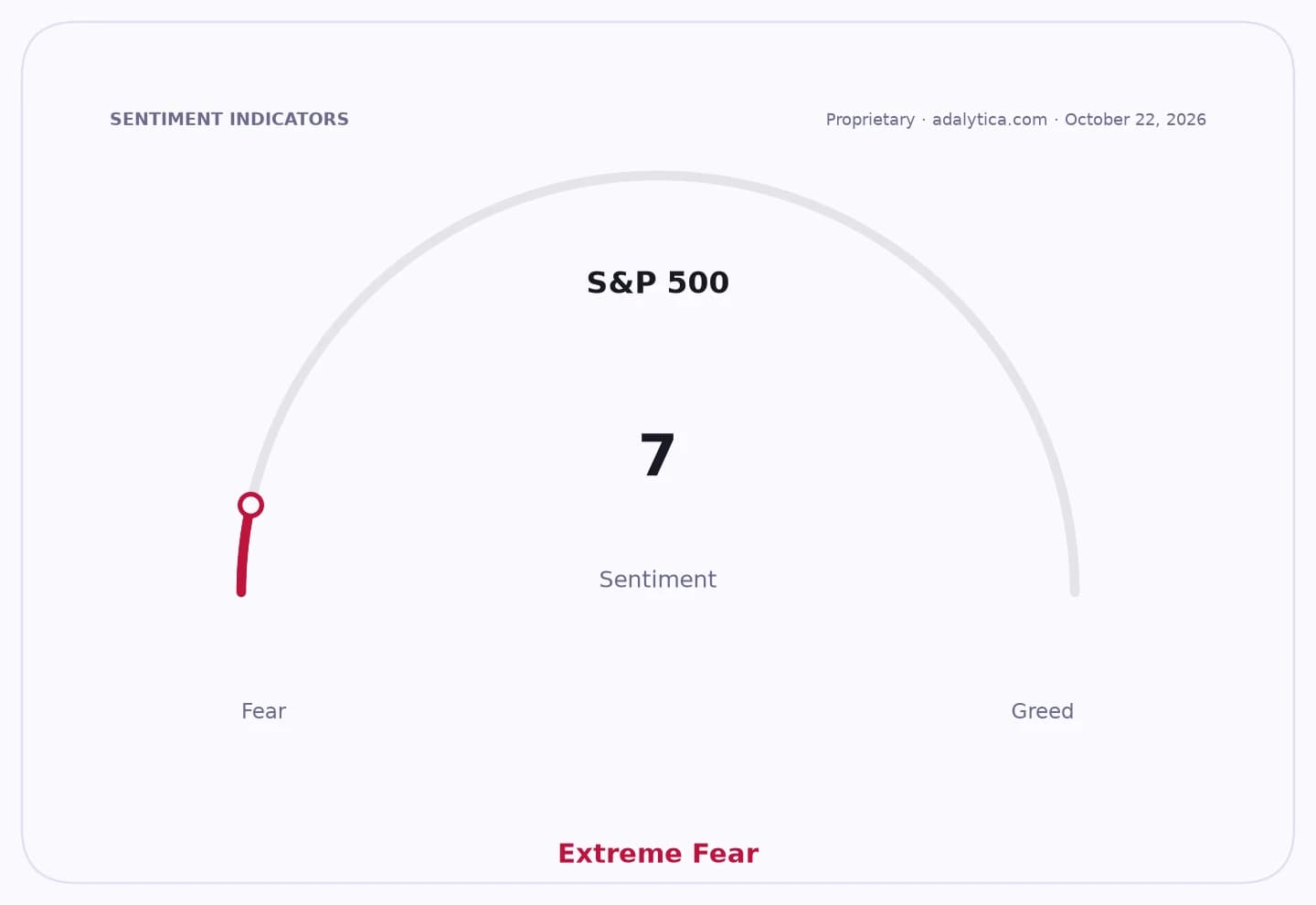
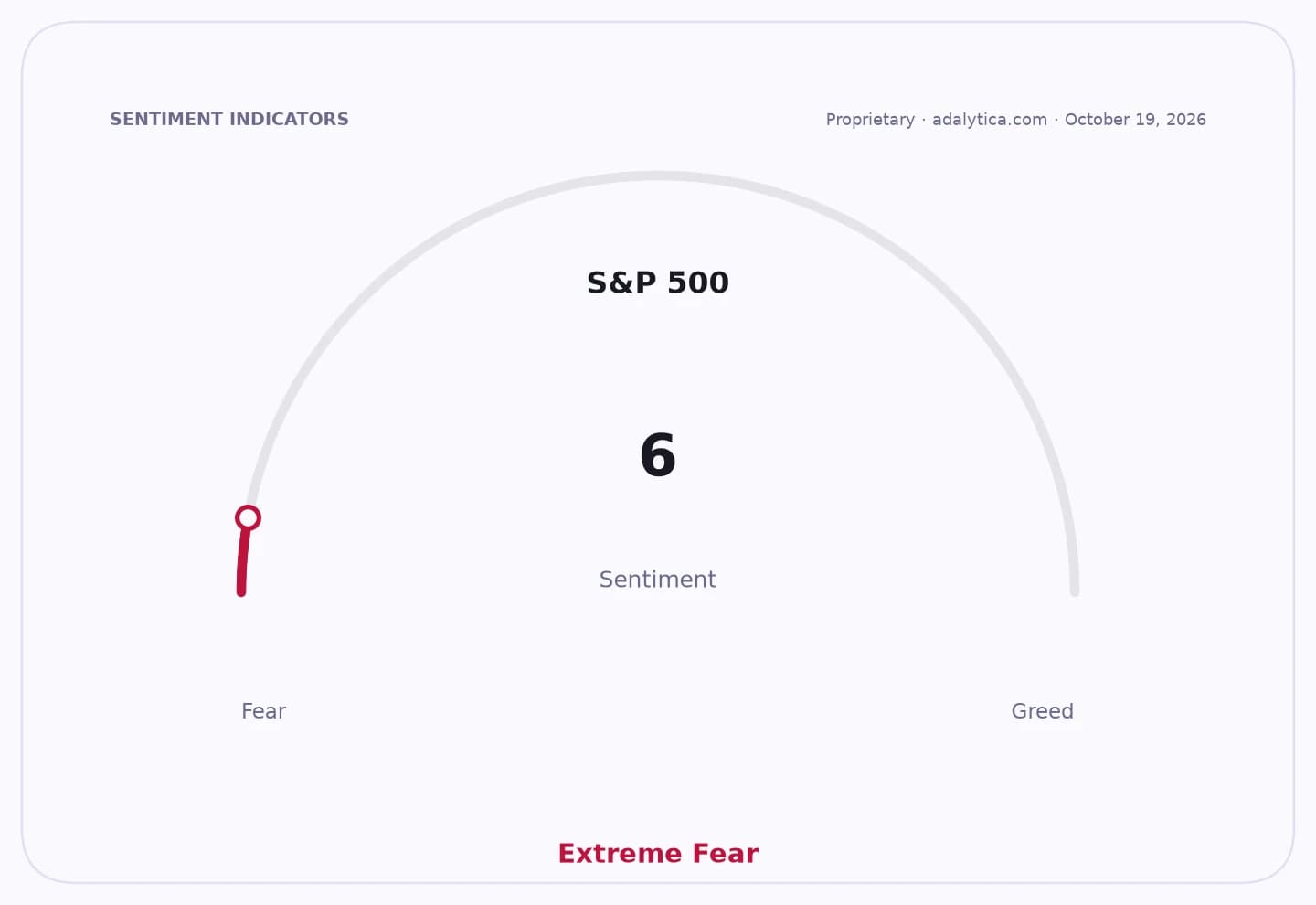
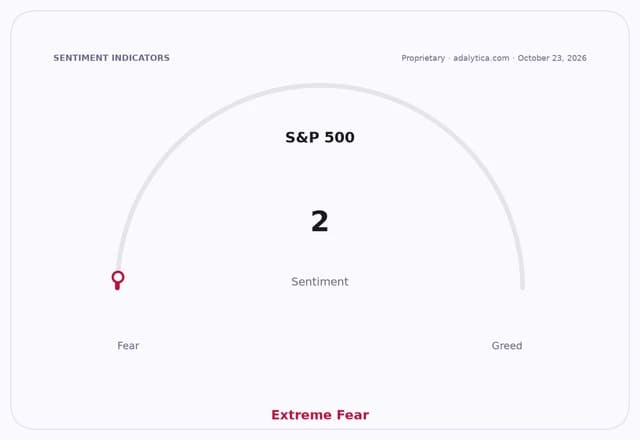
The bigger market message is even clearer. The Nasdaq-100 ETF QQQ has slipped to about 704.88, and the technology sector ETF XLK is at roughly 183.28, both well off their recent highs. Adalytica’s S&P 500 trade signals show “Extreme Fear,” underscoring how quickly enthusiasm can give way to caution when rates stay high and credit spreads stop cooperating. That does not mean the AI story is broken. It means the market is becoming more selective about which companies can turn scale into durable free cash flow.
For long-term investors, that is actually useful. Booms often end not because the theme was wrong, but because financing became too expensive for the weaker players. The winners are usually the companies that can fund growth without stretching the balance sheet too far, keep customers locked into mission-critical platforms, and turn heavy upfront spending into years of recurring revenue. Oracle’s challenge is to demonstrate that its AI and cloud strategy can do exactly that.
The next few quarters should tell investors whether Oracle can keep expanding while the cost of capital remains stubbornly high. If it can, the stock may regain its place as a credible AI compounder rather than just another expensive infrastructure story. If it cannot, credit stress will keep narrowing the list of winners in one of the market’s most important secular trends. For now, Oracle is still one to watch closely, but patience and selectivity matter more than ever.
| Entity | Gains | Losses |
|---|---|---|
| Oracle | ▲AI/cloud credibility if execution holds | ▼Sentiment if growth disappoints |
| Bondholders | ▲Higher yields and wider spreads | ▼More default risk if leverage rises |
| AI leaders with strong cash flow | ▲Better access to capital | ▼Slower rivals that rely on debt |
| QQQ/XLK investors | ▲Long-term winners from AI adoption | ▼Near-term volatility from rate pressure |