The market is flashing a classic late-cycle warning: U.S. 10-year Treasury yields are holding near 5.1% while high-yield credit spreads are widening, and that combination is exactly the kind of pressure that can turn a resilient equity rally into a fast unwind.
S&P 500 Nears Resistance as Yields and Spreads Rise
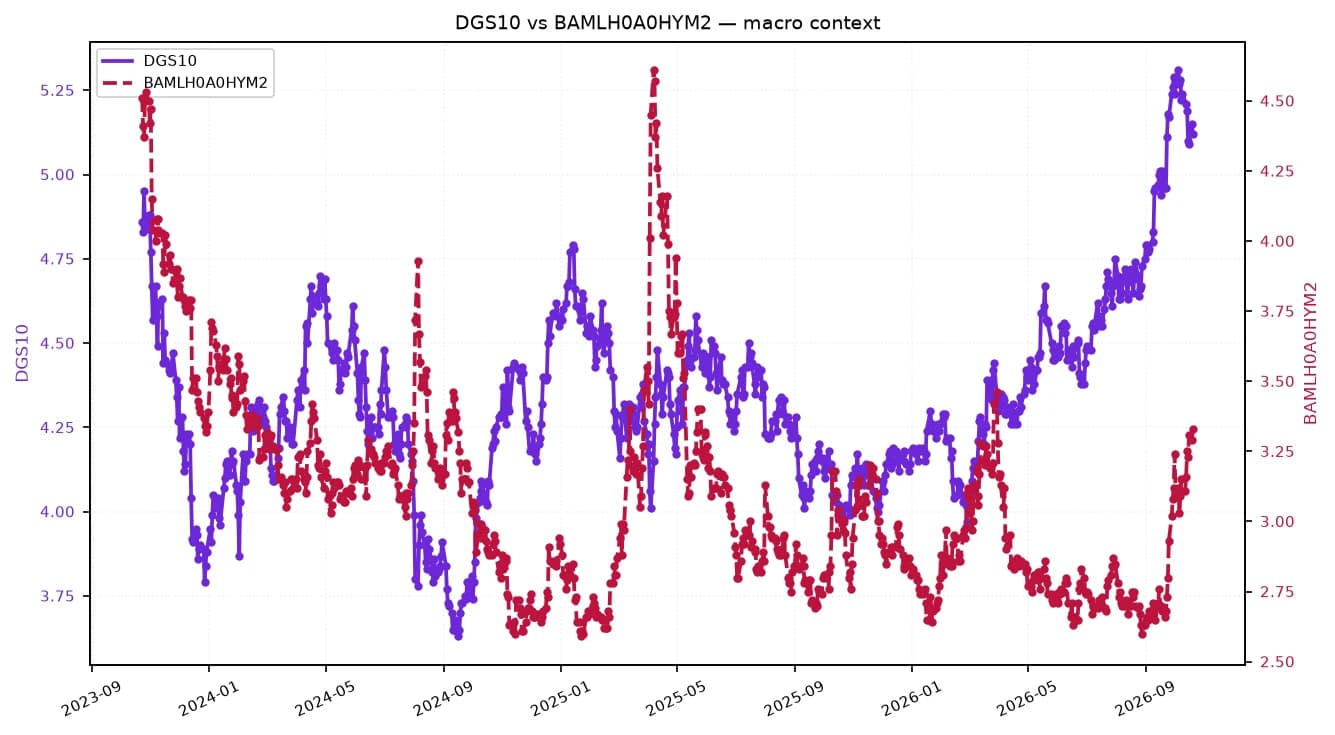
For investors, the message is simple. Higher risk-free rates raise the discount rate on future earnings, squeeze valuation multiples and tighten financial conditions just as credit is getting less forgiving. That is why the gap between Treasury yields and junk-bond spreads matters more than any single daily move in stocks: it says the cost of capital is still rising even if the S&P 500 looks calm on the surface.
Sentiment IndicatorsⓘProprietary · adalytica.com · October 22, 2026
This is a snapshot — live sentiment, awareness and momentum for 130+ markets update continuously in the dashboard.Open AlphaPulse
The S&P 500, tracked by SPY, is still near 773, above its 200-day moving average of about 723, but the technical picture is less comfortable than the headline level suggests. The index is only modestly above its 50-day average around 767, while the RSI at 58.4 no longer has the stretched momentum that carried the market higher in spring. In other words, the rally has not broken, but it has lost the kind of breadth and force that typically keeps investors complacent.
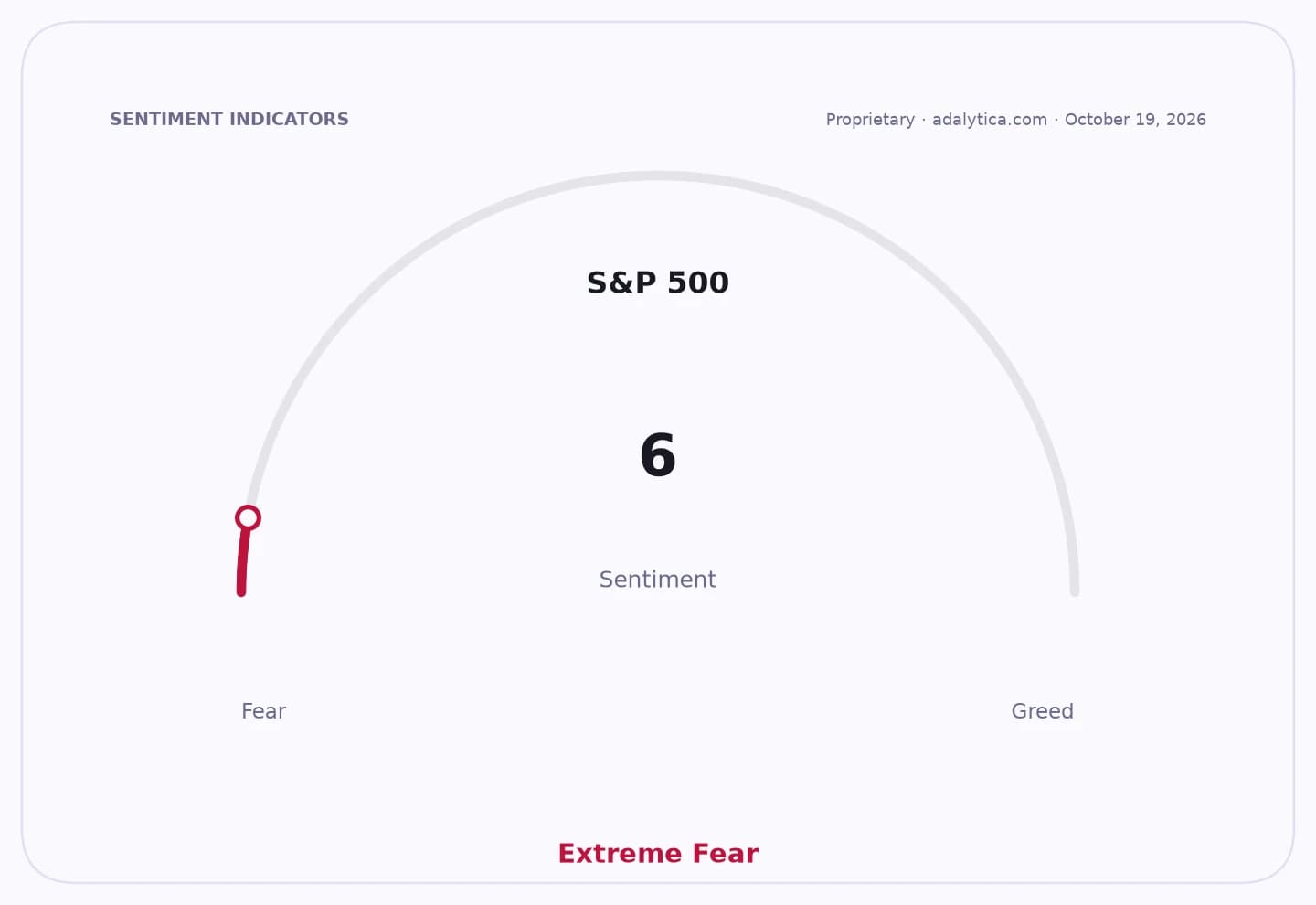
That caution is showing up in market psychology too. Adalytica’s S&P 500 trade signals show sentiment at 6, labeled “Extreme Fear,” even as awareness remains elevated at 76, a mix that usually points to a market still on edge rather than one ready to resume a clean risk-on trend. Bond traders, meanwhile, are leaning aggressively into duration, with Adalytica’s U.S. Treasury snapshot showing “Extreme Greed” on Treasuries, reinforcing the view that investors are buying protection rather than chasing cyclical upside.

The significance is broader than one asset class. When yields stay anchored above 5% and credit spreads start to widen, the market begins to discriminate sharply between companies that can fund growth internally and those reliant on easy financing. That is why megacap technology, balance-sheet-heavy industrials and defensive cash generators tend to outperform in the early stages of a tightening scare, while cyclicals, highly levered small caps and speculative growth names get hit hardest.
The Nasdaq-100, through QQQ, reflects that split. It is still above its 200-day average near 675, but its 50-day average around 726 is now acting as a near-term ceiling, and the RSI at 40.8 shows the index has already burned off much of its momentum. This is not a crash signal by itself, but it is the kind of setup that often precedes a deeper factor rotation away from beta and toward quality, cash flow and duration-sensitive winners.
For investors, the playbook from here is about positioning before the crowd catches up. If rates stay elevated and credit spreads continue to widen, the market is likely to reward cash-rich platform companies, utilities tied to power demand, defense names and infrastructure linked to the AI buildout, while punishing firms that need cheaper capital to survive. The biggest opportunity may not be in betting on a straight equity collapse, but in owning the assets most insulated from a higher-for-longer regime and avoiding the weakest links in the credit chain.
The next catalyst is whether widening spreads start to spill into earnings guidance and funding markets. If they do, the “cracks are widening” call stops being a warning and becomes the market’s main story.
| Entity | Gains | Losses |
|---|---|---|
| U.S. Treasuries | ▲Safe-haven demand | ▼Yield-sensitive risk assets |
| Large-cap quality stocks | ▲Relative flight to quality | ▼High-beta cyclical shares |
| High-yield borrowers | ▲Easier conditions if spreads tighten | ▼Higher refinancing costs |
| ASX/global equity bulls | ▲Nothing if caution fades | ▼If risk-off selling broadens |