The U.S. stock market is sliding into a make-or-break week with the S&P 500 and Nasdaq both cracking important technical levels just as investors brace for Tesla, Meta Platforms and SpaceX results, a setup that could decide whether the recent AI-driven rally resumes or turns into something far more damaging.
S&P 500, Nasdaq fall ahead of Tesla and Meta earnings
That matters because the selloff is no longer just about a handful of hot names. Friday’s slide pushed the S&P 500, Nasdaq and small-cap Russell 2000 below key support, while the Dow outperformed but still failed to inspire confidence. At the same time, a jump in Treasury yields is tightening financial conditions again: the 10-year note is holding near 5.09%, up sharply from 5.19% on Oct. 14, while credit stress is creeping higher, with the high-yield spread widening to 3.31 percentage points. In other words, the market is getting hit from both sides — higher discount rates and weaker risk appetite.
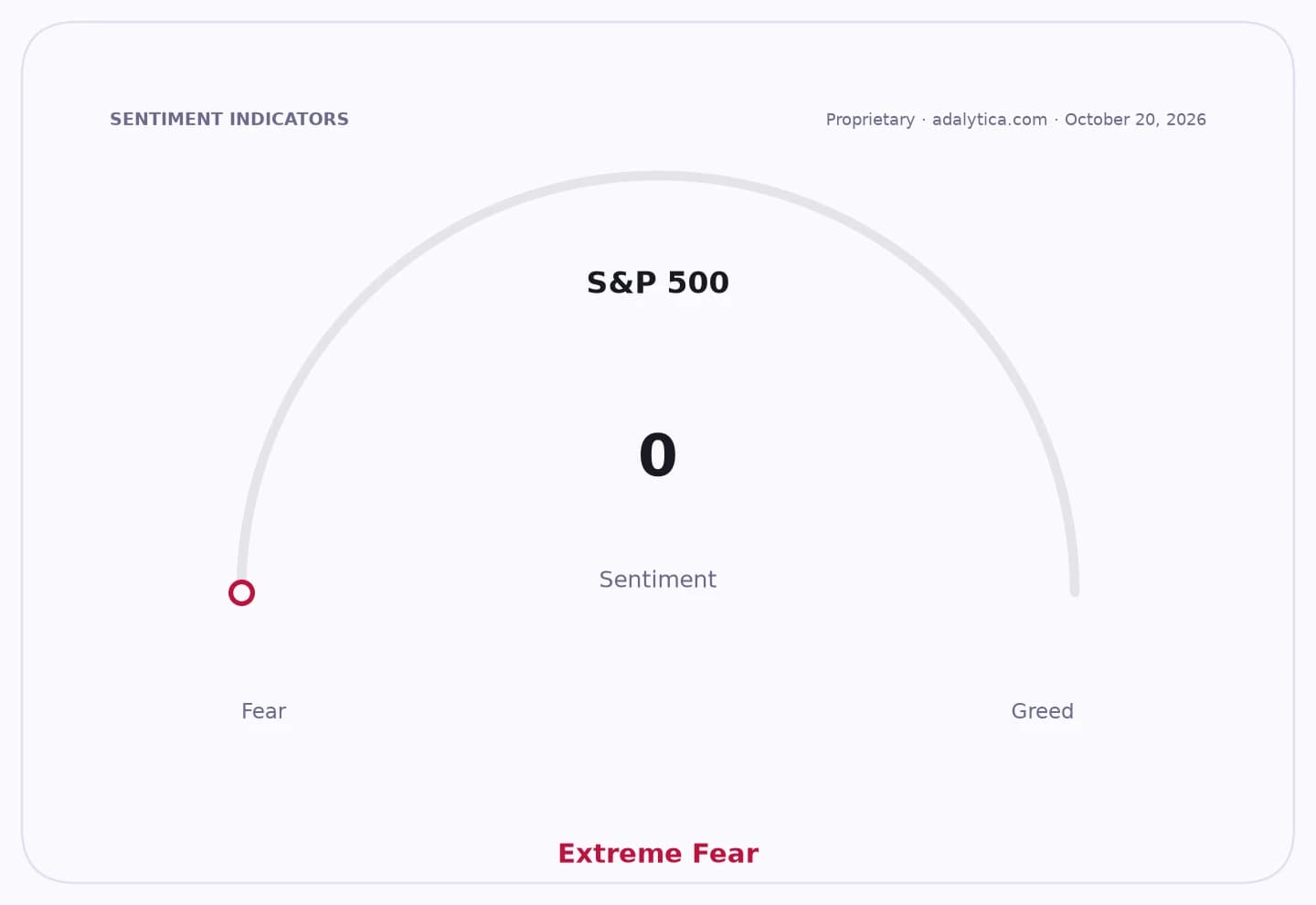
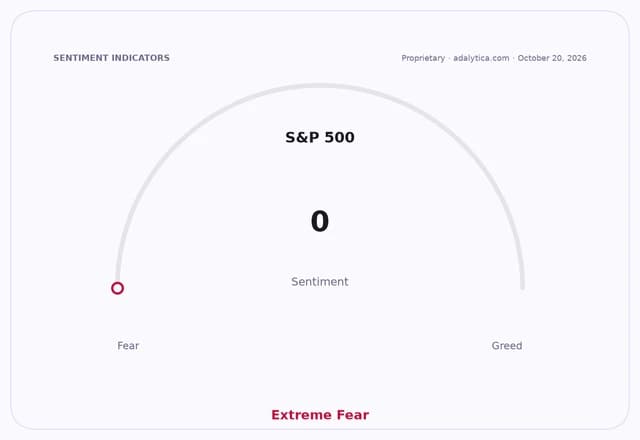
Sentiment IndicatorsⓘProprietary · adalytica.com · October 20, 2026
This is a snapshot — live sentiment, awareness and momentum for 130+ markets update continuously in the dashboard.Open AlphaPulse
Investors should read that as more than routine volatility. The S&P 500 futures closed Friday at 7,704.25, just above the 50-day moving average at 7,736.83, with RSI readings at 45.6 and the MACD still below its signal line. Nasdaq futures finished at 29,391.5, under its 50-day moving average of 30,006.06, and the Nasdaq’s RSI sat at 32.1, a sign the index is nearing oversold territory but has not yet found a durable bid. That is the kind of technical damage that can feed itself, especially when momentum names are already wobbling.
CoreWeave and Dell add to the warning. Their weakness is not just stock-specific; it is a reminder that the AI infrastructure trade is no longer a one-way bet. CoreWeave has become a proxy for the market’s willingness to finance aggressive data-center expansion, while Dell sits closer to the hardware and server cycle that has benefited from hyperscaler capex. When those names come under pressure together, it suggests investors are starting to question whether the enormous spending boom around artificial intelligence can keep supporting valuations without a pause.
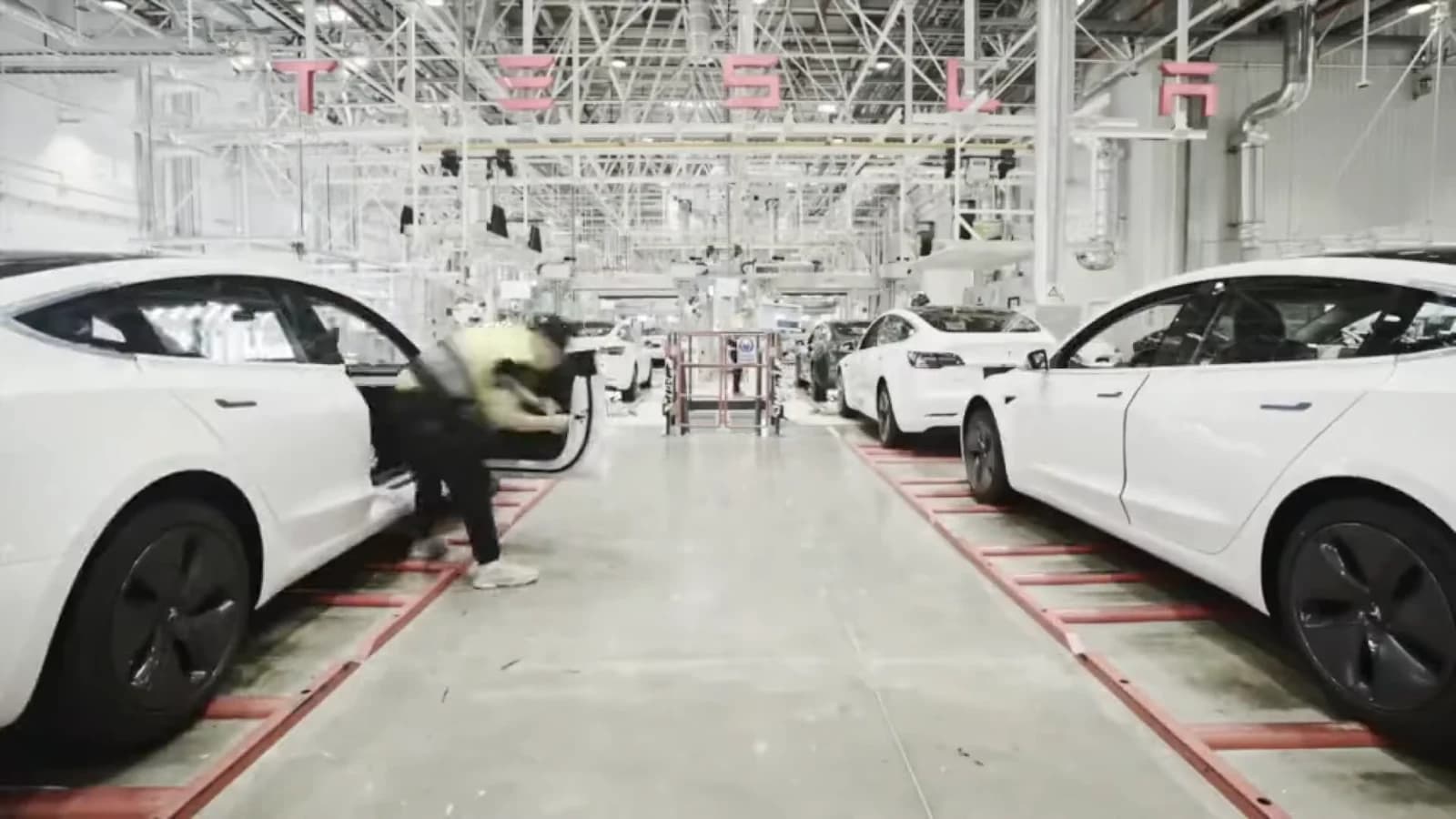
That is where the next catalyst comes in. Tesla and Meta earnings are now front and center, and the market is likely to treat them as a referendum on whether big tech can keep spending heavily enough to justify current multiples. Tesla will also have to contend with a market that is already more defensive, while SpaceX-related headlines will feed the broader narrative around private-space and advanced manufacturing capex. If those results reassure investors, the current selloff could become a buying opportunity in the highest-quality secular winners. If they disappoint, the recent break in the major averages may prove to be the start of a deeper reset.
The macro backdrop only raises the stakes. Adalytica’s S&P 500 trade signals show “Extreme Fear” even as awareness remains elevated, a combination that usually reflects a market crowded with attention but starved of conviction. Treasury bonds, meanwhile, are flashing “Extreme Greed,” a sign that money is still moving toward safety rather than growth. For now, that favors the defensive end of the market and keeps pressure on expensive technology names, especially those tied to debt-funded expansion and future earnings far out on the curve.
Our thesis is simple: this is not the moment to chase the broad index. The market is repricing duration, leverage and AI expectations at the same time, and that is a dangerous mix for the Nasdaq and the most speculative corners of the infrastructure trade. The better opportunity, if the pullback deepens, is to watch for leaders with real cash flow and direct exposure to AI and cloud capex rather than names dependent on perpetual narrative momentum. If Tesla and Meta calm the market, the rebound could be sharp. If they do not, this week’s break below support may be the first step in a much larger rotation out of overowned growth.
| Entity | Gains | Losses |
|---|---|---|
| Treasury bonds | ▲Safe-haven inflows | ▼Growth stock multiples |
| Defensive stocks | ▲Relative stability | ▼Cyclical tech leadership |
| AI infrastructure leaders | ▲Long-term capex trend | ▼Near-term valuation compression |
| CoreWeave, Dell, Nasdaq | ▲— | ▼AI trade momentum |