Prices for overdue debt have climbed to new highs, signaling that investors are once again willing to pay up for distressed and delinquent credits even as the underlying economic backdrop remains uneasy.
Overdue Debt Rallies as Credit Stress Eases
That matters because overdue debt is where the market usually spots stress first. When those prices rise, it often means creditors believe recoveries will be better than feared, refinancing windows may stay open longer, or the rush of forced selling has started to fade. In practical terms, that can ease financing pressure for borrowers, improve collateral values for lenders and reduce the odds of a disorderly wave of defaults.
Sentiment IndicatorsⓘProprietary · adalytica.com · July 20, 2026
This is a snapshot — live sentiment, awareness and momentum for 130+ markets update continuously in the dashboard.Open AlphaPulse
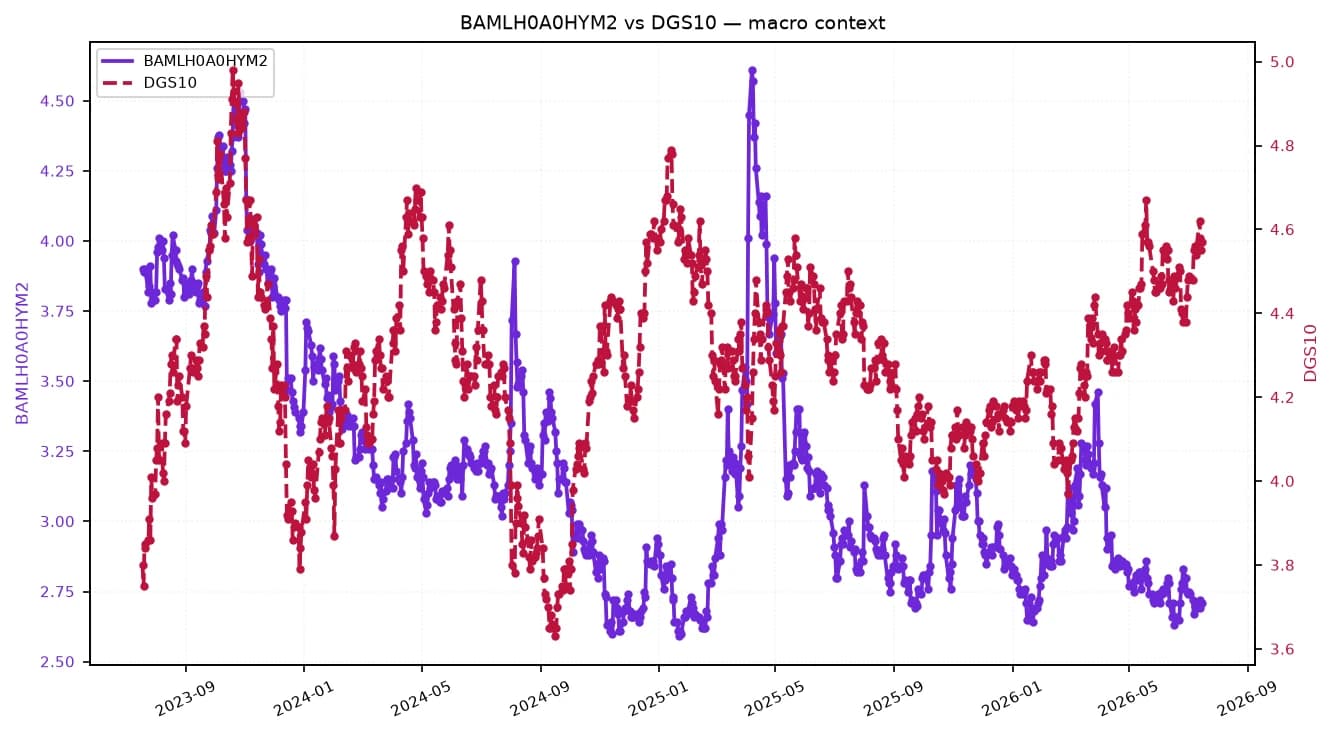
The move fits a broader tightening in credit conditions across the market. The ICE BofA high-yield spread has eased to 2.72 percentage points, near the lower end of its recent range, while exchange-traded funds tracking speculative-grade and investment-grade credit are both close to their highs. HYG is trading around 79.65, above its 50-day moving average, with an RSI reading in the mid-50s, a sign of firm momentum. JNK is even stronger technically, while LQD has held near its 50-day and 200-day moving averages, underscoring demand for credit across the risk spectrum.
For investors, the signal is important because overdue debt is often where the most asymmetric returns live. If the market is repricing distressed paper higher, the easy money may no longer be in plain-vanilla bonds or broad credit ETFs. The opportunity shifts toward the specialists who can source, restructure and monetize troubled credits before the market fully normalizes. That is where alternative managers, distressed-debt funds and restructuring advisers can capture the spread between fear and eventual recovery.
There is also a macro message here. Treasury yields remain elevated, with the 10-year note around 4.56%, and the fed funds rate still above 3.6%, so financing is not cheap. Yet credit is behaving as if the economy can absorb that burden. That combination suggests the market is not pricing a recessionary credit event, but rather a late-cycle adjustment in which issuers are pressured, though not broadly broken. In that setting, the market underestimates how quickly distressed assets can reprice upward once default fears stop worsening.
Senegal’s expected move to hire Lazard to help manage debt pressures is a reminder that sovereign and quasi-sovereign borrowers are still reaching for restructuring expertise as the cost of capital stays high. That keeps demand intact for advisers with deep workouts franchises, while also highlighting the opportunity in debt claims tied to borrowers with asset coverage or political support.
The investable takeaway is straightforward: the market is telling you that distress is becoming tradable again, not catastrophic. I believe that favors high-yield credit selectively, but even more so the pick-and-shovel businesses behind restructurings — from Lazard to private-credit and distressed-specialist platforms — because they profit whether borrowers refinance, restructure or linger in limbo. If overdue debt is making new highs, the next big move may be in the firms paid to navigate the mess.
| Entity | Gains | Losses |
|---|---|---|
| Distressed-debt buyers | ▲Higher recovery potential | ▼Less mispricing |
| Restructuring advisers | ▲More mandate flow | ▼Fewer deep-distress bargains |
| High-yield issuers | ▲Easier refinancing access | ▼Less urgency for concessions |
| Rate-sensitive borrowers | ▲Lower default pressure | ▼Higher financing costs |