OVHcloud said about half of its connected cloud capacity is still available for new customers, giving the French operator room to grow without a fresh build-out just as it prepares to enter the AI model market in early 2027.
OVHcloud says half of cloud capacity is still available
That matters because capacity is the key constraint in Europe’s cloud race. With 110 megawatts of its 250 megawatts connected and 140 megawatts already in operation, OVHcloud has spare infrastructure that can be monetised quickly, while larger rivals continue to spend heavily to keep up with demand for cloud and AI computing. In a capital-intensive sector, available capacity can mean better near-term returns on existing assets and less need for immediate funding.
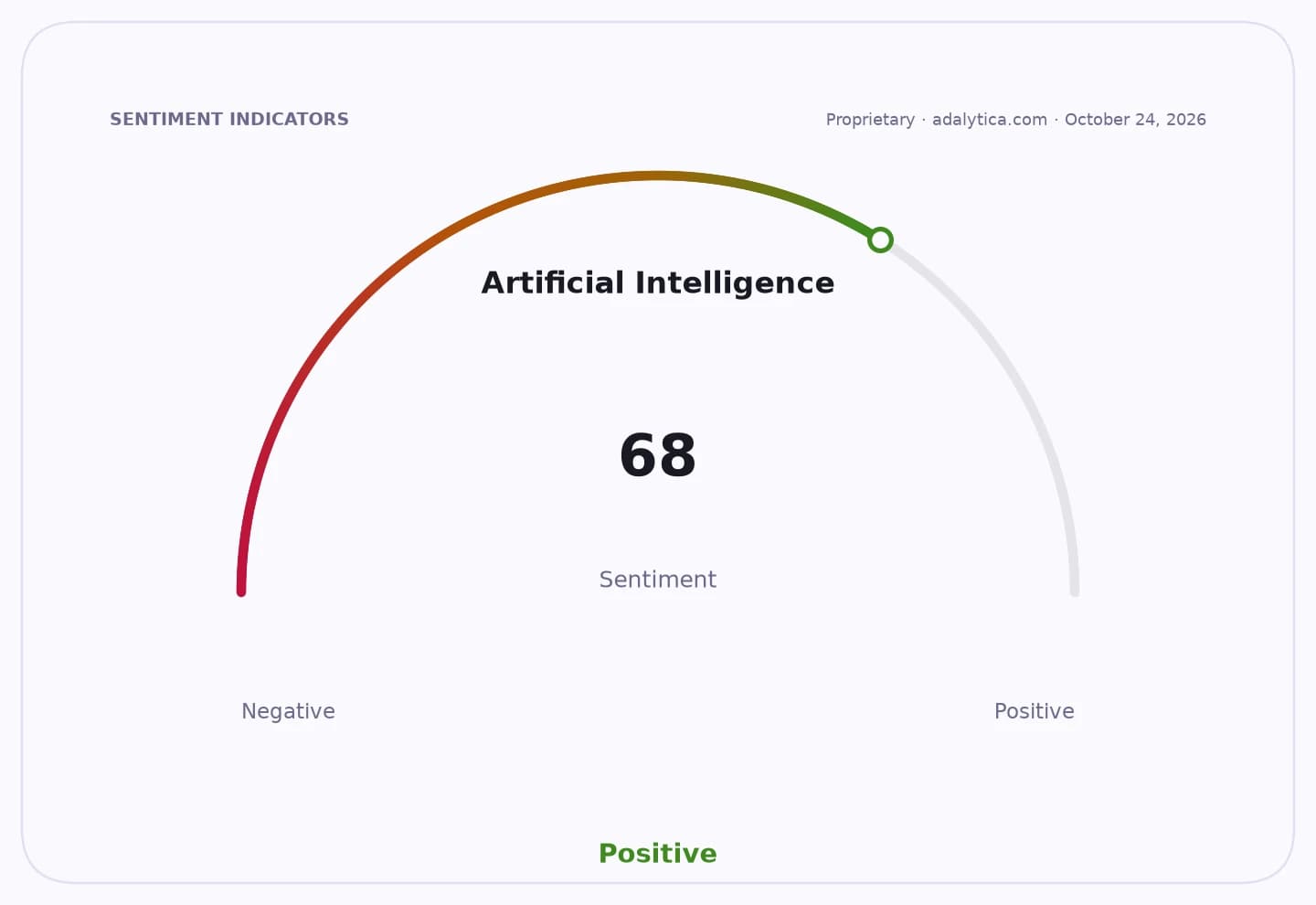
Sentiment IndicatorsⓘProprietary · adalytica.com · October 24, 2026
This is a snapshot — live sentiment, awareness and momentum for 130+ markets update continuously in the dashboard.Open AlphaPulse
Chief Executive Octave Klaba said the company’s first AI model will be launched in early 2027, following a pilot for OVHai Workspace, a productivity platform trained on OVH’s internal data and linked to workplace applications such as email. The model will use a mixture-of-experts architecture, a design that routes tasks to specialised sub-models and is increasingly used to improve efficiency in large language systems.
The timing puts OVHcloud in a developing European push to build domestic AI infrastructure and services, even as Klaba continues to criticise the region’s state-backed computing programmes. He argues that projects split between the EU and member states tend to become national initiatives without the customer base needed to justify the investment. That critique goes to the heart of Europe’s cloud challenge: demand for AI compute is rising, but the economics of matching US hyperscalers remain difficult without scale, long-term clients and sustained public support.
For investors, the near-term focus is less on the AI model itself than on whether OVHcloud can fill unused capacity profitably. The company’s spare headroom could support revenue growth and margin improvement if demand from enterprises, public-sector clients and AI workloads continues to firm. The bullish case is that OVHcloud can grow into its footprint and gain share as a European alternative. The bearish case is that the AI product launch arrives into a market already dominated by larger cloud and model providers, while Europe’s fragmented demand still limits the pace of utilisation.
The next catalysts will be execution on the Workspace pilot, customer uptake of the company’s remaining capacity and whether the 2027 AI model can move OVHcloud from infrastructure provider to a fuller-stack European AI contender.
| Entity | Gains | Losses |
|---|---|---|
| OVHcloud | ▲Higher utilisation of existing capacity | ▼Need for heavy new capex |
| Enterprise customers | ▲More cloud supply in Europe | ▼Fewer near-term scarcity pressures |
| Hyperscale rivals | ▲— | ▼Potential share pressure in Europe |
| European public AI projects | ▲Political cover for local capacity | ▼Criticism over fragmented funding |