Pagani has unveiled the Huayra 70 Anima in the US, completing a three-car, ultra-limited special-edition run that underscores how the Italian maker is leaning harder into bespoke craftsmanship as the market for multimillion-dollar collector cars remains resilient.
Pagani unveils Huayra 70 Anima in US
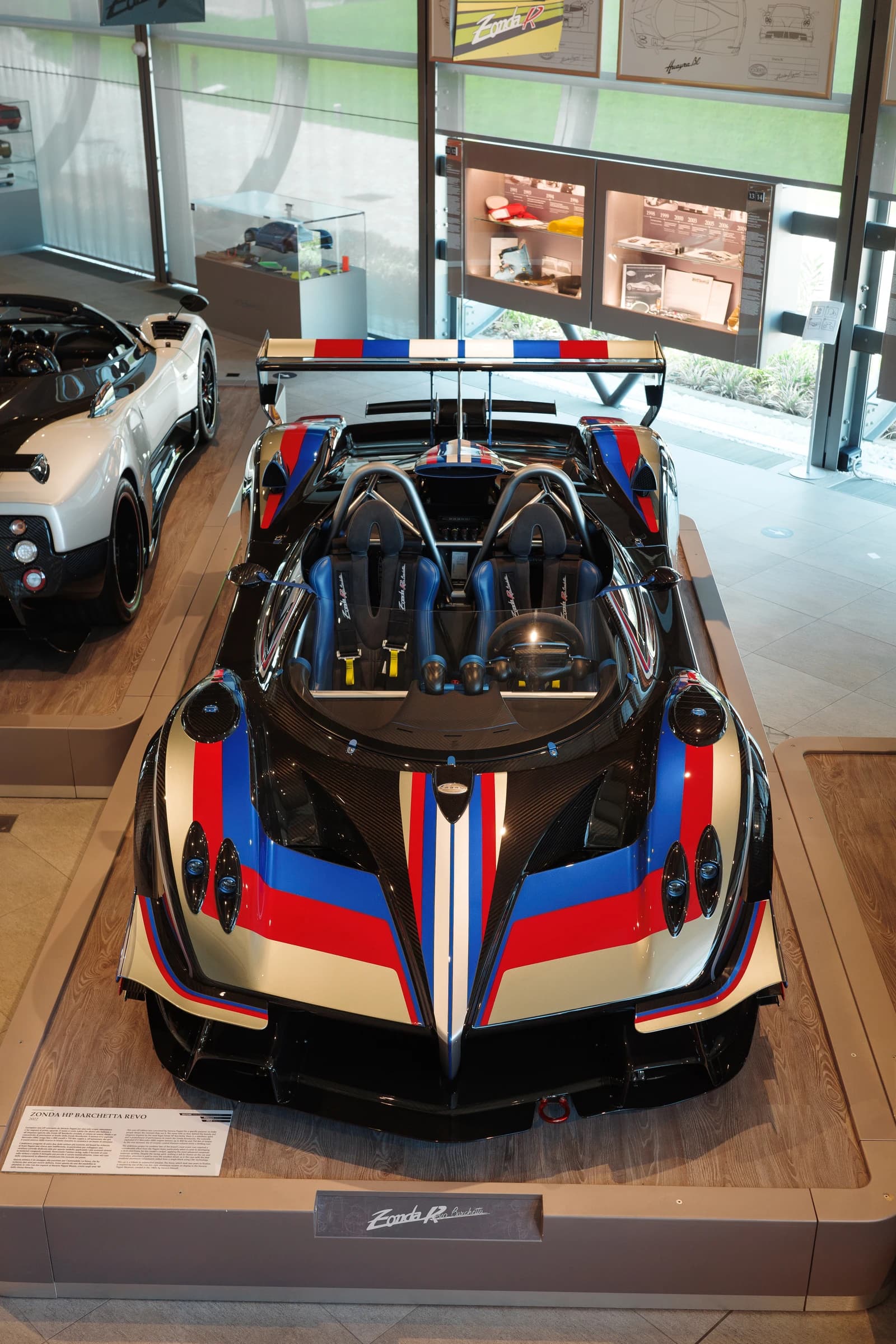
The Anima is the final model in the Huayra 70 trilogy, following the Trionfo and Derecho, and was revealed at the Concours at Wynn in Las Vegas. For Pagani, the significance is not the novelty of another Huayra derivative, but the commercial logic behind the car: the company is monetizing scarcity, personalization and craftsmanship at a time when demand for hand-built halo vehicles continues to outpace mass-market auto trends.
That strategy matters economically because it targets a corner of the luxury market where margins are driven less by scale than by customization, exclusivity and brand equity. Pagani said it worked with the owner for more than a year through its Grandi Complicazioni personalization program, a process that turns each commission into a near one-off product. In a sector where customers are willing to pay for provenance as much as performance, that makes each delivery part product launch, part brand reinforcement.
The Huayra 70 Anima pushes that formula to the extreme. Its exterior mixes exposed blue carbon fiber with real diamond dust and hand-applied platinum leaf across the front wing, parts of the doors, engine cover and rear wing supports. Inside, the wheel and gear selector are also infused with diamond dust, while the cabin keeps Pagani’s familiar aluminum-finished hardware. These details are not just aesthetic indulgences; they are the economic moat. In the ultra-high-end market, craftsmanship and material novelty help justify pricing and preserve the brand’s position against rivals such as Ferrari and Lamborghini’s limited-run specials.
Pagani has not disclosed pricing, but the Huayra 70 trio sits in a category where transaction values are typically well above mainstream supercars and can climb materially with bespoke options. That makes the final car less relevant as a unit-volume story than as a reminder that low-volume exotic automakers can still generate meaningful revenue from a tiny customer base if the product is sufficiently differentiated.
The mechanical package stays faithful to the old-school recipe that has defined the Huayra line. Power comes from Mercedes-AMG’s 6.0-liter twin-turbo V12, tuned to 851 horsepower and 1,100 Nm of torque, with no electrification assistance. It uses a seven-speed manual gearbox developed by Xtrac and sends power to the rear wheels. In an industry increasingly shaped by hybrid systems, software and regulatory pressure, Pagani’s refusal to electrify this model reinforces its positioning as a purist alternative rather than a technology race entrant.
That contrast is important for investors and car collectors alike. It shows the market still has room for two distinct luxury narratives: one built around electrified speed and software capability, and another built around analog feel, mechanical theater and scarcity. The recently reported crash of BYD’s Yangwang U9 Xtreme during testing in China is a reminder that the higher the performance ceiling, the more durability, safety and execution risk come into focus. Pagani’s approach avoids that kind of headline by staying in a narrower, more traditional lane.
The bigger takeaway is that Pagani is using the Huayra 70 Anima to close a product chapter while keeping its order book anchored to Utopia production and bespoke commissions. For the company, the story is less about volume and more about sustaining pricing power in a niche where buyers pay for identity as much as horsepower. For the market, it is another signal that the top end of the automotive world remains a business of narrative, scarcity and craftsmanship — and that, even in an era of electrification, there is still cash to be made from the internal-combustion supercar as long as the customer believes it is irreplaceable.
| Entity | Gains | Losses |
|---|---|---|
| Pagani | ▲Pricing power | ▼Mass-market scale |
| Huayra 70 collectors | ▲Exclusivity | ▼Broad availability |
| Ferrari/Lamborghini rivals | ▲Benchmark pressure | ▼Attention share |
| EV supercar makers | ▲— | ▼Purist halo appeal |