Dongfeng has unveiled the Fengshen L8+ crossover with a starting price of 129,900 yuan and a claimed power reserve of 1,505 kilometers, underscoring how Chinese automakers are using long-range plug-in hybrids and aggressive pricing to fight for share in the country’s crowded EV market.
Dongfeng Fengshen L8+ starts at 129,900 yuan
The new model lands in a segment where range, affordability and brand credibility are becoming the main weapons in a prolonged price war. A sub-130,000 yuan entry point puts the Fengshen L8+ squarely in reach of mass-market buyers, while the 1,505-kilometer figure is designed to ease one of the biggest remaining consumer concerns in electrified vehicles: charging anxiety on long trips.
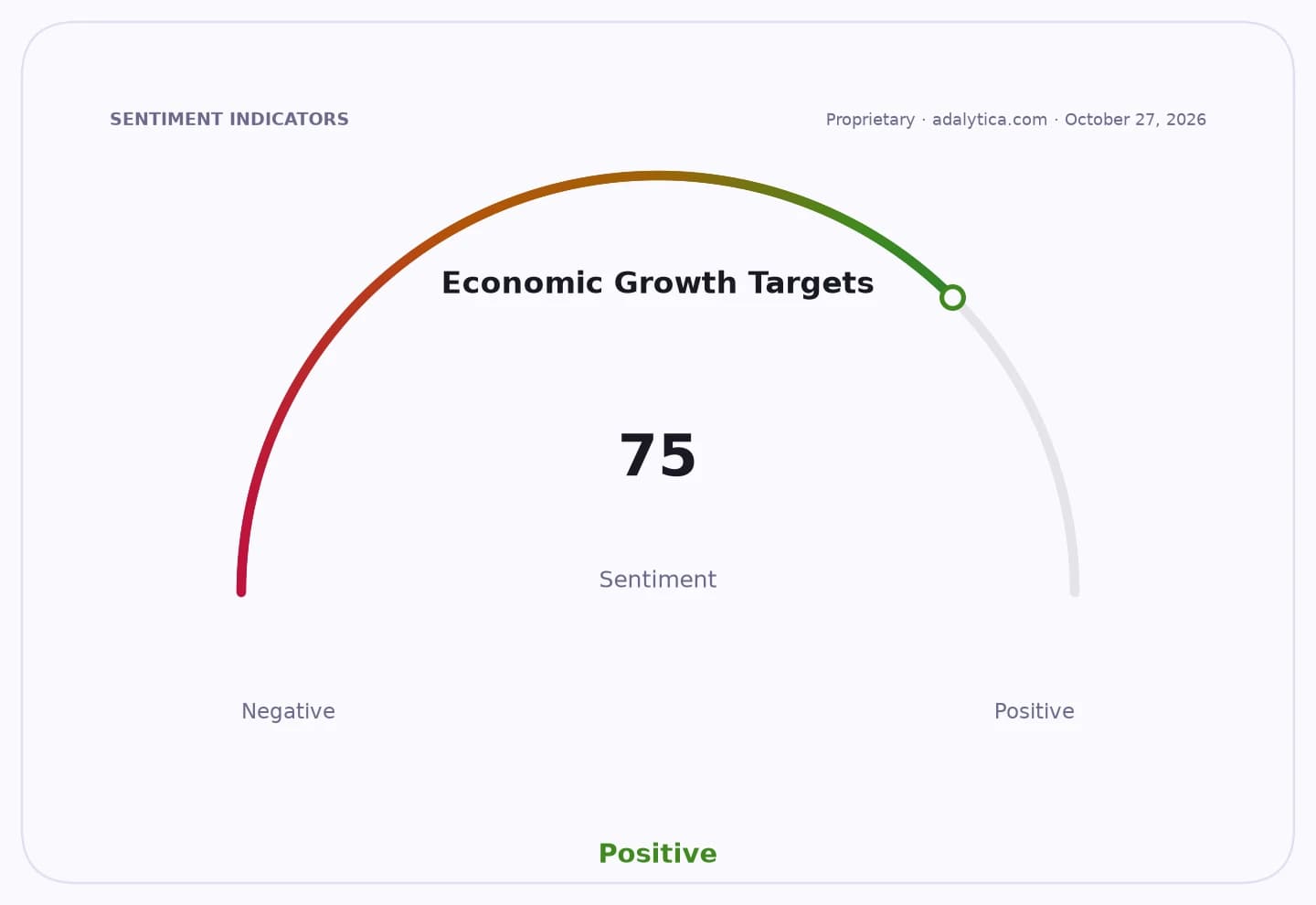
Sentiment Indicators
That matters economically because China’s auto market remains one of the key engines of domestic consumption, and competition is shifting away from pure battery range toward total cost of ownership and practical usability. Automakers are being forced to balance lower sticker prices against thinner margins, while suppliers of batteries, motors and software systems face pressure to help deliver cheaper cars without sacrificing performance.
For investors, the launch reinforces the intensity of competition across China’s EV and hybrid landscape, where product cycles are accelerating and incumbents are under constant pressure to defend volume. The move is also relevant for global peers such as Tesla, BYD and Nio, all of which are operating in a market where pricing discipline is weak and product differentiation is increasingly measured in kilometers of range and yuan at the showroom.
Tesla shares were little changed around $399.81 in recent trading, while BYD’s U.S.-listed shares were last at $8.74 and Nio’s at $3.21, reflecting the broader strain on Chinese EV names as investors weigh growth against margin compression. Technical readings on BYD and Nio also point to fragile momentum, with both trading below their 200-day moving averages.
The launch fits a wider industry pattern in which automakers are leaning on sharper pricing and longer-range products to secure orders in China, a market still central to global EV demand. The next test will be whether Dongfeng can convert the headline range claim and low entry price into sustained sales without forcing deeper margin concessions across its lineup.
| Entity | Gains | Losses |
|---|---|---|
| Dongfeng | ▲More showroom traffic | ▼Margin pressure |
| Chinese EV buyers | ▲Lower entry price | ▼Limited pricing leverage |
| Rivals including BYD and Nio | ▲Industry growth momentum | ▼Tougher price competition |
| Tesla | ▲EV demand validation | ▼More aggressive market pricing |