Volvo Cars is slashing 2,500 jobs as one of Europe’s most exposed carmakers retrenches from a China business that has rapidly stopped behaving like a growth engine and started looking like a drag on earnings.
Volvo Cars cuts 2,500 jobs amid China slowdown

The cuts are a blunt response to weaker demand in China, where the company’s sales have nearly halved, and to a similarly fragile U.S. market. For investors, the move underscores a broader shift in the global auto industry: the world’s largest car market is no longer a reliable source of volume expansion for foreign brands, but a fiercely competitive arena where price pressure, excess capacity and fast-moving domestic rivals are eroding margins.
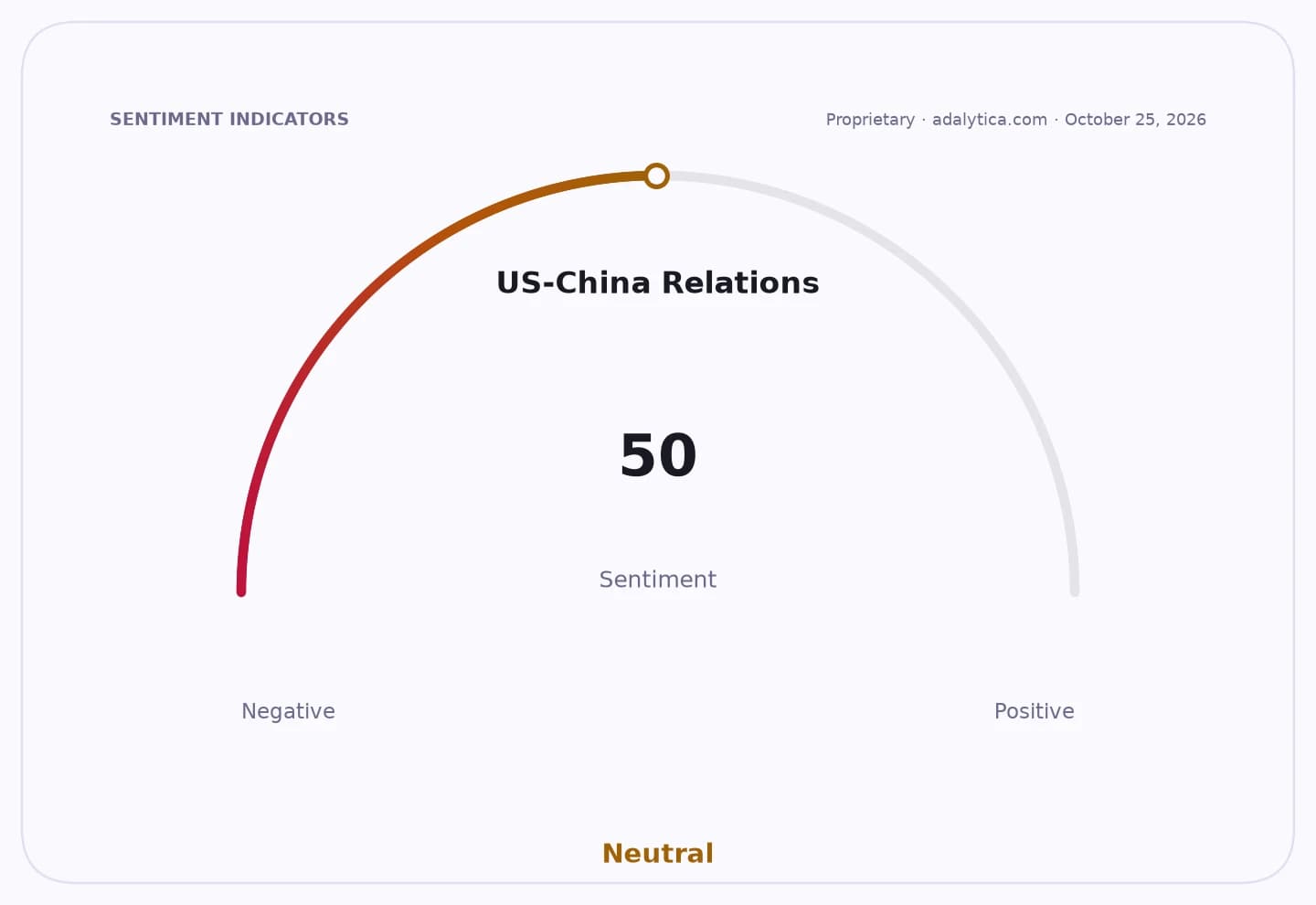
Sentiment Indicators

The timing matters because China remains central to the economics of the industry even as foreign makers lose share. General Motors said in its latest filing that industry sales in China fell 18.2% in the first nine months of 2026 to 15.8 million vehicles, while its own sales there were down to 1.1 million units. That type of contraction forces global automakers to choose between defending market share with discounts or preserving profitability by shrinking their cost base. Volvo has chosen the latter.
The restructuring also reflects a wider industrial squeeze in China. Overcapacity in autos is pushing producers to cut prices, while government efforts to support exports have only intensified competition abroad. For legacy automakers, that creates a difficult trade-off: retreat and risk losing relevance in the world’s biggest car market, or stay and accept weaker returns. Volvo’s job cuts suggest the economics of staying have become harder to justify.

The market implications extend beyond Volvo. Tesla, General Motors and Ford all remain sensitive to shifts in China demand and pricing, and the pressure is visible in their shares and operating commentary. Tesla’s stock has recovered sharply from earlier lows but remains well below its 200-day moving average, reflecting continuing investor caution around margin durability. GM has traded closer to its long-term trend but remains tied to the health of North American and Chinese demand. Ford, meanwhile, is still trying to stabilize earnings after a volatile year, with investors watching whether tariff risk and commodity costs offset any operational gains.
The broader narrative is one of deglobalization by necessity rather than choice. Foreign automakers once treated China as a source of scale that could fund electrification and global expansion. Now it is increasingly a market where survival depends on restructuring, localization and disciplined capital allocation. That favors leaner operators and domestic champions with better cost structures, while punishing companies that rely on premium pricing or imported supply chains.
For investors, the key question is whether this marks an isolated reset at Volvo or another sign that China’s auto market has entered a lower-return phase for global incumbents. If demand stabilizes, companies that have cut deepest could regain operating leverage. If not, more layoffs, plant rationalizations and asset write-downs are likely as the industry adjusts to slower growth and harsher competition.
| Entity | Gains | Losses |
|---|---|---|
| Volvo Cars | ▲Lower fixed costs | ▼Lost China scale |
| Foreign automakers | ▲Fewer excess expenses | ▼Margins under pressure |
| Chinese rivals | ▲Market-share gains | ▼Price competition persists |
| Auto investors | ▲Clearer cost discipline | ▼China growth thesis weakens |