Pakistan faces a harder economic trade-off in fiscal 2026-27 as the IMF projects growth of 3.5% while inflation accelerates to 9.9%, a combination that points to firmer prices, a wider external gap and limited room for policymakers to ease conditions.
Pakistan IMF forecasts 3.5% growth, 9.9% inflation
The Fund’s latest World Economic Outlook leaves Pakistan below the government’s 4% growth target and only modestly ahead of the global rate of 3.4%, but the more consequential warning is the reacceleration in inflation from 7.1% in the prior fiscal year and above the official 8.2% target. For households, that means wage gains are likely to lag living costs again. For businesses, it raises input costs and complicates pricing. For the government, it makes debt servicing, subsidy control and revenue collection harder to manage.
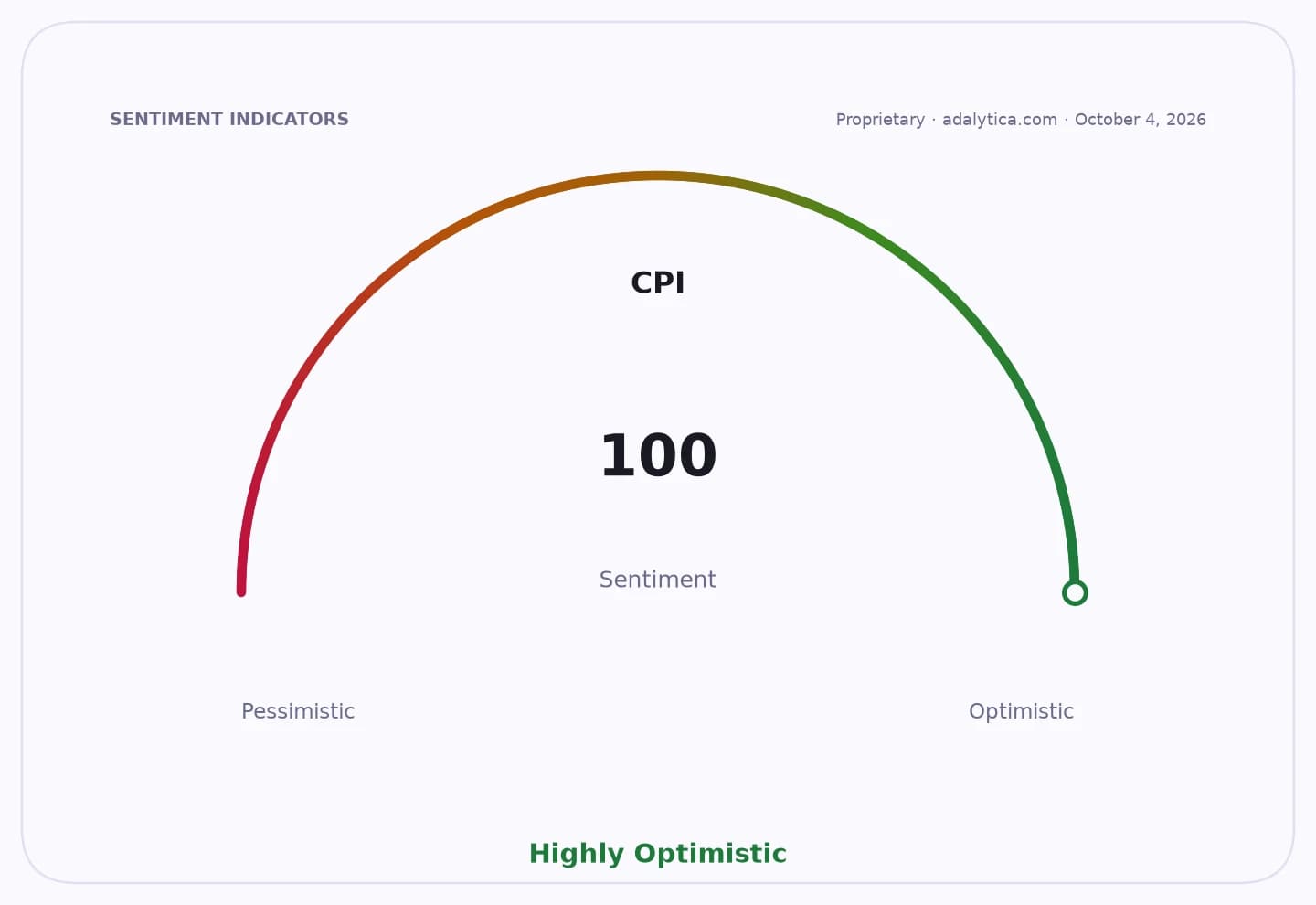
Sentiment IndicatorsⓘProprietary · adalytica.com · October 14, 2026
This is a snapshot — live sentiment, awareness and momentum for 130+ markets update continuously in the dashboard.Open AlphaPulse
The IMF also expects Pakistan’s current account balance to swing to a deficit of 1% of GDP from a surplus of 0.5% in fiscal 2025, underscoring that the economy may need more external financing just as price pressures are set to rise. That matters because Pakistan has repeatedly depended on IMF support and other multilateral and bilateral financing to stabilise reserves and avoid balance-of-payments stress. A move from surplus to deficit usually implies more demand for imported goods, a weaker currency cushion and greater sensitivity to oil and food shocks.
The growth forecast itself is not weak by regional standards, but it is lacklustre relative to Pakistan’s own needs. At 3.5%, expansion is enough to keep unemployment edging down to 6.5%, according to the IMF, but not enough to materially raise living standards or rebuild fiscal space after years of volatility. The contrast with India’s projected 7% growth also highlights how uneven South Asia’s recovery remains, with Pakistan still stuck in a lower-growth, higher-inflation lane.
Globally, the IMF said growth is proving resilient but uneven, helped by the AI investment cycle and by economies with stronger trade and technology links. Pakistan appears to be on the weaker side of that split: it lacks the export mix and technology exposure that are cushioning some economies, while remaining vulnerable to import costs, exchange-rate pressure and external financing needs. That makes the country more exposed than peers if energy prices rise or if global funding conditions tighten.
For investors, the message is that Pakistan’s macro story remains one of stabilization rather than escape velocity. Higher inflation would keep real rates, policy caution and fiscal tightening in focus, which may support nominal returns in local debt only if credibility is maintained. But the combination of a widening current account deficit and sticky prices also raises the risk of renewed pressure on the rupee, reserves and sovereign funding costs. Any sign that growth is running below expectations, or that inflation is feeding into wages and imported essentials, would make policy coordination with the IMF more important, not less.
The central question now is whether Pakistan can preserve macro stability without choking growth. If inflation rises as the IMF expects while external balances weaken, policymakers will have to choose between defending price stability and supporting activity — a trade-off that has repeatedly defined the country’s economic cycle.
| Entity | Gains | Losses |
|---|---|---|
| IMF program discipline | ▲Macro credibility | ▼Policy flexibility |
| Pakistan exporters | ▲Weaker-rupee support | ▼Import-cost inflation |
| Households | ▲Lower unemployment | ▼Higher living costs |
| Sovereign bondholders | ▲IMF backstop hopes | ▼External deficit risk |